We are a few hundred miles south east of Kamchatka, headed for the Tsugaru Strait, 9 days from Oakland, it’s Ronald the Able Seaman’s birthday, and this boat has finally broken me down enough to try Karaoke.. how great of a feat that is I will explain later.
Today had been an annoying day for me.. I mean, I don’t have much to complain about.. I am seeing a part of the world very few people see, I am literally in one of those places on the map you don’t even contemplate, the kind of place I dedicate my life to getting to, and I feel alive every time I feel the boat move, but today, and it was a kind of passive move, and only the second time there have been any restrictions placed on me, I was barred from going on deck because of 36 knot winds and some crazy waves.. might not seem like a big deal.. sounds dangerous in fact.. we are a thousand miles from nowhere, in the middle of the northern Pacific Ocean, a floating island loaded with industrial exports, and likely some empty containers headed back to the world’s greatest industrial mecca, the Pearl River Delta of China, but I woke up this morning dreaming of roaming the decks on what to me seemed like one more Alaskan day, but the Romanian Officer on Watch had other plan for me. My frustration was compounded by the gym being a construction site when I woke up.. the grapevine told me that some leaky sewage pipe had been discovered when they were moving the punching bag the other day, so I was kind of pent up, and of all things, after we passed a frontal boundary that had scared the shit out of the crew on the weather report, the day broke beautiful and sunny, if a bit windy, and I was left to roam the ‘accommodation’ the super structure of the ship that is like a condo complex, after three days of hibernating in the gray and ticking off the stack of old movies I had brought with me and scrounged.
Ronald was one of the more irony blessed of the Philippians, meaning one of the most easy to talk to. If you have spent a lot of time in the third world, you lean that abstract thought is not a given for huge swaths of the world, and conversations often never get past exchanges of well published facts, lot’s of awkward nodding, something I am well familiar with by now. I had had high hopes for him until some lunch banter turned into his explaining that the Philippians was being hit by so many natural disasters because they worshiped too many god’s. Alright, so too much for hoping Ronald and I might get sarcastic together, a pent up need of mine that had been growing for the last few days, a need to vent my sarcasm that builds up, to purge it somehow, a natural need for the New Yorker in me like bathroom breaks and the occasional sexual act not with a computer screen in front of me for my general humanity. Anyhow, Ronald still was nice enough, fun enough, and I had noticed during our hilarious emergency drill a few days before that he had suited up as one of the 4 firemen, meaning that he had some experience on the high seas that was noticed. So I had decided I liked the guy, so when he invited me to his birthday party in the crew club, literally 4 feet from the crew mess I had taken to eating in to escape the endless pseudo dramatic banter of the Romanian officers I am supposed to eat with, I consented, although I planed to stay about two second flat.
You see, I know what a Filipino party means.. I had been listening to them for days on the ship, and I had been avoiding them in various forms for the last ten years as I roamed the earth.. drunk and geeked out coke smugglers on the coast of Colombia, morose Chinese tobacco workers in southern Yunnan, Mozambiquan Yuppies trying to forget that they are too educated to be in such a backwards place by singing Tupac, all fucking karaoke parties are the same.. it’s dudes singing bad music off pitch acting sad about things that I would likely not think more than a second about in the course of my life…the room always smells of smoke, and especially in Latin America, it usually lulls people drunk and sad enough to come out of the closet to me in ways that are as horrifying as my mom telling me my cat was dead for the 6th time by the time I was 10.
I had decided to join the German Technicians for dinner hoping they could help me vent some of my vitriol for the night… one of them actually speaks English like a thoughtful Welshman (due to his favorite band, The Streets I learned, an interesting white hip hop crew from Brixton and Birmingham), even though he and his crew are 6 huge former merchant mariners turned welders and electricians who picked up a gig installing a 7000 volt shore service plug, the first they have ever done, as part f the fight against global warming.. it’s gunna take them 17 days, about the time it will take us to get to out first port in china, to basically wire a plug, turning this 360 m vessel into some weird massive version of a Prius plug in. I had been avoiding eating with them until recently, knowing they needed to bond, plan, and decompress after their shifts working in the ear splitting noise of the gear box room on the tail of the ship, but I figured by now they had their shit together and could handle me the interloper. As we were casually joking about my lack of German Language Skills, and Viking sacks of Rotberg, all of them but one the size of Refrigerator Perry and looking like a Norwegian Death Metal Band, Ronald showed up at our table and made the invite..
I decided if they were actually going to go, it wouldn’t be so painful, and we had been on this boat long enough there was no way out of me hanging with the Philippine portion of the crew this way.. anything else would be like kicking a puppy. Painful as it would be, there was no way to politely get out of it.
After all of us peeking in, the Germans made the excuse of needing to shower.. it was obvious to everyone I didn’t need to shower.. I sit around al day, and the nearest female is a whale, make that I didn’t shower, so that excuse was gone, and I found my way to a seat and worked up the courage to embarrass myself with a little Karaoke, figuring that if I could do an Eric Burden song, We Gotto Get Out of Here by the Animals, it might kick the party into another zone with me the crazy white guy passenger making an ass of himself for the hope of the team. My biggest fear was drunken puppy sadness for round after round of Filipino equivalents of Celine Dion songs until I could crawl out. As I came into the lounge, half the guys, about 6, were playing cards and the birthday boy and a few of the others were around the couches and the bar manning the machine. There was the regular endless supply of Milwaukee’s best which they delighted in me calling ‘The Beast’, which must have been the cheapest beer they could buy through the supply services in Long Beach or Oakland, but there was the additional wild card of a 50 dollar bottle ( the label was still on it, otherwise I wouldn’t have had the foggiest) of Ketel Vodka that made me realize this party might go someplace.
Somehow as much as I might cringe I this situation under normal circumstances, my social isolation, our collective isolation from all humanity ( I can calculate that the one building air base on Adak in the Aleutians might be the closest collection of humanity, 1000 miles away, and likely in a similar state, as I had read that the whole base lives in one large building that they only rarely leave during winter. That or Kirabati or Midway.. someplace like that..) made this mission to Mars a good time to perhaps get over my fears of Karaoke, just give in to the lowest common denominator, before I travel once again through the wilds of Asia where it will be frankly fucking everywhere. I can’t beat them, so I am joining them.
I’m on the couch with Ronald, belting out sad sad songs.. about girlfriend leaving for Manila, and rice farmers with broken hearts… and I uncharacteristically volunteer for the book, more as a way to stop the bleeding of whatever song he’s is singing in the dim light of our plastic wood lined parlor. My plan comes to fruition when I find We Gotto Get Out of This Place is in the system.. I can lead a little self righteous baby boomer rebellion of my own after months of rejecting their arrogance from one end of California to another, thankfully with Eric Burden being the least affected of all of those 60’s voices. The crowd goes wild… Tom the Passenger can sing a little Karaoke, in English of all things!.. he can lower his guard… he can be goofy… he’s one of us now…
The Germans make good on their promise to actually show up a few minutes later, (yah… why not.. where else could we go?) and it’s on… a thousand miles from nowhere and we roar.. toasts and cheers and jeers… and lot’s of yuk yuk yuks…
I conclude my night a half hour later with New York, New York, to round applause… for some reason I can’t sing it without doing a Sinatra immigration, or Piscapo from the 80’s ding Sinatra (the only thing he did well on Saturday Night live if I remember).. it’s in my blood from seeing too man Yankees games to the final out, and make my leave… the Filipinos go back to chocking cats sadly and calling it music, and the Germans tap along with a wry smile, and I understand now the wisdom of the Romanians never to come to the crew lounge… but I’m almost half way to Hong Kong and I can’t help but admit I am having fun…
I am writing from a decidedly un-Christmasy culture.. They aren’t Christians, 97% of them anyways, and they aren’t that consumeristic, although that is changing (spreading like a flower scented cancer from the malls of the capital city)… but they aren’t my readers in any large measure I would guess either, and my readers are staring down the barrel of a loaded ‘fun gun’ called ‘Christmas in America’ right about now. I get it, I grew up with it, I wanted my Red Rider BB Gun once, and I felt no shame in the filthy orgy of misinterpreted Christianity and greed it was…it was fun, some of the presents did change my life and the life of my family and friends for the better, and it was one of the only times of the year that anything approaching reverence crept into the cocky wreck we called a family. And I get the Christianity part too.. I took it quite seriously for a while…and I like to think that my now South Park version of Jesus would be kind of shrugging with amused chagrin at it all…
So my defense of Christmas aside… it’s fair to say that something much maligned as ‘Consumerism’ is a main driver of many of our Environmental woes. It’s ‘consumerism’ when other people do it…. when we do it, it’s the Christmas Spirit… I ain’t casting stones… but all this buying stuff, stuff beyond food and basic necessities, a nice example of how adaptive and successful our cultures have been, is really screwing things up in the planet department, in general (again, no pointed fingers… we cool? We cool…). One huge example is electronic goods. I am pretty sure although you don’t need one to survive, they don’t issue them to Buddhist Monks, that your nose is buried in some light producing screen spitting out info-tainment as we speak… in fact, I can almost guarantee it… There are perhaps 2 billion of the things, maybe more, for a population of 7 billion… and they take a lot of resources to both produce and run… just think about that.. 2 Billion Computers, when you could count them on your hands after World War II. They came into my house, perhaps at Christmas, as a way for us to keep up with a trend… this was the early 80’s. They were cumbersome and labor intensive ( We had a Texas Instruments) but you could smell something amazing was happening…
I watched the first MTV video from a spot on the carpet where we used to plug the TI into the TV, next to the spot where we dragged the phone to drop onto the modem… Media was coming on strong.. The First MTV Video: Video Killed the Radio Star by The Buggles
Imagine the combo of these three instruments I was crawling behind the TV to make work by unplugging the VCR (the Fourth) and plugging in the TI… You don’t have to imagine it, it’s 2 billion strong…. and you are nose into one now… how did I know?! Now when this all first started to happen, it was the Government using these huge IBM mainframes to do what at the time were considered huge calculations.
These things needed their own Power Plants.. then Cray Supercomputers helped us refine the Nuclear Age (so last century!) and perhaps the energy demand was dropping, but it was well past affordability for the householders of the world. Then the personal computer came in, and made it easy to do so many things, from Skyping relatives across the world for Christmas, to making Christmas plans, to shopping for said Christmas, to even getting directions to the relatives in Jersey, where you have to go for Christmas even though you hate to, so you used to print them out because you always intentionally forget the confusing route, and now your phone just tells you… All that computing, it takes energy… http://michaelbluejay.com/electricity/computers.html like a brain needs vitamin B to keep up with the endless stimulation (Anyone want to get a Pizza?.. they have Christmas specials! Reindeer Sausage and Red and Green Peppers!). Multiply it by two Billion, and the energy demands likely exceed those of some large fraction of the smallest countries on earth ( I am guessing.. it’s Christmas, I don’t want to do the math… but imagine an average of say just 100 watts per computer, x 2 billion… agh… moving on…). You can imagine the demands this places on energy grids, and we all know that unless you live in Iceland, your grid is doing something bad… heck, even in Iceland, you flood valleys to get 3/4 of your power, so let’s make it a blanket statement. The US only get’s 20% of it’s grid power from non carbon sources, and they still have environmental consequences and costs in production, so yeah, your computer, it’s doing something somewhere, as we speak, unless you are powered by solar, and planted a tree and remedied a rare earths mineral mine to cover your footprint.. The idea of coal is a double whammy on Christmas (My jerk sister used to love to stuff it in my stocking, just to let me know what Santa might be too nice to say…) so I won’t bring up that depressing subject, but you better live in Hawaii or maybe Puerto Rico to not think you aren’t getting some juice from it in the collective right now. So let me bring up a guy named Steve Jobs… he’s no longer as concerned about his legacy I would guess.. because he’s dead… if you didn’t know, you must not own a computer, so I will assume you do. The guy was no Jesus, he was a businessman… He made addictive little contraptions, and leveraged insecurity, pretension, and a love of media to make money selling them to you. Bill Gates, who is still alive, did something a bit different.. he might have had less ideas, but he had some slightly more Utopian visions, no matter how much the marketing of Mr. Jobs was swaddled in Utopianism.. and is now spending his days of idly pursuing a sainthood of sorts. Those of you on a more modern Version of Windows wish he was as obsessive as Jobs, because Windows sucks without Gates there to supervise, but this accentuates my point that although no saint, Steve Jobs was the ever acclaimed perfectionist and made a good product. His single minded pursuit left something else by the wayside too… the Environment.. which is why he will seem an unlikely hero in a few lines. Maybe it is just the scrutiny it gets from it’s ultra hip bloggy mc-graduate degree customers (although mac’s increasing popularity is watering that gene pool down a bit these days.. yup, your tacky housewife cousin who Facebook posts too many pics of her kids has one… the sorority girl.. yup.. her), but Mac might have come in a lot of colors, but very few, Jobs included, saw it a green. They got Flack for not pushing for recyclable or sustainable materials, and more flack for the pollution caused by it’s Southern China factories and the methods used to extract and refine metals used in it’s production. He was single minded in pursuit of sales, and if that collaterally led to greenness, he was all for it, but it is my assumption that Jobs didn’t want to get side tracked by making bamboo and banana leaf computers when that in and of itself would have required a pretty huge and un-demanded investment. But, with market demand, he did start another revolution, a word I begrudgingly use because it used to make me cringe whenever the Beatles Song of the same name was blasphemed from it’s sacrosanctity by being used in his campaigns to sell his idiot boxes with extra buttons… http://www.youtube.com/watch?v=iMXhtFik-vI sorry, it was Nike, but same difference to some of us.. anyhow, so I am about to describe something that will seem small.. it is small, but multiply it by 2 billion, and it isn’t so small. Let’s start by describing how it was small in a good way. I am talking about the IPad… what it is, is a solid state computer, and by solid state I mean no moving parts. it’s magic is that it’s just a series of circuits.. it’s somehow our privilege that Planck’s Constant gave us RAM that could be hand portable without ROM before the guy who knew what to do with it died… make it snazzy and give it a really nice touch screen. If the last sentence went past your head, this one will make sense to anyone who passed high school physics or pays attention to plugs or their electric bill. These Tablets that Steve Jobs introduced, because they have no moving parts, use something like 1/10 of the energy of their recent predecessors. I’m talking about Tablets, which were led by the Ipad, the newest incarnation of the Computer Revolution. http://www.youtube.com/watch?v=Z9qbgQdAxls
This was under 4 years ago, and I would have to guess that IPad’s and their new derivatives, the Tablets, number in the hundreds of millions today. I had one for a bit.. a good buddy made me get one so I could communicate easily during a trip abroad. Addictive little thing. I had to literally destroy it to go cold turkey. It didn’t brake easily either ( I was literally in a war zone, so shooting it like Elvis would have been pretty dramatically misinterpreted by the soldiers guarding my hotel.) I had to bounce it against about 4 walls (making NEWS: North, East, West, South) because it was so solid state. Before that act, I could literally never disconnect from my wired state.. I could wipe and keep watching The Daily Show at the same time without even putting it down.. I don’t know how to explain it’s power better than that… Jobs was plunging his system deep into my psyche, and pulling cash out as well…which didn’t escape the observations of the South Park Guys: http://www.southparkstudios.com/full-episodes/s15e01-humancentipad But my addiction aside, let’s go back to the whole solid state thing again… Remember hard drives? They spun.. they moved.. the required power to do so, and Desktops… they had a big ol’ TV attached to them.. must have used 50-100 watts or more…gone…now even mouses are obsolete.. not that they used much power.. they were, well, mouse-like, dainty in their consumption… but now, again.. obsolete with the touch screen, well, credit to the touch pad, but still an investment and a power user… but the touch screen? the coffin is sealed… So right before my NEWS incident, I left my charger behind in a major city.. like cars before the gas crisis, I had never really wondered how much power they used because it never was an issue.. no one thinks about efficiency in computers.. we need them too badly to question them…we take what they give us… but Jobs, in his pursuit of something better.. the reliability and hand held possibilities of a tablet, not to mention the battery life possible in 2010 (the beginning of the age of Lithium) addressed this problem without us even knowing it.. Where I was looking for Ipad Chargers, I was in the land beyond them.. the city I had just left, was a city of 3 million, and had two mac outlets.. I went into a province with no paved roads leading to it, but due to the miracles of the Cell phone and cheap Chinese crap being everywhere, I could buy IPhone chargers there.. it created about half the charge, but it was enough to trickle charge my IPad.. now the big moments.. how much does an IPhone charge on.. 5 watts… the Ipad.. about 10… 10 watts.. no, not 10 kilowatts, which might have been what the first plasma screens needed.. There are clock radios that run on more than 10 watts, and they sure as heck don’t do what this thing can.. it’s pretty amazing.. and it uses next to no power.. it runs on about 2.5 watts http://techlogg.com/2011/03/qa-whats-ipad-2s-power-consumption/2322 that’s an almost negligible amount of power.. there were too many things to sell it on to have this be a selling point… to even talk about power consumption almost breaks that magic.. implies limitations and weakness.. Jobs might have been right to never mention it.. but he has launched a revolution for real.. This whole commercialism thing that is slowly sinking the planet… there are two routes out… Luddite solutions (make some NEWS!) and innovation… efficiency was an afterthought here, but if you do the math, every minute that you are curled up with your IPad in bed instead of sitting in front of your desktop or laptop, you are saving the planet, relatively…. and any time you ask a question of your IPhone instead of your laptop or desktop.. again.. triple bonus points.. unless you have it sitting asleep but on all the time, waiting to be cranked up if the tablet or phone stops entertaining you… then you suck!
I wonder how many hours it takes to get past the environmental costs of the production of that devious little Monolith (My god.. it’s full of stars!) and be in the black on power usage… you could run it for over 2000 hours without incurring 1 dollar’s charge on your power bill, in California where energy costs are the highest in the Contiguous US states by some rough math. And the world has followed suit.. Samsung and Asus and now Chromebooks are all essentially IPad variants.. no moving parts but the buttons, using 1/10 if not 1/40th or 1/100th of the power of the device they replace… So since Santa and Jesus made peace, consume away if it brings these kinds of (relative) savings.. not Black Friday savings, but black coal savings.. leaving it in the ground and not in the environment, from China to Charlestown, WV! ….. wait.. you didn’t watch that.. it was literally the first South Park even made by Parker and Stone as film Students at UC Boulder.. http://www.youtube.com/watch?v=eSQczYEeB2w watch guilt free.. on a tablet, of course… you info-tainment gobbling consumer.. just don’t shoot yer eye out! Oh and… there might even be innovations in the big screen category to come, just in case you can’t give it up: http://en.wikipedia.org/wiki/OLED http://www.oled-info.com/flexible-oled Merry Christmas Every One!
Every once in a while you stumble upon something, and you are surprised at the change. I travel so much, I know what to look for when it comes to change, and I know how slowly change usually happens. If the change is environmental in nature, in this case the application of a technology to reduce air pollution, and you see a complete turnaround in 4 or 5 years, you get a bolt of Hope in a hurry, especially if it happened in the heart of the world’s new global warming bette noir, The Peoples Republic of China, and to be exact, it manufacturing powerhouses in the areas around Hong Kong, Shenzhen and Guangzhou, the old Canton. What am I talking about.. it’s gunna seem small, it is small, but I hope I can find statistics to explain to you just how large it really is. I am talking about 2 stroke scooters, or the apparent lack of them, in Shenzhen. I used to have to imagine Asia without the whine of these ubiquitous little motors, now I can experience it. Every scooter in Shenzhen that I saw during a long days night of pacing the streets was electric. It was a complete change out of inventory in a way that could only occur under the type of authority extant in the wold’s largest Capitalist Dictatorship, the PRC, which just passed These Here United States of America for Overall Atmospheric Carbon Emissions a few years back. Let’s not talk per capita just yet, that’s embarrassing for the west. But in this blog, I wouldn’t be pointing such a hairy finger of blame, in part an accident of demographics, if it wasn’t somehow involved in displaying something good.
So what was I doing in Shenzhen, China’s fourth largest berg, or more accurately Shekou, it’s nicest sub city, for one night? Partying with a bunch of drunken sailors. Seriously. I was temporarily one of them, and we were 23 days land deprived and in need of a good look around and a night to remember. While the bosun and the watch officers unloaded and loaded our cargo of containers with the Chinese Longshoremen as part of the traffic between Long Beach, Oakland, and a quintet of Chinese ports as part of a regular service, those of us left got to sally onto shore for a bit of recreation.. The afternoon started with the normal sight seeing, let’s not talk about how the night ended to the uninitiated, but it was fun to see 20 drunken Brothers of the Sea from 4 different nations acting like teenagers on the town from one big happy family, and it was nice to be greeted by what we were greeted by in the form of these electric scooters. When you spend a lot of time at sea, there can be a symphony of mixed feelings involved in coming to shore. You remember how sad things can be. You have been staring at more stars than you can imagine, and the only humanity you were interacting with was humane, thoughtful, and only in a hurry when it needed to be, and there was no rancor but for the regular pulse of the engine, which becomes like a mothers heartbeat with time. So as I signed out of the gate with my new buddies, I braced myself for the smoggy insanity I know Mainland China to usually be. What greeted me was something distinct.. sure, people were still in a bit of a hurry, and the buses made a bit of noise, but something was missing, distinctly missing, and it is the signature sound of Asia beyond the twang of of the Huqin. The sound I am talking about is the whine of the two stroke engine, that is the heart of the Motor Scooter, ranging from 50 to 300 cc in strength. It is the modern Asian ride,the bike of the Post War Boom, the symbol of floating through a sea of humanity with modernity. There are hundreds of millions of motorized two and three wheeled conveyances inAsia, and they make an awful sink and an awful din, but it reminds you where you are in a way that can also be comforting.
For those who don’t know much about engines.. ahem.. let me educate you with my in fact accredited knowledge from some time I did in the garages of Community College. A four stroke engine is what almost every car has. the piston goes up and down, driving a crank shaft, which turns your wheels, usually though a transmission to change the gear ratios so you can be more energy efficient, stay within the peak performance areas of the vehicle. The Strokes are Intake, Compression, Power, and Exhaust, not these guys: http://www.youtube.com/watch?v=pT68FS3YbQ4 The problem with a four stroke engine, in addition to the facts that it is only about 30% efficient and works most easily on fossil fuels and is ruining our climate, is that it is more expensive than something called a two stroke engine to make, maintain, and it’s heavier too. Following me? a two stroke takes those four strokes of and combines them into two. When you do anything in half the time, it usually gets sloppy. It’s only about 15% to 20% efficient, but in a moped, it is lighter, easier to handle, cheaper to fix, so who cares if it is loud like a chainsaw (also almost always a two stroke) and uses say 40% more gas, only about half of which is actually burns, emitting the rest as a greater variety of burned and half burned pollutants than even your four stroke. All those loud damn mopeds and scooters that have ruled the road from Paris to Saigon and Beyond for some 40 years now, perhaps longer, are nasty polluting two strokes. Cute as a Vespais, and yes it’s overall better than a car, but it’s not as good as the cheap motorcycle right next to it, which is the smallest 4 stroke you tend to see in transportation, starting at about 125 cc in the Tiny Chinese Bike department, when it comes to not being polluting. So a 2 stroke scooter is better than a hummer, yes, but that hummer burns relatively cleaner, and you can’t fit as many of them in a small area as you can the 70 puffing and burping and screaming 2 stroke scooters you are apt to see waiting at an intersection from Jakarta to Hokkaido and west to Pakistan. In any nation whose development model has been taken seriously, if people start making 10 to 15 bucks a day, then can afford one, and that is more and more of the world’s factory, modern Asia, and most prolifically, the Pearl River Delta where I was hanging with the drunken sailors. When there was talk of enviromagheddon, a car that would be so cheap everyone in India would buy it, the Tata Nano, I thought to myself, well, sure it will spike traffic like crazy, it takes up 4 times the space, but at least it will be a 4 stroke.. if you are not in that traffic jam, just breathing the air on the same planet, it’s kind of a wash. Why? because it is a 4 stroke, and actually gets about the same mileage as a lot of old scooters it would be replacing, and with less of a range of emissions, so it’s almost an upgrade. Plus, it gets people out of the rain.. that’s progress! Now if it replaces one of these little motorcycles I am talking about, which are 4 stroke, it isn’t a wash, the car will be worse since these things can as cleanly give you as much as 80MPG, but who am I to say who gets to get out of the rain. Anyhow, back to China, and Shenzhen in particular. Shenzhen is 10 million people now, but was a village over the Hong Kong Border 40 years ago. It’s growth has been exponential with the creation of a special economic zone right at that port of Chiwan, about 5 miles away, where our ship was sitting, the exact spot that Deng Xiaopeng opened China to the world in the gathering dawn after the dark days of the Cultural Revolution by making this special economic zone, with Chiwan as it’s first port a few miles, away from Hong Kong. It is the epitome of what I am talking about in scale, if not in duration of industrialized time, as places like Taiwan and Japan and Korea had a head start due to not having been plunged into the extremes of isolation and social and economic upheaval that occurred during the rule of Mao Tse Tung. Other huge populations like India and Indonesia are now plunging right into that “moped zone” of economic development, along with countries like Thailand and the Philippines, long famous for their Tuk Tuk’s, but now entering areas of per capita GDP where people sick of walking and buses (and bemos and mini busses!) can grab themselves a little two banger to get around. If transportation creates about 15% of the world’s carbon emissions as of my writing in the year of our lord 2013 (Buddhist Year 2556), I would have to guess that the hundreds of millions of scooters we are talking about create some 2-3% of the world carbon emissions. Unfortunately, I can’t seem to find breakdowns that way, but we are talking about big numbers. That is the same stake aviation has, which is spending billions of dollars to eke out marginal savings.. this is huge low hanging fruit. http://www.youtube.com/watch?v=gsUSc3OIVEg http://www.huffingtonpost.com/2009/03/20/scooters-vs-hummers-which_n_177567.html http://www.theicct.org/sites/default/files/publications/twothree_wheelers_2007.pdf This report attempted to bring order to this madness in 2007, and estimated that 85% of the world’s two and three wheeled vehicles are in Asia. A half step is to retrofit 2 strokes to 4 strokes, as was famously done in a big initiative in the Philippines, http://www.cleanenergyawards.com/top-navigation/nominees-projects/nominee-detail/project/37/?cHash=991e497c16 but the pie in the sky, the ideal state, is electric driven by renewable energy. So as I begin to research here, I find a writers dilemma, a few actually. First is that I don’t speak Chinese.. Wo Bu Hui Jiang Hua Yu!… Suck it up writer, you say, it’s your dilemma, hire a Chinese research assistant for 20 cents.. you already have me intrigued! Well, moving on from my laziness, I find my second dilemma.. the coverage that is in English of this major phenomenon focuses on a dust up between Shenzhen and their now massive (for me, good news) electric bike community: http://blogs.wsj.com/chinarealtime/2011/06/20/shenzhen-takes-on-chinas-silent-killer/ http://www.shenzhenparty.com/forum/shenzhen-legal-forum/electric-scooter-nanshan Imagine that… 200 million electric bikes..
Wikipedia, towards the bottom here, says that some 100 million electric bikes were made between 2008 and 2010, the scooters close cousin. Here is this great leap forward depicted in English only in light of the ban, oh, and in, light of the guy sprawled all over the pavement because these things are quiet as can be, go really fast, and don’t require a licence like scooters..now I am going to start to sound like the Chinese Government saying smog is good for your sense of humor, when I am arguing against smog! Turns out I was wrong about this being government ordered, my third dilemma, kind of. It’s the good old free market. The change was so complete, so impressive, I could have sworn and assumed when I started writing that this was a government program, when in fact, it was the exact opposite, good old Chinese free market in action perhaps (forgetting the devaluation of the Yuan that makes all that manufacturing possible in the first place!). As I read however the plot thickens, as the Motorcycle was banned in about 90 Chinese cities, according the Wikipedia’s electric bike entry, but not scooters. So we have this combo of Government and free market, but the Chinese have definitively stated through purchasing that they like these things. So the Wall Street Journal Blog brought up all the conventional wisdom problems of this situation, so I might as well just speak to their criticisms now. What I have learned is that these big changes that affect climate change tend to be two steps forward, one step back… at first. Everything being said here has been said about the electric car and hybrids in the US, and we keep moving forward. It’s the same with wind turbines.. they do kill birds and bats. However, you can add a noise to a silent vehicle ( I think Tesla has.. it sounds so Buck Rodgers, or maybe it is just the brake discs rotating in the brakes, which you can’t hear on other vehicles over the engine), maybe we could make these for people: http://atomictoasters.com/2012/11/what-ever-became-of-deer-whistles/ and you can regulate speed.. ask Smokey and the Bandit.. maybe China needs to find it’s inner Burt Reynolds. I think the first traffic cops were born within days of the first cars 110 odd years ago (imagine that, 110 years of auto dominance!). The Ni Cad battery argument was made often, strongly, and perhaps correctly about the Prius (the allegation being that they were made under such horrible industrial conditions in some Siberian mine and factory that they negated the gas savings of the car in meta analysis), and it forced Chevy and Tesla and Nissan to go for Lithium Ion, much cleaner to make, and now Prius is Lithium too… that was maybe a 5 year curve…. and now we have a solid improvement with the lithium for planetary and local health. And sure Chinese power plants are awful, trust me. I just heard from a Chinese friend over a big bowl of squid soup that the government has openly said they are moving as many polluting industries as possible to their east coast to take advantage of he prevailing westerlies.. I just cruised the Chinese coast, and the pollution was awful, the sky a yellowish grey.. made me not want to eat the seaweed in the soup (the only thing I did want to eat on some level) since they farm it on these big bays right underneath said coal plants, but there are signs of hope that that might someday change: http://e360.yale.edu/digest/china_doubles_pace_of_renewable_energy_installation_in_2013/4020/ This is where we find ourselves in the original dilemma again of the strength of centralized authority in China, but in this case, it will be a good thing. Anyone who knows anything about China knows that when this government makes a decision, it starts to happen, no matter how invasive.. this one goes in the good category. China is taking this very seriously.
They have to. Their people are dying from these emissions, but now at least, less from point source pollution that settles in every street and chokes you as you walk to the store to get some sea urchin chips or water your orchids.. Shenzhen is materially better.. I don’t want to argue the same old joke of a line in environmental science that “the Solution to Pollution is Dilution” but shooting it up into the atmosphere at this point,under more efficient generations schemes from coal perhaps, but increasingly natural gas, bio, wind and solar, do make these electric bikes a step forward I am pretty sure, it not now, soon in the future, and the conversion of technology and mindset have occurred. The rest becomes just hard work. Plus, half of them must be made in Shenzhen! it’s like local food..carbon costs of delivery are almost nil! So on my wild night partying with a bunch of drunken sailors on the streets of there was none of the rancor you usually associate with China, just calm.. it was calm, and for a bunch of sailors, we were happy to be back on land, because maybe, just maybe, the stress of modern life might be abating in one little corner, like a child falling off to sleep after a crying fit, making people more likely to want to walk instead of drive, and since that little corner is literally the world’s factory, it will spread from there. They are waiting for it in South East Asia, perhaps even India, trust me! The Scooter is Dead?! Long Live the Scooter! http://www.youtube.com/watch?v=vRfbL6memSs http://www.youtube.com/watch?v=vu598EhI7LU you guys are bad ass! http://www.splashnewsonline.com/2011-10-22/vespa-lebrities-celebrities-on-scooters/ oh and yes, a dog riding a scooter: http://www.youtube.com/watch?v=c75zy-2S8wU thank you you tube, you make all my dreams come true.. like Chinese Manufacturing… sigh… why leave home!?
Perhaps all it took was a conversation.. 58 years avoided… but it looks like the Colorado River, the long standing symbol of the tragedy of the Cadillac Desert of the American West, might very soon be rejoining it’s old amigo, The Sea Of Cortez, or the Gulf of California if you like, since semantics no longer are going to stand in the way of this symbolic waterways attempts to travel to it’s destiny. It might be a momentary meeting of any consequence, to be measured in days for anything above a small base flow, a bit like when the big wigs sat down together to ink what is letting it happen, but it promises bigger things. To quote vice president Joe Biden’s famous gaffe, when this happens, perhaps even next spring, it’s gonna be a “Big Fu*&ing deal!” for anyone who loves the West, The Colorado, or Sonora, Baja and El Mar De Cortez. Before I go into the minutiae of how a negotiation of something called Minute 319 to the Treaty of February 3rd, 1944 might be in fact a big f@#ing deal (trying to imagine Secretary Ken Salazar and the Mexican Border and Water Commission Head Roberto Salmon making the same lovable flub, since that’s who it would be in this case), how’s about a little color and background, before your restless mouse wanders to that Viagra commercial flashing on the left of the screen…
Let me start with the controversial yet satisfying notion of a pristine yardstick from which to measure this story, a ‘world before man’ notion of nature left to it’s own devices, since in this particular case, before man arrived in these areas maybe 13,000 or less years ago, but more significantly, before Gringos with bulldozers and cement showed up about 90 years ago, this river was different indeed. I just read that the Delta used to receive 4 to 6 million acre feet per year of water from the flowing Colorado. A little quick math shows me that that’s a constant flow, if we split the middle and call it 5 Million Acre Feet, that’s almost 7000 cubic feet per second, all year (there are 31 and a half million seconds in a year I just figured out.. how bout that!), the standard of river run measurement in the US. 7000 CFS is not a huge river, but when you think about the difference between spring and fall flows in a desert like the west, you realize it can be. What makes this story a bit more complex is that this delta doesn’t always drain to the sea.. if you have even driven around south-easternmost California, you might have bumped into the Salton Sea.. in the river’s normal meanderings, instead of heading for the Sea of Cortez, it sometimes wanders north from below Yuma, above which valleys and canyons kind of control it’s spread, to the below sea level areas to the north west. In essence, the delta is a huge triangular area of which only one corner is what we accept as it’s delta today, the rest is a big Sonoran and Mojave Desert Sandbox, including the Salton Sea, which despite popular legend, wasn’t exclusively created by the rupture of one of these aqueducts 100 years ago, although that helped:
However, by any measure, despite the huge size of the delta proper, the vegetated area of the hydrated portions of the delta would have been significantly smaller, down the current river channel and it’s oxbows and offshoots, down to where it branches out to the many tendrils and braids into the sea, but not nearly nonexistent as we have today.. Environmental watchers have known for years that the Colorado River, the mighty aorta of the American West, doesn’t reach the sea, or any of it’s possible destinations in that vast area, inland seas included. It is kind of the sad burden of the self appointed eco-cognoscenti to know this, to be morose standing atop the mighty viewpoints of the South Rim, or the Hoover or Glen Canyon Dam’s, to have a little sympathy for Hayduke and the Monkey Wrench Gang for what you knew, and the tourists didn’t, that the artist of such a mighty work as the American Canyon territory or the gorges of Glenwood Springs, this wild river whose legends from Indian Lore to John Wesley Powell read as savage and exotic as any story from any land, was now like a castrated bull or a fixed dog, unable to fulfill his own push to satisfaction in his massive sandy delta… not even contemplating such an act, so hobbled by the pressures of so many obligations.. a harried unic fulfilling the demands of the empire, it’s masters King Civic Water and Queen Irrigation, and their child the Great Dams (Hoover and Glen Canyon most notably), only vaguely aware of the memories of his own physical demands… For a while you had to almost be a local or the Quixotic kayaker Chris McCandless to know that the river’s water was completely siphoned off, maybe 20-30 river miles before it reached it’s most recent delta on the north end of The Mar De Cortez. It’s delta, once hundreds of square miles of vitality, now almost completely converted to desert, because it was only whispered in certain environmental and educational circles, and was incidental, or urban legend to the rest. It was like a sad family secret for the locals of sorts. Along came McCandless, his path followed by John Krakauer and Sean Penn, and urban legend was confirmed to the masses, as you cried into your Imperial Valley grown iceberg Lettuce salad in the basement theater of your Phoenix McMansion about guilty indulgence to Eddie Vedder’s emotional tones (Oh my God, he starved to death. Never leave civilization!), as the sprinklers ran on the lawn upstairs, and you played Wilco to fall asleep that night for the next day’s run at suburban life.. yup dipshit, it’s your fault… Anyhow, where did all the water go, what almost killed the Colorado River Delta, near the city of Mexicali, and the Phoenix party town of Puerto Penasco, AKA Rocky Point, just downriver from Yuma, AZ, where it runs dry near the little border town of Gadsden, famous for the purchase agreed to there? Well, an unquenchable thirst for water. Water for cities, for teeth brushing and toilet flushing as far away as the California coast and Denver on the other side of the Continental Divide, both well out of the Colorado’s watershed (Las Vegas gets a bad rap for draining the Colorado, when in fact, they have been the most proactive of any of the Municipalities that do in terms of conservation despite a few famous indulgences like Lake Bellagio.. if you want bad guys, look to the Mullhollands of the World, and the Scottsdales.. , and water for Irrigation to grow crops in what used to be desert… You can grow Cotton in the desert if you have enough water, and if you do, it grows well, let alone less water demanding crops like certain types of produce, but they don’t stick to sugar beets; they got the water, and they use it. The ‘resource’ is measured in Acre Feet in the US (one acre stacked one foot high with water, 43,460 cubic feet.. the flow of the river for one second on a high day down from Moab), and Meter Hectares in Mexico, 353 146.667 cubic feet, about 7 seconds on that same day, and both are exchanged in separate markets in each country, after a treaty was negotiated in 1944 divvying up the take between the two nations… what’s left for the Delta, to flow free and sustain it…. nothing.. that’s right, nothing… it’s all spoken for unless you have a huge flood, rarer and rarer in the increasingly drought ridden west, and the last time the River flowed to the Sea was in 1998 after what I think was a heavy Rocky snow load that led to a spate of flooding.. that’s right.. 15 years ago. Where does it all go.. well, by ditch to the the major cities of Phoenix, Los Angeles, the Southland, conceivably San Francisco, http://en.wikipedia.org/wiki/File:California_water_system.jpg and a lot of cities in between, including Mexicali and Maybe even Tijuana, and to Irrigation Projects, mostly the Imperial Valley, but also farm fields from the Front Range and Utah to the San Juaquin. http://environment.nationalgeographic.com/environment/freshwater/change-the-course/colorado-river-map/ But I said ‘almost’ dead a bit ago, twice actually. Where does the almost come in? Two reasons.. one impressive adaptation, the other kind of a dirty divine accident.. the adaptive is that Desert Plants, even riparian desert plants, tend to be remarkably resilient, and even after years laying dormant, rebound with just a bit of water, as they did after the last flood in 1998, which people said was beautiful, all was green and lovely, if just for a little while.. well, in the little glimmer of hope in this story I have come to love, that little accident that shows me the Coyote God of the desert knew what was up and made provisions all along,.. the fauna and flora of the Delta, which is dry as a bone, just a big beach that goes for miles without much vegetation in all directions… visible from space and even nearby Mt. San Pedro Martir, (which your author conned his way to the top of once, gated for a university observatory, tallest mountain in Baja at 11,000 ft), as a big sandbox, has been saved by the most fortunate of accidents… it somehow all migrated to the end of a drainage ditch that handles the polluted runoff from Mexican and American Farms… no joke.. a sewer might have accidentally saved some species and subspecies endemic to this one delta… essentially stopping extinction with a little accidental inland estuary, due to the higher than normal salt content of this water, and preserving the H in this story of Hope, while recent developments work to add the remaining three letters back to this parched game of Hangman… The spot is called the Cienega de Santa Clara.. this anomalous green blip, flowing to nowhere, but like a seed bank or an ark for the now long dry delta.. to make it odder, to point out the almost divine perfection of the situation, since the most recent delta was in fact the saline waters of the Sea of Cortez, most of the wildlife that needed preserving, since normal riparian species do have a foothold from Yuma up, were used to high salinity’s, so the humor of the situation is that a previous but not nearly as critical renegotiation of the Treaty, Minute 2!! in the 70’s, called for a Desalination plant in Yuma to clean out the salt before it got shipped over the border, kind of a good neighbor deal, small in scope compared to what was necessary, but still noble, but the plant was never properly funded or turned on for whatever reason, even though it costs 6 Million a year to keep it in it’s present state I read, but that accidental delay might have been good for the species Balance in the Cienega.. if the water was too fresh, some species might not have survived, which is what the study that gave us the above graphic was about. If you read some of the dramatic accounts of the attempts to resurrect the delta, which seemed to take on some momentum in the ’90s with the involvement of something called The Sonoran Institute, and a more earnest Mexican environmental enforcement and intent with the election of Vincinte Fox and the PAN, this little Cienega, as few as 500 acres in size before it was recognized for what it was, the last surviving tinder in a necessary fire, and people describe it as appearing more or less as the whole hydrated area of the delta once felt… green and bio-diverse… loaded with grasses and cottonwoods… and it now measures thousands of acres due to restoration attempts to expand it and improve as much survivability as possible. But the Cienega isn’t in the current river channel as you can see.. it’s a ways to the east, so here is the dilemma.. how do you get water flowing back into the river channel itself, all the way to where it wants to be, the Sea of Cortez or anywhere else it wants to jump to once it has the hydrodynamics to do so? Well lemme describe what we have now, which I learned about at considerable risk to my life and limb if I do say so myself… I didn’t want to take McCandless’s word for it, kid’s a bit dramatic for me. I had to see it for myself, so I found myself in Yuma not too long ago, after waiting for the 3:10, and stumbled onto a modern world that would have more than intrigued the likes of Elmore Leonard. You see, the river runs dry along the 20 miles of The US of America/US of Mexico Border that is formed by the Colorado river, or was, like I am saying… now half of that border is formed by what is assumed is the middle of last channel of the river when there was one.. interesting situation, isn’t it… what makes matters worse is that there is a ton of smuggling and illegal immigration in this little stretch, (I think it’s El Chapo’s territory, the Sinaloa Cartel), since there are farms and roads right on the other side of the river levee, so it’s a 20 mile, now ten mile, miniature version of the Rio Grande… Hit Morelos Dam, and the river goes from being a river, deeper than your head ( I swam in it in two spots.. north of Yuma, and right where it enters Mexico on one side), and navigable by tubers and even the Border Patrol Boats, to nothing, since this is where Mexico siphons off what must be 99% of the water that makes it to the border to Mexicali and the fields around it.. On the other side of this diversion dam, you see a few guys cast netting for bait fish, and the water is maybe three feet deep in a pool and trickles out from there…Mountain Dew film crew and some babes in bikini’s.. green with cottonwoods.. oh and, let’s not forget the drug couriers who started coughing from about 20 feet on the other side of the 20 foot wide river as we sat there (I’ll get to that), me thinking we were in wilderness.. it was nuts… and within a mile south, the river was just a pile of heaped garbage and a braid of sand washes. After crossing an irrigation ditch that did run full, under the over watch of a big agent from Texas, I drove around but heeded his advice to not go down into the dry braids of sand that were the remnants of the Colorado, just to stay on the dirt roads that ran along it and in his field of vision.. Between these two points, I used my woods sense to follow along with my eyes, and told a third Agent I pulled over to talk to that you could see the transition from the last tall cottonwoods running south to just salt cedar (a sad little invasive that now rules the river banks and washes in many places, all the way up into Utah), at a bend in the river a bit far from the levee top patrol road, that they recommended I not go to.. so I made it within 200 yards, saw both sides of it a mile up and a mile down, but the true end of the Colorado where it stood 2 months or so ago was in a no mans land I dared not to enter, no matter how many Latin hot spots I had visited and pushed the boundaries of.. somehow I had less courage when it was one of my own countrymen telling me it wasn’t a good idea… that Gringo invulnerability of surprise no longer on my side in the last yards of my own land.. I took off for San Diego relieved to not be dealing with that tension anymore..but appreciative of the agents who had taken the time to tell me stories and show me around..no matter how much I might curse ‘Big Gubbmnt’!
10 miles south and it’s gone..
soaked into the sand… it’s profound. I learned a few other things that night and the next day.. most Border Patrol agents, unlike the often surly customs guys at the border crossings, are pretty chill and friendly dudes… and can be helpful. You see, their trucks are parked and watching like every 200 yards along that stretch, which seemed like overkill at first, but after a few conversations didn’t. You see, if you talk to one, or one sees you, they all know you are there pretty quickly, and they pass you along to where you need to be like a smuggling ring.. OK, maybe a bad metaphor… like a good corporate phone system. They sit there all day, for hours on end, and the more thoughtful of them not only know the area extremely well, almost down to the tree, but they have had time to ponder the river and the things around them. So that first evening, after introducing myself to one, he told me the skinny.. they can’t tell me not to go down there as an American Citizen, I can go right up to the river if I want to, but it’s dangerous, not just kind of or possibly dangerous.. there are lookouts for the smugglers in the bushes every few dozen yards it seemed more or less.. sometimes they get drunk and taunt the Border Patrol out of Boredom from the other side. When I was right on that corner by Yuma right above the dam, right at sunset that first night, I decided to take a dip in the river, I didn’t know precisely if the other side was US or Mexican, I was that close to the line, and maybe didn’t realize the wire literally next to me stretching across was the border marker, right by this cleared pull out I parked on and ambled down to the river from, and since it was sunset, the guy hooting at me from the other side all the sudden was indistinct, I had to look for a gun belt in his silhouette while treading water and wondering how much fertilizer and e-coli was in the river to figure out he was Mexican by the lack of one, and not a border patrol agent.. he was laughing at me for being dumb enough to swim, or maybe he thought I was some fugitive or returning mule and he could help me for a tip, no gun belt.. yup. that’s Mexico. The guy was only 40 feet from me. Now the agents would hand me to each other by radio to see different things.. I would drive a few hundred yards, and another would show me a river gage, or the dam, or some other detail, and maybe would swap stories or ask me what I had learned about the river so far.. as it got dark, they told me again, they can’t tell me where and where not to go, but it was apparent the witching hour had arrived, radio traffic had picked up, people were gonna come across the border with either drugs or looking for jobs within minutes as the sun fell, and people got shot here at times, and the cartelistos even grabbed farmers who worked the no mans lands between the fence and the irrigation canal road where the Border Patrol cruises the siding road in their vehicles and tried to get kidnappers ransom to let them back over the border.. the other side of that road was truly lawless.. so I went back to my motel to mull this all over. I decided the next day to go back in search of the true dry spot, since these guys were remarkably helpful. With only one section of fence, by Gadsden, since they got tired of people sprinting through town and jumping into SUV’s all the time.. it’s around where the north end of that fence is that the river disappeared when I was there, but getting there was not as easy as you might think. Anywhere else in America, I would just troop down there and take a peek, but this is where it went from fascinating to wild… I went in search of the spot twice.. my first time in the heat of midday, but cowed by the stories I backed off and drove south furthur down around the spot where the border corner is, where the river turns south after Yuma, and in about a quarter mile or less, the west side of the River goes from US (or almost, I think it is an Indian Reservation) to Mexican territory and the town of San Luis, and then you hit the Bridge and can go no further without checking into Mexico. I came back north as things cooled off. After the same kind of baton pass between 4 different agents, all nice, one even female, I found what I was looking for.. there was a spot that in any other place would have been bad ass for a rope swing… an agent from Chicago walked down a little wood log retained dirt staircase with me to where the river was 2 feet or so deep, and you could see trout in the river, and if it wasn’t for him having body armor and an M4 in his hands, would have been a pretty bad ass pastoral little spot, like a Kentucky swimmin’ holler. That’s when I let out some tension and heard someone cough from the thicket a few meters away, just like the night before with the guy hooting at me. The Agent didn’t hear it since he was focused on something else as we gazed at the water, kind of relaxing for a split second, so I mentioned it to him. We beat feet up the dirt steps and back to relative safety. I feel like a coward now knowing these two did that 20 mile stretch: http://e360.yale.edu/feature/video_colorado_river_running_near_empty/2443/
This looks like the fence near Gadsden, just to prove it can be a busy place.
If that is the nadir I have been describing, let’s get back to the ‘o-p-e’ in Hope, since I said the Cienega was the stalwart H.. I had a long conversation with Dr. Francisco Zamorra in Tucson, the first time I ever did an interview for this Blog, God knows I put a lot of effort in for both of my readers.. Hi Mom! yup, wearing clean underwear.. Dr. Zamorra is Mexican, got his undergrad in Baja but went to Oregon for a PHD, but has lived in Tucson for 20 years, and in his current capacity find’s himself in the Delta every other weekend, kind of a bi national commuter, a bit like the river itself.. you see, when it comes to this Minute 319 stuff, he’s the guy, he might as well be Secretary Ken Salazar, because when it comes to fulfilling the requirements of Minute 319, a huge burden falls upon him and The Sonoran Institute to Fulfill, about a 6 million dollar burden I think he said, depending upon where water prices go in Mexico… http://www.sonoraninstitute.org/where-we-work/northwest-mexico/delta-water-trust.html You see, every renegotiation of a water or border treaty between the United States of America and Los Estados Unidos de Mexico becomes a ‘minute’ under the Aegis of something called the International Border and Water Commission, http://www.ibwc.state.gov/Treaties_Minutes/Minutes.html many of them are insignificant in the grand scheme of things, might be about bridge construction over the Rio Grande, or some other minor detail requiring agreement between the two nations, but Minute 319 was quite different.. somehow the big guys got together, Cabinet secretaries, not lower level guys making the trains run on time, and decided to if not fix the river, restore it to some holy pristine state, to at least throw it a lifeline, give it’s dehydrated body an IV and some shade, contingent upon some follow through over the course of five years… The essence of the negotiation was this if I understand it: If the Mexican Environmental Agencies, working with the Sonoran Institute to raise and administer the Money, can buy up 50 thousand Acre Feet of Regular Flow to the Delta, from the Mexican half of the ledger agreed upon during that original treaty of 1944, essentially buying water rights piecemeal from open Mexican market dealing with water that makes it to the Morelos Dam and is now used for Mexicali, it’s urban environs, and farming in that area, to have run that much down the river by the end of 5 years, the clock commencing at the signing of the Minute 319 last November, 2012, then the US will give them Pulse Flows, 250k Acre Feet flood events, every few years, to stimulate the natural spring flood cycles in that environment, actually, scratch that. to just simulate the river running normally back in the day, but compared to how it flows now, it will feel like a big springtime flood event, and it will help distribute seeds and revitalize the ecosystem. In fact, my math shows (this is a pretty full envelope by now!) that the pulse flow is equivalent to 17 and a third days of old normal flow… I don’t know the details of how they plan to release it, but it sure as heck is gonna help. So if the Sonoran Institute and the Gobierno De Mexico can create a regular flow to reawaken the Delta, the US will give it these Pulse Flows to get it dancing again… All they gotto do, is raise about 15 million bucks… I think he said he has about 6 in the bag already.. it’s kind of unique, pulling the private sector and non profits into the mix, buying this stuff on the open market, which I thought would be well worthy of an NPR Marketplace bit. Francisco described it to me this way.. two Employees of the Mexican Environmental Administration buy them up as they come on the market, mostly advertised by flier on bulletin boards throughout the various water districts in the Mexicali Agricultural region. Simple as that.. Now buying this water on that market won’t account for all 15 Million.. they estimate maybe half of that at current market prices, which they don’t want to shock, so they are buying slowly, but they have other plans, to reforest huge areas, protecting and expanding the seed they have in the Cienga, and also, preparing for the pulse flow… Now here comes one more biggie.. They don’t have to wait until they earn the pulse flow to get one.. the first one is a freebie.. it comes when they are ready to receive it, which could be this Spring.. yup, Spring of 2014.. When I think of the possibilities of this, it makes me a little emotional.. I am not sure if it will flow past the Morelos Dam, or flow through the Farm Canal System near Mexicali and pop back out further down the river channel as Francisco implied, down The Hardy River (Party at the Hardy!) and back into the last channel.. but for me, the idea of the river flowing down that section of the border, past all those Border Guards I talked to, past those trafficking soldiers and their Narco Bosses cruising in their big Doge Ram’s, grandparents telling their kids that this is what it was like when they were children, that they weren’t wrong to have had nostalgia for such a dusty and neglected place, it seems like, if you’ll pardon what seems like a pun, a Watershed Moment… I picture the tall laconic Guard I had the most genial conversation with, he was from Utah I think, scratching his head in satisfaction, after two years of his life staring at the same dry section of border, his daily chess board, all the sudden, it’s a river, a torrent, a thing of beauty, and as much as a healthy crop of cottonwoods might make his job a bit harder than it used to be, give them guys more to hide behind, a bit more mud to crawl through for the predator and the prey, it might also add a bit of perspective to the whole scene.. as water to me is a symbol of getting what you need, and these dusty border towns, it’s hard to say people get what they need when they succumb to some of the desperation you see in some of these towns.. some towns worse, some better, but none of them perfect.. but maybe if we take care of Mother Nature and the Mighty Colorado, she will in turn offer us other ways to take care of ourselves… Let the River Roll, and either this spring, 2014 or the next, if I can take Francisco and the US Government at their word.. you don’t have to just hope for it, you can count on it… in fact.. they are already clearing out the brush and getting ready….
Update: Flood Event March 2014 A little birdy whispered it in my ear, and now it’s made it online: http://www.savethecolorado.org/blog/2014-what-will-it-mean-for-the-colorado-river/ there will be a release of water sometime this March 2014 into the delta, despite the drought, if all goes well… it’s the moment you have been waiting for, thirsty Colorado… normally in the desert, they recommend you sip, but I think you are ready for some deep gulps… Second Update: By now you know, the event happened, and it was a great day for the Environment, Mexico and the United States. The Desert was so thirsty, it took a few weeks for the pulse flow to make it to the sea, but it kept flowing for the whole alloted time, like a month, and finally made it to the sea. How do I know? A buddy of mine decided to float the river and document it, but they had to pause a few times to let the sand fill up with water: Rowan Jacobsen Outside Article on The Pulse Flow in the Colorado I wish I had been at that celebration in San Luis!
It made it, if only briefly..
Second Update: December 2015 Fundraising Completed In December 2015, Raise the River, their parent organization The Sonora Institute, and their companero Mexicano Pronatura Noroeste have raised the 10 million (I felt like we talked about 15, but it was down to ten. maybe 6 for the water rights and 4 for the rest, the plantings and administration and land to restore) they sought to create a regular base flow made up of purchased rights from the Mexican side of the border as per the treaty. It will flow as long as there is water to feed the rights… and expect another pulse flow in a few years if all goes well..unless somehow Will Farrel messes it up!
For some reason, this is among the purest and most satisfying types of conservation and ecological restoration projects. I love it.. it usually involves remote places, peaceful and exotic.. places where birds congregate their chattiness juxtaposing the serenity off the surroundings, where the sea meets the land and the outside world doesn’t seem to exist. This story takes place in the lands that inspired Robert Louis Stevenson, Daniel DeFoe, and the movie maker and King Kong creator Marian Cooper. It also is finite, accomplish-able, and the results can be incredible, and uncompromised. What I am talking about is Island Restoration. Now let me explain.. most islands are not disappearing, they don’t need to be pushed back up.. well, the people of Vanuatu and Tuvalu, might disagree these days, but this term means something specific, it generally means the removal of invasive species from ecosystems that have evolved in relative isolation. These invasive creatures seem to have most often come from the Whaling Industry of yesteryear, although natives and 20 and 21st century man also contribute endlessly to this problem, but it’s a case of a distinct act, usually of culling or relocating invasive mammals, having a measurable result that improves the survivability of the worlds biodiversity, and somehow restores of rescues nature’s, or even perhaps some divine power’s, intent for the complexity of the world, if only in these remote corners.
As Whalers spread around the world in the 1800’s, first entering the Pacific on the recent coattails of Cook and the British Navy, who despite Magellan being the first, were the most thorough in their reconnoitering of the world. And not to leave the Atlantic out, Islands like Saint Helena and the now Famous Falklands and South Georgia, where they also explored, Europeans flush with navigation technology and their new gunpowder weapons and big wooden boats, and heck, the Indian Ocean as well, going further and further afield in search of, you named it, Oil, in this case Whale Oil… Initially the Europeans went in search of Treasure and Spices, but that led to other civilizations, not as frequently but occasionally the uninhabited knobs of the world. What the whalers would do is stockpile food and supplies on these islands.. release a few pigs and let them roam, so they could breed and eventually they would come back and shoot a few, and of course eventually a Norway Rat or two would scramble down an anchor rope and onto shore, goats would be added to the pigs, and perhaps a pair of fecund cats would be the company of some lonely attendant there to farm supplies for passing ships, he might grow a few trees for shade that might also be used for Ship repair if given time to mature… while a natural outgrowth of commerce, it all had a devastating effect on these isolated island ecosystems, these places usually only touched by what could fly, or swim, or float there with the currents, where evolution occurred in isolation and species adapted to their immediate surroundings since change came rarely enough..
Now perhaps the strong should be allowed to dominate the whole earth..man and a few tigers and rats and bears should roam everywhere, but that kind of takes the fun out of it, the kind of distinct ecological cultures that give the world some richness…so people started to take notice of these impacted ecosystems.. I am not sure who and where first, but somehow the Kiwi’s, the kings of practical intervention, decided to take this on in their own country, starting both at home and on some of their remote island territories. the New Zealand Department of Conservation, or DoC (pron: Doc) as it is known in N Zed, are kind of the SAS of Conservation. They are small, nimble, capable and relentless, while still being user friendly. They serve the role of like 20 different agencies in the US, BLM, NPS, USFWS to name a few, all under one roof, and they decided to take on some projects around their sumptuous little island country. These problems I am describing are most romantic on deserted uninhabited islands, and New Zealand has a few, but the whole country was kind of a lightly inhabited, if not deserted, then isolated Island (not to piss off any Maori, the aggression gene and all that.. they were the most advanced Stone Age Culture in the world by some measures, pretty cool to boot, but can be credited with the extinction of a flightless bird called the Moa which was the top predator on the North and South Islands after 50 million years of blissful isolation until Polynesians showed up 1300 years ago, and they did have trade with other groups on the nearby island chains it is proven, as they were seafarers as well as warriors).
The Work credited with beginning this kind of Environmental restoration, necessary on likely hundreds of islands around the world, if not thousands, began on a small Island, Cuvier, barely a mile long, off the Corimandel Penninsula aside the Bay of Plenty, on the north Coast of the north Island of N Zed.. it has a lighthouse on it, and not much else, and it must have been crawling with invasives, as it’s remarkably beautiful looking, (I have been 20 miles south of it but never to it, it was beautiful where I was as well), but otherwise unremarkable, because I had never heard of it until now. Most Kiwis are originally Scottish, and they like things tidy, DoC employees no exception eh, and somehow this offended them, so work began in 1962 to clean up this mess. You need to understand that given the ecological history of New Zealand, Rats and even lots of species of Mice are invasive.. it’s a tall order to make things they way they should be, or were, to be scientific and not moral. At around the same time there was an effort to eradicate a rat species from Bermuda, and a few other things, but I am not sure how many projects functioned on this principal of full restoration if possible.
Cuvier Island near the NE of the North Island of NZ
An island set I had heard of, and the first to intrigue me before I learned of these efforts worldwide, including significant efforts on the Aleutians and Channel Islands of my own country of the United States for two, and loads of other places big and small, is a classic case that struck me as I read it not for being the first, but for being such a colossal effort for a result that many would consider inconsequential, which taught me how far DoC would go to restore nature and right wrongs, since these islands are so far from anyone that justifying this work in most democracies would be ludicrous. I am speaking of DoC’s work on the Campbell Islands.. never heard of them? You are not alone… they are a little group of islands 600 km south of Stewart Island and NZ proper, and further from the closest major population areas of Dunedin or Christchurch, down close to Antarctica, and the roaming areas of the Southern Right Whale. What had happened, as I alluded to at first, is that Whalers had dropped off domestic animals here, cows, chickens, and even a caretaker to raise them and provide when people showed up looking for supplies. Rats took hold as well, chasing off tons of bird species, many endemic, including what has been described as the worlds rarest Duck Species, The Cambell Island Teal. On the nearby Auckland Islands, it was pigs, mice and even one of the sub islands was crawlin’ with rabbits, but never rats. There had even been a town there, or a settlement, Port Ross, for a few years, as well as a Maori population fleeing the colonizers, so the lack of rats was a surprise to many. On Campbell, DoC, starting in the 70’s, had culled cows by 1984, sheep by 1992, and then the amazing feat of rats by 2003, and the results already show for Snipe and Teal and other shore and seabirds returns have been impressive. It’s like restoring a museum that no one will ever see, just because it should be done, polishing a fabrage egg and locking it in a closet in Northern Alberta. However there is a constituency that does appreciate it, even if they don’t vote: the ecosystems have rebounded and many of the species numbers are way up, mostly birds, and with them an increase in the healthiness of the whole ecosystem one might imagine. I remember watching footage of the helicopter hunts for the last feral pigs on Auckland, and it reminded me of something from Mutual of Omahas Wild Kingdom, man in remote lands, hunting to save, helicopters that looked out of an 80s thriller, steely eyed serious men intent of preserving instead of destroying. http://www.youtube.com/watch?v=tmnc9INxceM http://www.doc.govt.nz/conservation/land-and-freshwater/offshore-islands/new-zealands-subantarctic-islands/auckland-islands/restoring-the-auckland-islands/ These places are UNESCO World Heritage Sites now: http://whc.unesco.org/en/list/877 A study on the success of 5 of the 90(!) islands they have restored, many quite small, but still worth it http://www.doc.govt.nz/documents/conservation/land-and-freshwater/offshore-islands/island-conservation-effectiveness.pdf They said that New Zealand has some 165 islands, but that the rest were not in need of intervention. You can see here the projects that DoC has moved onto: http://www.doc.govt.nz/conservation/restoration-projects/ And while I gush over All Black conservation ethics, it seems that even their private sector has gotten into the game, with an interesting approach to this invasives issue. To back up, as I explained, the impact of these invasives is that they either eat what native species like to eat, therefore making their survival harder, or they sometimes eat the native animal species. Maybe both….Double Whammy. But there is another impact they have, which is that animals like rats will eat seeds off the ground or young shoots that might have either been ignored by the native animals of NZ, or not eaten up quite as efficiently, hence they can change the makeup of entire forests. If there is some plant that would normally be abundant, but can never make it past germination, whole generations and regeneration can be stunted, and if you imagine the competition for nutrients and light, the species that the invasives, like rats or mice, don’t eat tend to thrive, shifting the balance of the forest strongly.. in the American west it creates a shift towards shrubby thorny type things that cows ignore… for some Kiwi species, like, for example, the Kiwi it’s self, this creates a lot of pressure as they kind of grew up in a safe neighborhood for the millions of years they evolved, and then in the last 200 to 150 things changed dramatically ( I believe Captain Cook was the first European to visit New Zealand, although now that I think of it, it was a Dutch guy, Abel Tasman in 1642, hence the name, after the southwest Dutch Province of Zeeland..) since the growth of European settlement, although the first of what could be called invasives came with the first Polynesian settlers in I believe 1300 AC.they arrived with Pigs and chickens and who knows what else after long sea voyages… So this brings me to a more mainland and private attempt, as if to prove that the whole country of New Zealand supports efforts like this. I was once driving on the south Island, the largest of the Islands, about 600 miles long, so hardly a place where you can just eliminate invasives in the controlled confines of these larger islands. I was driving in a very pretty area north of the college town of Dunedin, and I came across an odd fence with a fence that had only the smallest of openings.. big enough for flies and that’s about it… it seemed to encircle a few hundred acres even though ti was still being built, and I asked a local what it was for. He told me it was to protect some little lizard, with a funny combination of shagrin and respect… I was pretty impressed.. it seemed like a lot of work for a little lizard.. The Lizard he was talking about was the Otago Skink.. http://en.wikipedia.org/wiki/Otago_skink they have been so busy they haven’t even gotten to reintroducing it yet.. October of 2013 is the plan, but they have been busy indeed: http://www.orokonui.org.nz/content/theorokonuistory.php http://www.orokonui.org.nz/content/howitworks.php Think of Stalag 17.. or M. Night Shamalan’s The Village for native Species… This whole thing was the pipe dream of a Kiwi Cartoonist and his buddies in the 80’s, named Burton Silver: http://en.wikipedia.org/wiki/Burton_Silver http://visualhumor.wordpress.com/2013/05/13/burton-silver/ the idea had many forms and even died before coming back to life sometime in the 90’s, and sometime in 2005 or 2006 it appears real construction began. http://en.wikipedia.org/wiki/Orokonui_Ecosanctuary http://www.odt.co.nz/news/dunedin/225287/dunedin-ecologist-joins-heady-group-loder-cup-winners Accusations of Environmental Absolutism aside.. it’s hard to not be impressed by this… and it wasn’t exclusively a DoC or even government funded program, although they no doubt helped.. So it might be a bit Demoralizing that Ne Zealand has set the bar so high for the rest of us.. but remember, this blog is about hope, all good news is good news. In the Age of Globalization, shipping containers, and flights from everywhere to anywhere, invasive are now a worldwide challenge.. the problems introduced by Whalers looking for a little reliable non seafood grub seem pretty small by comparison these days: http://en.wikipedia.org/wiki/Invasive_species The Un has gotten in on the act: http://www.unep.org/Documents.Multilingual/Default.asp?DocumentID=585&ArticleID=6180&l=en http://www.cbd.int/ yup.. there is an agency: http://www.cbd.int/secretariat/ and meetings: http://www.cbd.int/invasive/ and there are these Biodiversity Targets come up with in a convention in Japan: http://www.cbd.int/sp/targets/ http://www.gov-online.go.jp/pdf/hlj/20101201/18-19.pdf http://en.wikipedia.org/wiki/Biodiversity_Indicators_Partnership http://www.unep-wcmc.org/meeting-aichi-target-11_928.html All kind of mind Numbing but necessary, but it does make you curious what goes on where the rubber hits the road, and since all politics is local, it’s gunna cause millions of little independent fights and efforts even though it’s nice to see some top down planning going on.. That said, I got a bit off topic from these exotic islands, these paradises lost and returned. Since I am an American, and like I wrote once in a piece about the Jordanian De Sal Canal, it’s easy to write about the US, since there is always so much coverage in English, I am going to write about these efforts there, most notably on the Islands of the Pacific, The Aleutians, Hawaiian Islands, and the Channel Islands of California, where this is happening, and there is even an organization that takes this on worldwide and has made inroads on Mexico’s pacific coast and Sea of Cortez islands that tend to be desert and therefore somewhat user friendly in the eradication category. The Hawaiian Islands have a mixed bag of Success.. the ball hasn’t completely started rolling yet because of, you guessed it, people.. the worlds most persistent invasive: Tell em Keanu! In addition to many invasive plants (there is a wild Asian ginger that was introduced by a Resident Ranger in his garden that is now the bane of Volcano National Park) there is the Drama of the Pigs.. wild pigs that were mostly or entirely introduced by Europeans despite rumors that they are descended from Polynesian Voyagers, but now there are efforts by hungers to protect them even thought hey tear up the Jungle there pretty severely.
The good news comes from the Aleutians and the Channel Islands.. again on the Mammal scale, with even an effort to eradicate Rat’s from Rat Island! There are many invasives throughout the Aleutians, from Caribou and Elk to Rats and who knows what else, http://alaskamaritime.fws.gov/whatwedo/bioprojects/restorebiodiversity/background.htm but the emblematic species is the Arctic Fox. As many of you might know. Russia colonized Alaska after Vitus Bearing ‘discovered’ it on a Russian Imperial Expedition in about 1740, before the US bought it in 1867 to bail out a broke Tsar who had fears of the English seizing it for free. While converting the natives to Russian Orthodoxy, which still holds in many places, they got busy killing every Sea Otter they could as far south as California for the outlandish prices in the Chinese Market, while placing on every Island they could Arctic Fox, which didn’t roam natively south of likely the Yukon, but had a valuable white fur during winter. 455 Islands were populated in all from 1750 until the time the practice was stopped in the 1930’s, with it actually peaking in the territorial days at the turn of the last century even though the Russians did start the practice. Most of the ones dropped off in South East Alaska where taken care of by nature the way the Mafia takes care of squealers. However on the more treeless islands, the Aleutians and other islands of Western Alaska, they thrived. These guys were not friendly to the bird population as you might imagine, which had other consequences: http://currents.ucsc.edu/04-05/03-28/foxes.asp http://www2.gi.alaska.edu/ScienceForum/ASF17/1750.html
Starting in 1949 eradiction efforts began.. with 21 islands intentionally cleaned off by the 1993, with them remaining on 46 as of that year.. does this mean the US was ahead of DoC? Things happen Quietly in Alaska, so I guess so… although they were using poisons like strichnyne until 1972 when such practices were banned, and now are stuck using regular old traps… DoC stil gets in trouble for poison, so it might be the way to go, but you gotto follow the rules. http://www.dtic.mil/cgi-bin/GetTRDoc?AD=ADA322590 http://www.youtube.com/watch?v=oxsub-4N-vY It might have been an autonomous effort in Alaska from ’49, common sense ahead of legislation, but eventually the effort had something to do with the Endangered Species Act, passed under the Great Society push and the Silent Spring movement of 1966. One of the first animals listed was this guy: http://www.fws.gov/refuge/Humboldt_Bay/wildlife_and_habitat/AleutianCacklingGeese.html As you can see.. it is never popular to kill cute critters like a Fox, but it had it’s pluses.. these Aleutian Geese rebounded from 700 individuals to 120,000 in some 45 years! Farmers where they winter went from never seeing them to considering them pests in that short amount of time!
As the above extensive report and history from 1993 demonstrates, they have had success on many of the islands, but I was once rumbling around Atka, like many of the Aleutians, it’s name starts with an A, and I was exploring big tidewater rock on the bearing side where I was camping that should have been teeming with sea life, but it was kind listless, and I came around a corner and was confronted from just about 10 feet by a mangy looking black pelted arctic fox who looked me straight in the eye and didn’t really back off.. it was kind of a tight spot we were in between two high spaces.. and we kind of stared at each other for a bit.. and I remember thinking that his pelt almost looked like he was molting… and I remember thinking he thinks I’m as out of place here as I think he is… he shrugged me off and walked right past me… I recently Spoke to the Invasives Manager of the Preserve by email, and he said since 1993 there have been 26 more projects on individual islands, or closely grouped islands, and I am waiting to hear back from him on how many islands still have the fox that maybe shouldn’t. In a funny way, we can shrug off these distant Islands, they mean nothing to us in the immediate sense, they aren’t down the street, and they might not harm the air quality much, but when it comes to complete stewardship, a full and almost ideal approach to our shared environment, these are the Ethics you want.. Efforts continue in the Aleutians, where they have taken a breather, no projects are planned now, but that is likely more a sign of the current economic woes than intent by the USFWS guys in Homer who look after this and quite a few other reserves.. And in the Channel Islands the effort goes on.. funny that the most graphic but thorough recounting I can quickly find comes from animal rights activists: http://www.animalpeoplenews.org/05/4/tsg.channelIslands4.05.htm http://en.wikipedia.org/wiki/Channel_Islands_(California) Rats were removed from Anacapa just 10 years ago, usually the last thing to go before you take on invasive plants: http://en.wikipedia.org/wiki/Anacapa_Island On Santa Rosa, the Elk, the last and most symbolic of the invasive mammals, and source of the longest most dramatic three way fight between the NRA and hunters who wanted to Hunt it in perpetuity, the Animal rights activists who wanted it either left alone or live captured, and the park that just wanted it gone somehow, was finally extirpated just two years ago: http://www.independent.com/news/2011/aug/17/santa-rosa-islands-final-hunts/
And this brings us back to the kiwi’s for an encore: They have become the world experts, and now have companies that not only consult on these efforts but get the job done world wide, Kiwi Style: http://nativerange.com/ http://nativerangecaptureservices.com/ And as California is becoming a new home for this in the US, this whole effort has it’s own non profit now: http://www.islandconservation.org/index.php I checked out their website a few years ago, and they were just focused on the West coast of the US and The Sea of Crortez and Islands off of Baja.. I can see now that their scope has widened substantially.. and why not, Island restoration is kind of an Obsessive Dream..
I can feel your blank stare.. how, oh how, can you get hope from this, the deeply saddening deaths of these 19 swaggering young USFS Hot Shots who died in this wind shift near Yarnell AZ… where are you going to go with this Grumpy? Will it be right on any level? I can’t guarantee it will be right.. nothing about this is right…I was a few hundred miles away when it happened, also sweltering in similar heat, and I resent the crap out of any good coming from bad, but in some funny way, that’s what this blog is about, so follow if you will, on a trip that might seem a bit Machiavellian, a bit opportunistic, but if you were these 20 guys, the 19 departed and the one spotter who survived, I think you would be looking for any opportunity possible to make a difference to keep this from happening again, or becoming commonplace..
I’ve hung with Hot Shots before..they are a fun swaggering sort.. cocky young dudes in nature, usually 20 somethings, working hard, experiencing its rewards and it’s solace, and trying to make a difference.. a lot of them tend to be veterans, looking for a bit of perspective in the great outdoors.. they get the same camaraderie, but their enemy is a physical force, somehow a relief you can’t reason with it, as a forest fire just requires hard work and a bit of luck, and although it can be sad, it isn’t sad the same way as a civil war or terrorism is sad.. it’s nature, not misdirected man. If you spend time in the great wild areas of American West, usually public lands, or in the occasional dry years in the Appalachians or any of the big National Forests of the east, or even in the desert that is the Yukon Basin of Alaska ( 8 inches a year of precipitation on average, and it burns like you wouldn’t believe most summers.. didn’t know that did ya..) you will run into these scruffy cats, sportin’ tan work pants, boots, official looking t shirts, usually a smile to offset the macho swagger, and it all tells you they must be a fun group to hang around a campfire with, especially if it gets out of control! They aren’t smoke jumpers, they are usually too new for that, but they won’t correct you if you make that mistake, but to a man, if they stick in the seasonal work long enough, they likely would make a smoke jumping instructor proud.. they are the Rangers to the smoke jumpers Special Forces, next in line, the shock troops, and there to help. They volunteer for reasons their own, and they serve their country, and to save lives, homes, and natural resources, like any other fireman, soldier, and emergency personnel you can think of.. So where am I going with this? This could be controversial, and it’s a long thread to make, a tenuous one, but it can be argued that the Yarnell 19 were victims of Climate Change, and the kinds of victims a society can’t ignore.. http://www.nydailynews.com/news/national/firefighter-built-protect-ariz-hotshots-crew-article-1.1389040 They were young, but they weren’t kids.. they took the job willingly, they were too old to be victims, innocent bystanders, in fact, I would wonder just by looking at them, and knowing this kind of person, if any of them would want to be characterized that way… they saw themselves the way a SEAL Team sees themselves, or an infantry squad, or a group of cops.. they were proud to do their job and accept the risks as part of the occupation, but might be willing to cry foul if the risks are exacerbated by negligence: Lemme quote their boss a month before this incident, from a Christian Science Monitor Article about the 19 young men from Yarnell
“On average, wildfires burn twice as many acres each year as compared to 40 years ago. Last year, the fires were massive in size, coinciding with increased temperatures and early snow melt in the West,” US Forest Service Chief Tom Tidwell told the Senate Energy and Natural Resources Committee in testimony last month.
http://www.csmonitor.com/USA/2013/0706/Arizona-wildfire-Details-emerge-on-tragedy-that-killed-19-hotshots/(page)/2 The west has been burning more and more, and will continue to, in a vicious cycle that was first identified by climatologists and scientists in the 90s.. its a potent combination of warming temperatures, loss of biomass in some areas due to intensive uses like cattle ranging that make rains more intense but less consistent, a form of desertification, accompanied by fire suppression in other areas that make the forests more fuel laden, which leads to more intense fires that often overwhelm the fire resistance of the existing trees, and crowd out new growth. Those new trees are often destroyed, reducing their carbon trapping capacity while creating more undergrowth that is more fire prone in the spaces left by the dead trees.. There might be more factors, but you get the basic ecological ideas.. Global Warming plus 100 years of well intention-ed fire suppression, destruction of more resilient old growth stands, and ranching on public lands are leading to a dramatic and noticeable increase in fire frequency and intensity in the American west, and the sprawl of communities into these quite comfortable forest areas to live in has made more and more for the Forest Service to protect in terms of human homes and infrastructure. http://www.washingtonpost.com/blogs/wonkblog/wp/2012/06/30/western-wildfires-are-getting-worse-why-is-that/ http://www.abc15.com/dpp/weather/weather_news/arizonas-climate-heating-up-faster-than-any-other-state http://www.climatecentral.org/news/the-heat-is-on/ Tragedy places many above pointing fingers, it seems wrong, it seems like a violation of the sanctity of the tragedy, like arguing over a grave site, pettiness when nobility is called for, but If it is considered worthy to go after negligence in the Benghazi Embassy Attack, or in the Beirut Barracks and Embassy Bombings, or in Vietnam, Somalia, or a plane crash, or the Battle of The Alamo, then it is legitimate here, if nothing more than to understand, not to point fingers, but to find out why, because I am going to assert on the record that the record temperatures that played a part in this fire have an aspect of negligence to them, and almost all of us are guilty every time we burn fossil fuels, pour cement, or even breathe these days, but most of us are passively guilty, but our excuse of ignorance is fading.. but the actively guilty are those who are knowingly denying the human causes in Global Climate Change, lobbyists, corporations, and PR firms, and elected officials who fight these reforms as a huge crisis looms.. http://www.cato.org/publications/commentary/globalwarming-myth http://environmentblog.ncpa.org/ Guess where I am going with this… So where is the hope? So obviously, as I step up my conspiratorial circumstance building and Militarize these guys for American deification, there is something about this incident that wasn’t regular, wasn’t just a fire.. every article about this incident seems to mention global warming as a potential factor, I have made the case that Arizona and the west are being dramatically impacted by the increase in Forest Fires for reasons that aren’t a mystery, and unlike Katrina where the mysteriousness of the intensification of storm got replaced as the story by human suffering, politics, accusations of incompetence and even racism, even though white people in Mississippi were just as ravaged as people who do to some degree bear the burdens of living under river level, and again the story of Hurricane Sandy didn’t quite explain how much was devastated, and heck, New York ain’t entirely America by some peoples estimates, much the way Sept. 11 is in some ways still talked about a heck of a lot more in places other than the city where some 25 out of every 26 deaths occurred on that day, and polar bears are kind of a Disney Fantasy to some, along with Eskimos and the residents of Vanuatu or Tuvalu.. c’mon.. your island can’t possibly be.. Sinking.. http://en.wikipedia.org/wiki/Climate_change_in_Tuvalu Oh dear god it is.. You see where I am going with this now: Try to shoot holes in the reputation of the Yarnell 19. You can’t Swift Boat them, you can’t say they made a huge mistake.. the wind shifted 180 degrees during the highest temperatures ever recorded in the area, and they followed their procedures properly and still couldn’t survive.. they are Americans, they are sons of the heartland, they can’t be confused with Prius drivers from Marin County, lumped with the shrill liberal young who will learn someday.. they weren’t begging to be heard because they have a chip on their shoulder, the disregard able liberals that the Carl Roves of the world love to pigeonhole.. they were just dudes doing their job on a hard day, and they died doing it. I will give full allowances to the idea that forest fires have been happening since before we had any thoughts of global warming, and people died in them: http://en.wikipedia.org/wiki/Mann_Gulch_fire http://en.wikipedia.org/wiki/Rattlesnake_Fire http://www.latimes.com/local/lanow/la-me-ln-griffith-fire-20130701,0,1341812.story But any good detective would have to add to the math of the Yarnell Fire mans actions to warm the planet, whatever roles luck, chance, fate and skill might have played.. For years the paper has been filled with the trickle of faces from our wars in Iraq, Afghanistan, and wherever Al Queda appears (places you are less likely to hear directly about Americans loosing their lives in, but we are there, trust me..).. before that there was Vietnam and the Cold War in America’s recent memory… but until Yarnell, this new challenge to us, on the level of a War, perhaps eventually on the level of our greatest wars like WWII. I don’t want to play a Carl Rove card, the way they twisted the Sept. 11 attack into the absurdly labeled ‘Afghanistan First Policy’ no matter how completely fairy tail the connections between Al Queda and Saddam Hussein’s Iraq might have been, or the way Goebbels and Himmler fabricated public justification for the invasion of Poland to begin in earnest that horrible world war http://en.wikipedia.org/wiki/Operation_Himmler I could go on and on with propaganda and calls to action.. Pearl Harbor, the USS Maine, the Gulf of Tomkin, Silent Spring.. but if ever there were a set of young men who undoubtedly symbolize what has been lost and what can be lost if we don’t take direct action on Climate Change, as they fulfill every positive stereotype that Americans hold dear, as arbitrary and clannish as that may be, it is these 19 guys, and I hope they don’t mind, because I for one can’t seem to get them out of my head.. For once in a situation like this, perhaps we can honor the dead for something other than as symbols for hate, for this war of sorts has the blurriest battle lines one will ever see.. as intertwined as the molecules of the air..
but its a driving route that links all the good spots. I am unable to find any evidence that anyone has thought of the whole river, ‘The Land Between the Levies’, as what it has very well become, which is a sort of massive greenway and wildlife and nature corridor through the heart of the United States, accidental at that.
The Army Corps of Engineers might cringe at the thought, since they have enough political pressures on them without having to worry about the environment more than they already voluntarily do, increasingly so as time has progressed and their mandate to control floods has been more and more successfully met. This idea first occurred to me during a drive up The Mighty Mississippi about a year back. As I am sadly want to do, and you readers are the victims of it, I started researching the ecology around me as I came down the Natchez Trace Parkway, on nights in brick hotels and plywood motels, or even squirreled back in some odd spot to camp in the back of my car like an empty field near Oprah’s hometown, or a clear cut in what I think were called the Liberty Hills of the Highland Rim of NW Alabama, with a belly full of Bar B Q, and an imagination full of Rock and Roll and the Blues, in places like Tupelo and Jackson and Muscle Shoals. While driving, I had spotted a snake on the parkway, a copperhead, and spun around just in time to watch a local run it over for good riddance, so wanted to know what was really around me, almost out of mourning and anger. I stumbled upon a pieces about how the last remaining Black Bears in Louisiana and Mississippi tended to be along the banks of the Mississippi between Baton Rouge and Vicksburg. http://louisianablackbears.com/distribution-status-mississippi/default.aspx http://www.covebear.com/BlackBearFactsAndResearch.htm what I saw here were these concentrations along the river, since so many other parts of these states, if not heavily populated, are heavily hunted, and also given over to agriculture. By this point I had crossed at Natchez, and gone in search of Angola State Prison, of Monster Ball, Rodeo, and Dead Man Walking fame, on a long days loop south from Natchez on the west side before I had to turn north and head for a wedding back in Yankee territory, which would allow me to follow the whole river until St Louis where I would turn off the blue highways and head east on Interstates. I ended up finding the Angola Prison Employees Ferry on a lark left turn off the Louisiana side two lane that runs right on top of the Levee, onto a dirt road, hoping to just find he river, and maybe a short cut to Angola. I was genial refused access to the ferry (although told about a bridge about an hour south), as it runs right into the prison (you don´t want to go there, brotha!), but I had a chat with the big ol’ bull of a guard about whether he ever sees black bears around. I was a bit amused to hear him gripe about how the state of Louisiana was actually protectin´ them and trying to increase their numbers. The guy was a guard at one of the scariest prisons in the US, was the size of two of me, and I am not small, but he seemed truly intimidated by the idea of wild bears roaming the woods that stretched along this side off the bank for miles. He also seemed to see them as a bit of a pest. As we talked, I looked around me, and other than some visible buildings on the prison side across the way, the view from here on the bluff bank that was just a bit of a parking area with a guard post, was so satisfyingly primordial in all directions that I could not help but think I was seeing what De Soto might have seen, or Marquette and Joliet. It was starting to dawn on me that the land between the levees was all wild. It is left to grow, since it would help flood control, and not many farmers wanted to deal wit’ the high probability of crop loss from not only possible but probable flooding for anything short of algae. All the farm land was outside the levees, and people only built on the bigger bluffs in places like Nachez or Mempis or Vicksburgh or St. Louis. the further south you got, the less bluffs there were, and the wilder and wilder the land between the levees became, and likely wider as well, because the river drained more and more the more tributaries that entered, adding volume measured in tens of thousands of cubic feet per second: http://waterdata.usgs.gov/MS/nwis/current?type=flow&group_key=county_cd&search_site_no_station_nm= So the levees could either be even taller, or even further apart if the water was to be tamed.. I found them to be sometimes a mile or more from the river channel in places south of Natchez, areas that felt and were wild and in some places impenetrable… This picture, of the Illinois River, a tributary of the Mississippi and the namesake of that state, perfectly exemplifies the phenomenon I was seeing: http://www.nature.org/ourinitiatives/regions/northamerica/unitedstates/illinois/index.htm That strip of forest is between the levees, and undeveloped, and a corridor likely almost as long as that river, barring a few towns.. running all the way from St Louis to just about Chicago in this one instance, let alone the other rivers of the system, because the Levees aren´t just on the Mighty Miss herself, but on so many of her tributaries where they border farmland or populations, which is just about everywhere in The Great Midwest, perhaps the worlds greatest combination of climate and soil. Take a look at this area north of Vicksburgh, Ms, for instance, incidentally, the area of the Famous Teddy Bear Naming Incident: https://maps.google.com/maps?num=20&q=vicksburg+ms&ie=UTF-8&hq=&hnear=0x8628e027f6b111b9:0x77422a69074f7bc0,Vicksburg,+MS&ei=hcO0Uf25BY_-rAGspIGgBw&ved=0CPMBELYD this whole area is wild because it´s where the Yazoo River meets the Mississippi. You are five minutes out of Vicksburg and you feel like you are 400 years back, not 100 years back like I feel in Vicksburg already! And everywhere on the river, here seems to be one side or another where they is this almost begrudging gift to nature by the local farmers so that the river has some capacity to withstand the floods, which unannounced to me until now, since I am writing far far from the Mississippi, are occurring as I write, having hit it´s 4th largest crest in history in St. Louis just nine days ago. We´ll see if it registers on the kind of honorary official gauge down in Vicksburgh, which is just a few blocks for the Army Corps office for most of he Main Portion of the River south of the Ohio and Missouri inflows. http://www.flickr.com/photos/melystu/5737712933/ to make this more stunning, you can see that we were setting records just two years ago in 2011, and not on the gage, low water level records last year… not to venture off into another discussion of world weather extremes which you are all likely quite familiar with. So where am I going with this? Click for Background Music Song 2 I am not defending the levees per se.. I know they have bad effects: http://www.theatlantic.com/technology/archive/2011/05/what-weve-done-to-the-mississippi-river-an-explainer/239058/ but if you know about the flood of 1927, you know that people wanted to move into the area, and they didn’t want to die for the sake of picking cotton or living a life in what they had by then considered to be, for better or for worse, their homes. http://disasteratbirdspoint.com/watch-the-video/ http://www.youtube.com/watch?v=ftaeaC3yZO8 http://en.wikipedia.org/wiki/Great_Mississippi_Flood_of_1927 Few people know that were it not for the Levees, and The Old River Control Structure, the river likely would have moved over to the Achefalaya and be draining out the Achefalaya Basin by now near Houma, especially given the last few huge floods, 100 miles from it´s current outflow into the gulf of Mexico near Venice, Louisiana, leaving both Baton rouge and New Orleans high and dry, more worried about what to do for water and money than floods. You see it´s a classic story of people moving to a place that is wild, and taming it, and that is kind of what Environmentalists are against in principal, living in places that are inhospitable, that nature has another plan for, and bending them to your will at the detriment of the natural ecology, but it happened, and man did it happen under King Cotton and the creation of the Corn and Grain Belt! and maybe this is why so many people go the blues down there, because they were worked over hard as he nature there was, but there is a beauty in that resilience, and we now have communities one would consider old communities living there, 200 years old and counting in some cases, and thrivin’ cultures, and it would be termed Radical Environmentalism to just tear out the Levees, even if it would be the best for the plants and animals, but this is how things are, the Blues is about accepting, and the compromise is the levee system, and the upside is that it left this scrap of sorts, these river bottoms that are no doubt preserving the biodiversity of this once savage land that was only the home of human natives since the Clovis Man for 12,000-14,000 years, and then was explored by the Spanish, then the French, then the likes of Daniel Boone and later Jim Bowie and the like. it´s been in the last 200 years that man stopped moving for the River, and his effects are obvious from looking at satellite photos now. The Levees could be holding back some of he endless fertilizer and pollution that is part and parcel with intensive cotton farming and so many of the other crops that are the economy of this massive basin, which is creating a dead zone in the Gulf as we speak, oil spills just icing on this foul tasting cake.. http://switchboard.nrdc.org/blogs/aalexander/chicago_and_the_gulf_dead_zone.html https://www.smm.org/deadzone/ The Hope is that in these bottom lands, perhaps sediments are being stored and used to create life and forests and cypress swamps, instead of flooding out into the gulf and creating toxicity, perhaps the Mountain Lion will make his next breeding populations East of South Dakota, the Black Bear might be joined by the Grizzly Someday, the Elk, or maybe a few wolf will find a way past Minneapolis to trot down into the big bottom lands and wooded hills along the river in areas like Winona, MN, or follow it further south, into the River areas of Wisconsin, and if they can hop a lo of farm land, fat with Deer you might imagine, maybe all the way to the wilds near Muscatine or Cairo and Southern MO where the new Elk Population is waiting to be dinner! Click for Background Music 3 If no one has put this idea together, I now offer it.. maybe its time to take the idea of a contiguous Mississippi River Greenway seriously, and not just the after-effect of other policies. turns out it has been thought of.. Mississippi river corridor Study 1996 Read the Study and perhaps I finally found an advocacy group for the whole river, not just one little area like this one in the Minneapolis area: http://www.fmr.org/ These guys seem to be takin the macro approach: http://1mississippi.org/mrn/ Ha.. there’s more than one! http://www.msrivercollab.org/ http://elpc.org/category/natural-places/mississippi-river-protection Further research shows that the land between the levees is known as Batture, much of it is privately owned, just usually kept fallow and wild, and here is a lot of case precedent to it: http://www.tulane.edu/~mrbc/2001/MRB%20WEBPAGE/batture_case.htm http://www.tigerdroppings.com/rant/display.aspx?p=42060837&pg=2 Places to Start… or maybe we just keep it informal the way it is, laid back Southern Style… Maybe things are lookin’ up for the Old Black Water after all, and meanwhile, the critters in the land between the levies will keep on actin’ the way they have been since the days of the land of the lost.. one slither, shiver and growl at a time… Click for Closing Credits Music
go to minute 2:45 if you want to get to the point… I’m not usually an emotional guy, but somehow those 45 or so seconds of footage bring me close to tears. This entry might be the one that most affects me on a personal level, since it affects so fundamentally and dramatically a place I love so much and know so well, the Eastern United States, and the Appalachian Mountains. When I saw the above video,while learning about a release of Elk in Missouri that were brought from this wildly successful Kentucky herd, first released in 1997, I felt like I was learning about a long lost uncle as an adult, as if something that had been missing from me, and from how I understood my world on some emotional level, was being returned, even though I had never known it was gone. Not to play into the myth of a pristine pre-Colombian world, but I for years was left non-plussed by the legions of white tailed deer that populated my world, by the eastward moving Coyotes that were the only predators left, as they invaded previously unknown territories for them to pick off the edges of the weird kind of predator-less garden patch that was the East. I grew up suspecting but never knowing that that Eastern ecosystem had indeed been a wilder and much more complex one, and watching this video, after an accidental run in with an article about the Missouri effort, was big for me.
I had always thought I knew a lot about New England ecology as a kid, and then that of the Appalachians as I got a bit older. I knew we had black bears and white tails, and not much else on the big animal level, maybe some cool weasels if you were lucky, and always talk of some phantom Mountain Lion roaming the land, but never like in the past.
Eastern Ecology is ruled by nostalgia, and by this persistent compromise with the growth of the population on the Eastern Sea Board, the awkwardly named Bo-Wash Corridor and other places like Virginia Beach, and with the coal mining industry which is the ever harped about lifeblood of the Central Appalachians, like a family in crisis with the neediest sibling screaming the loudest, the coal industry, a far cry from the humility of suffering and frontiersman-ship that were the touchstones of legends of the early European settlement in the days after Plymouth Rock. I would sometimes scratch my head trying to figure out why Davy Crockett or Daniel Boone might be so challenged by a simple whitetail. Now I know it wasn’t necessarily whitetails they were after. Now I know that Wolves once roamed freely, that the forest humus used to be thick and full, sheltered by old growth canopy stretching for leagues before earthworms, extirpated by the ice ago, were reintroduced to the east of North America by the ballast of the boats that settled Jamestown, the Susan Constant, Godspeed, and Discovery. Life on the east coast was indeed quite wild, and quite different from what we find today..
An old friend of mine was a direct descendant of Daniel Boone, who hunted Elk when he came west though the Cumberland Gap, but as the map showed you, about 85 years after him and 125 years before my buddywas born, who still carries the orneriness of the original settlers, without the wilderness to bounce off of, they were no more Elk to be found in Ken-Tuck-ee. Now that I know about the Elk, it somehow gives me a warm feeling because of how seriously some states and the Federal government are taking their reintroduction, somehow making an un-whole, or ecologically broken East Coast and Eastern US now more whole, like an environmental form of Truth and Reconciliation that occurred in places like South Sudan, the Balkans, South Africa, and East Timor. We are facing our mistakes and correcting them as a society. I had never known that there were two sub species that didn’t make it past the initial wave of settlement that similarly drove out the Mohican’s, and so many other tribes in the Trail of Tears, and so many species that were lost or driven west by the incessant drive to domesticate these amazing fertile fields, possessing some of the thickest topsoil in the world, 80 meters in some areas near the Mississippi I was once told, that existed west of the Alleghenies. Alleghenies are thought to be the true indigenous name of the Appalachians, which was a bit of a map makers mistake as the Apalachicola of Florida boastfully but humorously claimed to Spanish explorers that they owned all the land and mountains of the east coast, a boast that would have made the Cherokee, Huron, Algonquin, and Mohawks to name a few more than a bit incensed to know about, if they hadn’t had a bit more to worry about at the time. These were the territories of the Elk of what is now the United States: http://www.plantanimalmineral.com/mammals/our-noblest-deer/4 And let’s not forget that Elk are park of a wider group of Wapiti that live in Asia as well: One of the Sub Species brought to extinction was the Eastern Elk (except for a group of half breeds now know as Red Deer in New Zealand), Wikipedia Entry on Eastern Elk supposedly the largest of them all, and the other the Merriam’s Elk of the Southwest Wikipedia entry on Merriam Elk What I had once heard rumors about, but never placed in a context, just figuring it was a fluke of some Gilded Age or Roaring 20’s Hunters, was the Pennsylvania Elk Herd. http://paelk.com/ http://gothunts.com/elk-hunting-in-pa-new-state-record-non-typical-elk/ Benezette, PA on Google Maps They were of course reintroduced as well, from one of the western breeds, but have been alive and well for close to 100 years in areas of Northwest, PA, which does bespeak why some areas of western PA east of Pittsburgh do seem truly wild, the folded mountains and gorges really resistant to the onslaught of domestication that takes people by surprise as they drive west on I-80 or the PA Turnpike. But they remained alone on the east coast, this little pocket, a delight to hunters, perhaps a frustration to a few neighbors, and an unknown entity to countless Wolves who might have taken the effort to get to central PA from their nearest locations north of the St Lawrence had their little sniffers been able to pick up the scent. that is, until someone started some forward thinking in Kentucky. I don’t know whether it was the conservationists of old, political speak for hunters who are friends of environmentalism as long as they get to take a few, who did save Elk in all of North America from extinction in the late 1800s by their efforts to save the Yellowstone herd and other remnant pockets in the west, that had dwindled from millions of animals, to less than 40,000 I believe in all of the west by the turn of the century. Unbenounced to me until recently, Michigan was a bit ahead of the gentlemen hunters in Pennsylvania, adding their own herd to the finget tip of the mitten in 1918. They reached 1500 individuals, but cut back to 800-900 for this 576 square mile area that has been designated as official elk habitat since 1984. They are staying where they are though, with no fantasies in the plan, currently, of allowing them to resettle all of wild north Michigan. http://www.michigan.gov/dnr/0,4570,7-153-10363_10856_10893-28275–,00.html http://www.michigan.gov/documents/dnr/ElkPlanFinal_382059_7.pdf Pigeon River Country State Forest Area, heart of Michigan Elk Range Now before I go into Kentucky, lemme give some more credit where credit is due to the great state of Arkansas, which did in fact enact a reintroduction in the early 1980’s around Buffalo River National River, a unit of the National Park Service, and the first of it’s kind subsequent to the modern environmental movement that began in the early 1970s with the publishing of Silent Spring, and was a place where Nixon and the Democratic Congress of the time found a lot of common ground as the public outcry grew for a number of environmental initiatives like the clean air act that launched the modern era. http://www.centuryinter.net/nacent/ozark/elk.html http://www.nps.gov/buff/naturescience/index.htm they number some 400 today of the 100 or so released from the high plains. But despite the two previous populations in Pennsylvania and Michigan, and the addition of and Arkansas some fourty years ago, none of them quite went as far as Kentucky decided to go, and another neat thing to realize, is that Kentucky did this in a complicated border region near the Cumberland Gap, where they adjoin Virginia, West Virginia, and Tennessee, and North Carolina is pretty close by as well… you might imagine that Elk don’t quite ask permission to cross state lines in these areas.. although they might be penned in by I-81 or the like, they have plenty of room to grow into all of the Southern Appalachians. Kentucky just has to shucks and apologize over to their 4 neighbors, most of whom are beginning to take it in stride. From the first releases documented about some 16 years ago, 1997, occurring every few years until 2002, there is a healthy population of 10k and growing. I have no idea who first had the idea in earnest, but someone in the Kentucky Department of Fish and Wildlife, an important government agency in a place like Kentucky you might imagine, got in touch with a group of neat guys in Missoula, Montana called the Rocky Mountain Elk Foundation. These guys have their hands in every single dang thing that happens with Elk, have raised not millions, but hundreds of millions of dollars in their time. Aside from the Federal and State Governments, they are the big players in this world, a bunch of Montana Conservationists, again read ‘hunters’, who had some cash in their pockets and seemed to get what was up, and had a way of connecting with the officials at these state agencies who might ignore their own biologists or the last 10 greenies left in a place like Kentucky or West Virginia, a breed just about as rare as Eastern Elk, who no matter how right they might be about healthy ecosystems, are likely to not have much of a voice in places like this. http://www.rmefnky.org/kyelkherd.HTML the video at top tells the true story, but here the Rocky Mountain Elk Foundation lays out the bare facts. This video below shows the good ol’boy combo of hunting and environmentalism, driven by the hunting revenue, that is helping make this all happen. If you have a sharp eye, you will spot that a lot of the ‘Elk Parks’ that they are putting these reintroduced animals onto are the re-mediated removed mountaintops of the coal industry, and this might be the only silver lining of that horrible practice.
So as has become a trend I have realized in environmental issues, a trickle becomes a waterfall at some point without people realizing it.. Kentucky’s bold act got around, and other states slowly began to emulate. When the National Park Service wanted to reintroduce Wolf to Great Smoky Mountain National Park, they kind of put the cart before the horse, and it ended in failure.. http://articles.latimes.com/1998/dec/13/news/mn-53449 One of the biggest reasons that the Wolf got out of there because there was nothing to eat. Wolf, like elk, have an uncanny habit of ignoring arbitrary human lines on a map. They wandered out of the park in search of food because there were no elk as there had been when the wolf roamed free. That effort in 1998 led to another one with elk in 2002 that might someday again pave the way for a more successful reintroduction of one of my favorite east coast predatory species to their old mountain home… http://www.nps.gov/grsm/naturescience/elk.htm http://www.nps.gov/grsm/naturescience/elk-progress-report-49.htm you can see above that it is a small herd, about 140, all bottled up in one small area above Waynesville NC, and Maggie Valley, called the Cataloochie, up a dirt road called Cove Creek that still manages to attract a healthy amount of Subaru driving aficionados away from the parks main attractions along the Newfound Gap Road, but give em time. In fact, as I update this post two years later, a herd of 20 is growing in the next valley by the Cherokee REservation. Interactive Map of Great Smokey Mountain NP Now to the effort that first caught my attention, part of this cascade, as other states catch on as well and decide this just is right to do: http://www.outdoorhub.com/news/restored-kentucky-elk-populations-being-shared-with-other-states/ nope not talking about Virginia’s nascent effort in Buchanan County (pronounced Buck-a-nan, you Yankee.. yep, I’ve been there..), nor Wisconsin’s efforts to grow the 150 odd strong herd they reintroduced in 1995 after Elk were extirpated there in 1948 (Minnesota and Wisconsin aren’t really the East… in a funny way, their Sand County Almanac Environmental Values were never quite lost, so I don’t quite put them in the same sorry shape of the Southern Apps, or the Lower Midwest. the one that caught my eye was Missouri, since as the saying goes “as goes Missouri, so goes the nation.” might be very well a good thing in this case.
And…. they’re back:
I’ve heard rumors that Indiana is considering doing something in the vast National Forests it has down south, and even Suburban Illinois has a little population fenced in in a town called Elk Grove to remind us of what was, and what will be again… far be it for me to hope for an earthquake that accidentally knocks down the fence.. Let the bugling return!
http://earthscience.files.wordpress.com/2006/12/worldlightmap.jpg In college I was once in a desert field ecology class (distribution requirements.. it was not my major.. now I kind of wish it was), and I found myself bumping through Tuscon with a van full of stinky but amiable Co-Ed’s late one night. Somehow it left an impression on me that Tuscon felt surprisingly small for the population I knew it to have, kind of, well, natural… and I remember someone mentioning or knowing there were some observatories up on Kit Carson Mountain, so I gazed up and had a look as we drove by on what must have been good ol’ I-10. I never knew much about astronomy, but my dad had been in the Navy, and knew how to navigate by the stars, had even studied it in college. He used to occasionally teach me a constellation or two. Given this small family preoccupation, I liked to pick out little details like knowing the observatory was there, and file them away. Fast forward a few years, and I am a Municipal official of sorts (everyone makes mistakes in life!), and something crosses my desk about a new type of Light Fixture that the state government wants me to set up a demonstration project for. I have to find a place to put something like 7 so called “Full Cut Off Lighting Fixtures”. There was so much jargon in government that my brain took it in stride (it’s a street lamp!), since I was learning about everything from the constitutional law to street plows. I read the description that the state legislature had passed, something kind of exotic and progressive called Dark Sky Legislation, to mitigate a so called Light Pollution Phenomenon (“What won’t they think of up in the capitol! Good for them, my brothers in utopic striving!” I thought to myself, in all earnestness.), and I think my brain was about to move on to other business as I moved further down the description, when I found the allegation that flooding street lamps have not only social consequences, but health consequences as well, and that people sleeping in rooms with too much light from street lamps can suffer from hormonal imbalances, mental health issues, and even circadian rhythms and menstrual cycle disturbances, and that it can be a contributing cause or the cause of their cancers and other infirmities directly or indirectly. Realizing that I work in politics, it might make sense that I fixed on one important thing: this might be something else to blame my girlfriend’s moodiness on when I am in the doghouse again.. hot dog!
Now since my girlfriend lived in another city, I did the right thing and told the state where to stick it, aka the main road from the more pastoral side of town, where I knew a few of the people to be the my boss’s supporters, one kind of cute as a matter of fact (like I said, my girlfriend lived in another city..), but also a place where it felt like rural blended into urban in a small town way, and where this allegedly nice lighting would shine down and bounce around instead of just flooding, highlighting at night a few of the nicer old wooden homes that created a small town feel despite the state highway plowed through there on what used to be an old wagon track. Done, onto next business, with me understanding that pretty soon anytime we had to put up a new street light or replace an old one, this law said it had to be ‘Full Cut Off‘. Send it by internal mail to public works… next order of business.. Back to Tuscon via a New Yorker Article I read a few years later while waiting for a check up in a doctors office. I never feel sophisticated enough for a New Yorker subscription, but whenever one was around in my eager ambitious youth, I would learn as much as I can about how the literati think, in case I might have a chance to impress one enough to get invited to their parties. As I sat there waiting for Dr. Feelgood, I stumbled upon this, and I don’t remember if I stole the magazine or sat there long enough to finish it (might have been all the light in my apartment screwing up my REM!), but finish it I did: http://www.newyorker.com/reporting/2007/08/20/070820fa_fact_owen Now I know his town wasn’t my own, since ours was founded in the dignified year of 1712, not some newfangled 1779 (dang interlopers), so I knew he wasn’t my neighbor, but his article addressed so many of my experiences, from the dark Arizona nights, that feeling of natural security I felt driving through Tuscon that I would never feel throttling down the interstate just in nearby Phoenix, to my sleepless nights in hotel rooms with floodlit parking lot’s outside, to New England Municipal lighting dilemmas, to that feeling that floodlit areas actually tend to be seedy and feel, well, dangerous, that this article was like a star lit pathway for my thoughts amid subconscious suspicions. And the realization that someone out there had an understanding of this, terminology, and an exotic sounding society of all things made me quite intrigued: http://www.darkskysociety.org/ and the even more influential International Dark Sky Association http://www.darksky.org/ they even have a scale, the Bortle Scale: http://en.wikipedia.org/wiki/Bortle_scale http://www.skyandtelescope.com/resources/darksky/3304011.html And here is a map that corresponds to the scale, similar to the satellite photo on top of the world, but color coded: http://www.inquinamentoluminoso.it/download/mondo_ridotto0p25.gif
Bortle Scale Map of US
some of the ones in places you don’t expect, like north of the Falkland Islands, or in northern Russia, are National Gas Flares on oil rigs.. yup.. just being burned and wasted so they an get to the oil underneath it.. it’s a dirty little secret people don’t talk about because coal and oil are so much worse than natural gas. My contribution to this fight was quite small, just an order to install those 7 odd lights in a row on the State highway, no biggie, but armed with this information, as I crawl a third world neighborhood or stand atop Mona Loa by it’s raft of observatories on an impromptu high altitude camping trip (right next to the highest observatory.. had a funny talk with a physicist out to get some air at 3am as I stomped my feet to stay warm in his pretty celestial parking lot, he taught me what the laser was for I kept seeing dart into the sky from his dome), noticing how subtle Kona and Hilo look from on high, since the island of Hawaii is quite commited-ly dark sky to aid the observatories, in addition to being well ahead in a few other national measurements of lifestyle and environmental care as a county. This article doesn’t just let me understand government or science, it helps me understand why I feel scared in certain places, disoriented, miserable, tired driving at night through urban areas, when the gross yellow halon glow of a cheap light makes me feel like I am about to stumble onto a group of Tijuana Thugs, or some weird playing of something from my Silence of the Lambs imagination.. here is some basis to it.. and it helps me also interpret that some places aren’t going to be bad.. they just look bad because of the crappy lighting and the disorienting effect of my not being able to see the sky. Sometimes I wake up in the morning to quite a nice place I might not have expected, since almost every town looks kind of crappy and intimidating when you arrive at night because of the inattention to these very details, and the norming factor of he lowest common denominator of street light, now a global phenomenon. Thankfully, the solution to this is following behind the pollution, and it ain’t dilution. In places with progressive leadership, people are caching on, and I have noticed Full Cut Off lighting creeping in on highways and in towns from Europe to Ecuador to even the Baja Peninsula. In some places they are federal projects, where this kind of advanced concept is most likely to have registered first, but there are places where I don’t expect to see it and I do, small towns, remote places, and it’s quite inviting when I stumble off a bus or try to find a hotel late some night. It means to me someone is thinking, someone cares about my well being, they aren’t just mollifying the public with flood lighting to address a real or imagined crime problem that almost makes the situation feel worse. And dare I get through a post without discussing real pollution, because lighting takes energy and energy often takes pollution. There was the argument that most Full Cut Off Fixtures are by nature more efficient, since they have mirrors and need less power to bounce down and around, but some years ago when a guy named Mark Begich was Mayor of Anchorage, Alaska, before he became the Senator from Alaska (Alaskans might tell you, perhaps accurately, that he sold out to the unions to get the job, and that if Uncle Ted had never been besmirched he wouldn’t even be there, but Alaska has more of a progressive soul than the old codger Sourdoughs want to admit! They are problem solvers. ) and when Begich became mayor, he did what the climatically challenged Alaskans do well.. he tried to innovate, and he started to find that although LED lights were starting to come on, no one had made them available for municipal lighting, and they solved two problems for him.. they made a lot of sense to the bottom line, since they use a lot less energy, especially when it is cold and those hot bulbs have to use a lot of energy just to burn, but also, he wanted to make Anchorage look a lot less ghetto for the long winter nights, almost 20 hours at their peak, that ‘ragers have to endure, and it’s not just people that you have to worry about: Moose and Brown Bears have ticked off kills within the city limits in my memory. But he is fighting a deeper endemic problem as well, the persistent urban problems in ‘Anchor Town’ associated with natives with emotional and substance abuse issues who drift into the city from there remote villages with now way of sustaining themselves, Tongan and Samoan gangs that took to dealing and tribalism to deal with displacement and breaks from fishing, and the long standing struggles of Anchorage with Prostitution since the pipeline days when cash was easy, where streetwalkers have became a norm to replace the pressure on the massage parlors of old that the city finally shut down, in places like Spenard and the ghettos of the East Side of town. http://www.treehugger.com/interior-design/anchorage-alaska-to-install-16000-led-streetlights-will-save-360000-per-year.html http://www.triplepundit.com/2009/02/alaskas-lighting-revolution-sustainability-is-more-than-kilowatt-hours/ The story I heard was that Begich actually had to work with this company Cree to get lamps that would work for the city, they actually were involved in pushing the design forward. http://www.creeledrevolution.com/revolutionaries/city-anchorage The white light they give off, while perhaps still bothersome in creating eternal daylight, was of a healthier, whiter glow, and didn’t give off that alarming amber glow, and started to make Anchorage feel cozy again, like it’s far flung cousins on the Alaska frontier, and to start changing it’s reputation from ‘Alaskas Bus Stop’, to a place to live in it’s own right. If there is no other more appropriate measurement, I can tell you that home values in Anchortown are up up up.
And let’s tie in some Disney-fied struggling sea creatures to wrap up as well… to end on an even higher note than the stars we are shooting for, the fuzzy good feeling we get by helping a pelagic in need.. so it turns out that Sea Turtles and their breeding are amongst the most affected by light pollution, a bit like the brown bag rule,… if they see it, they get disoriented, since their biological clock for laying eggs is set to the moon and tides, and they will crawl back out to ocean instead of laying on their chosen beach. More and more of the world’s shorelines are developed, and with people, rich and poor alike, comes alarmist, somewhat ineffective as we heave learned, stay away criminal lighting, if they can afford it, and it is considered one of the factors suppressing sea turtle numbers, along with plastic that turtles mistake for jellyfish, and poaching, and driftnets, and god knows what else (living to 120 ain’t so easy anymore!). So it has become a new concern, and a crusade in many a beach community (I have noticed that the surfier it is, the more progressive, but the limo liberals are chiming in as well, and its a good tune..) to try to make their beaches as dark as possible. Here’s a responsible little rule from a hip little beach community in South Carolina, which even restricts it’s self to mating season in case flood lighting the beach at other times of year is your thing: http://follybeachnow.com/folly-beach-info/beach-information Unlike Lebowki’s gold brickin’ ass, sea turtles are welcome in Folly Beach, and nothing says welcome to an amorous female sea turtle like low light and slapping sea waves… take note fellas..
Perhaps not in the Sierra, but by the time I left Colombia and Ecuador I had lost my fear of Burros, AKA Donkeys, and Horses. Not that I fear them, but it’s hard to imagine a climbing expedition supported by them. It seems so, well, old school, and now it fascinates me. The Sierra is loaded with them, as after your feet, they are the only other means of transportation I have seen there in common use. However their day to day use is likely governed by normal transport and harvests.
I had occasion to ride a few in some remote areas, and they are pretty tough, I must admit.. burros especially. I am larger than most people (don’t call me fat!), 90+ kg and I found burros to be resilient for the weight they were carrying. I don’t know much about how they would perform at altitude, above treeline, and what would happen if you were dependent on them and they didn’t make it,and you were stuck shuffling your gear, but I am not above considering them now. Horses are more fleet footed, but I also feel like they would be a little less dependably footed. In other words, for all their kind of stagger stepping, burros almost seem more dependable, the tortoise to the burro’s hare.. I would guess that burros and wranglers could be contracted to drop you off at the 5 blue lakes or any base camp you choose from perhaps Guatapuri, or from natives in any number of places, or even from mestizos in a place like Palomino. Average wages in this area are quite low, 10 or less dollars a day, so I bet they could be had for 50 bucks a wrangler and horse, if not cheaper, per day. How invited they or you would be would be another discussion, especially as you got further up, and the classic thing is for them to demand more money when you are almost there, so you would have to be firm, and have good relations. You also could experience them just saying they can’t go any further, or the pack animals having health issues. You could ride some and have others pack, or walk beside them, or some combination. My experience with the sierra at the end of the wet season was that the Camino Reals, the trails that go up the mountains that might be official old royal roads, were horribly muddy, but that the locals still took their horses though them no problem, and their hoofs seemed to hold up fine. Many of the natives walked in the barefoot as well. Walking from Palomino to the climbable area would be a 4 day undertaking I am told, perhaps more for the unseasoned.. horses might take a huge dent out of that, although the time does allow for healthy acclimation. I would guess that either mestizos or Arawakus would be the most reliable wranglers, but choose wisely. I have done no inquiring of this, but it would be my guess that it could be arranged in a week or less, but you would want to form relationships with the wranglers and be on good terms with them first, and understand their methods of operating, the limitations of the animals, and have realistic expectations of each other, which would be formed by conversations with a lead guy you trust.
there is precedent for this, as the trek to Ciudad Perdido supposedly has some wranglers that hover and wait for gringos to hire them if they want to throw in the towel on what is supposed to be a tough walk. they could potentially be contracted, but they would only know a small corner of the Sierra you would be unlikely to go to, and finding a way to transport them around to your starting point would also be some work, but all possibilities.
Here is a post about using Burros in the Sierra to move school books into the remote areas:








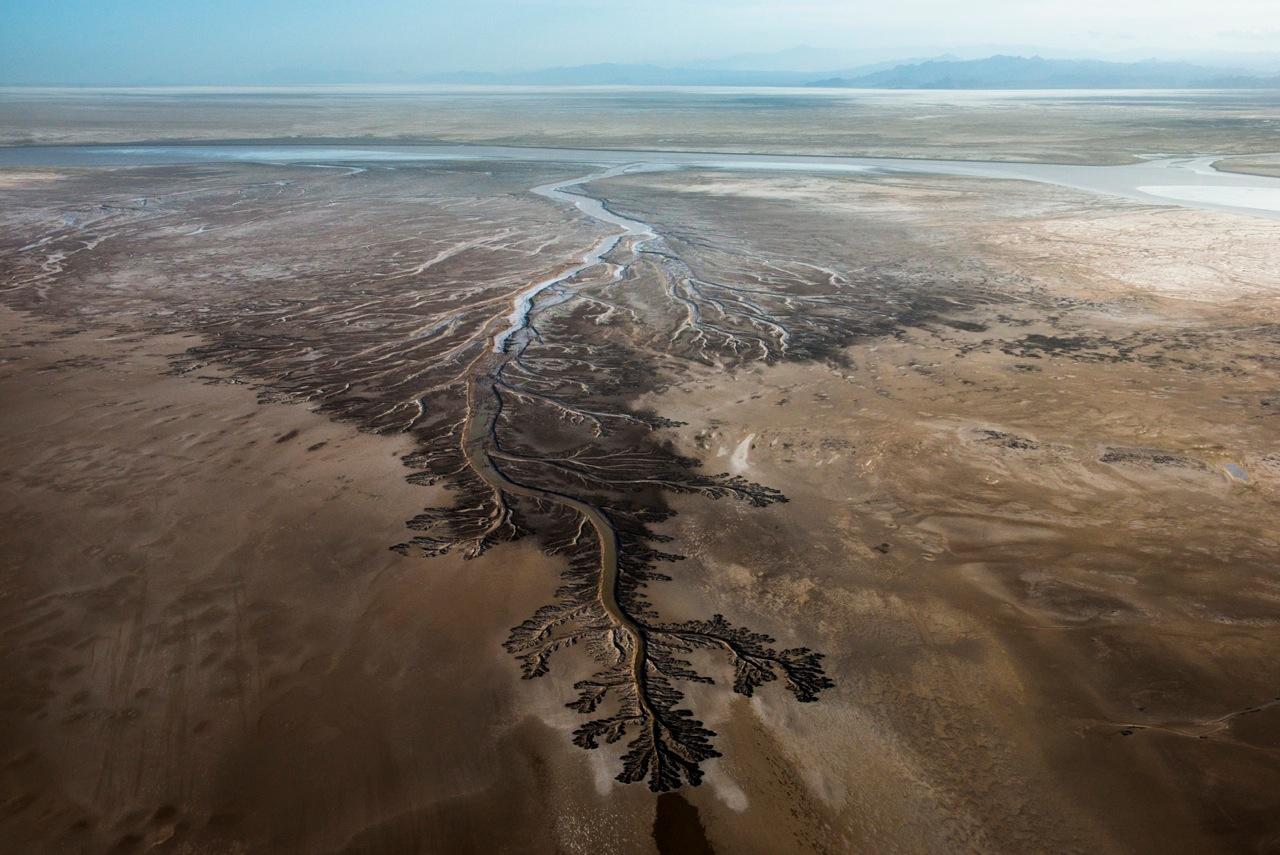
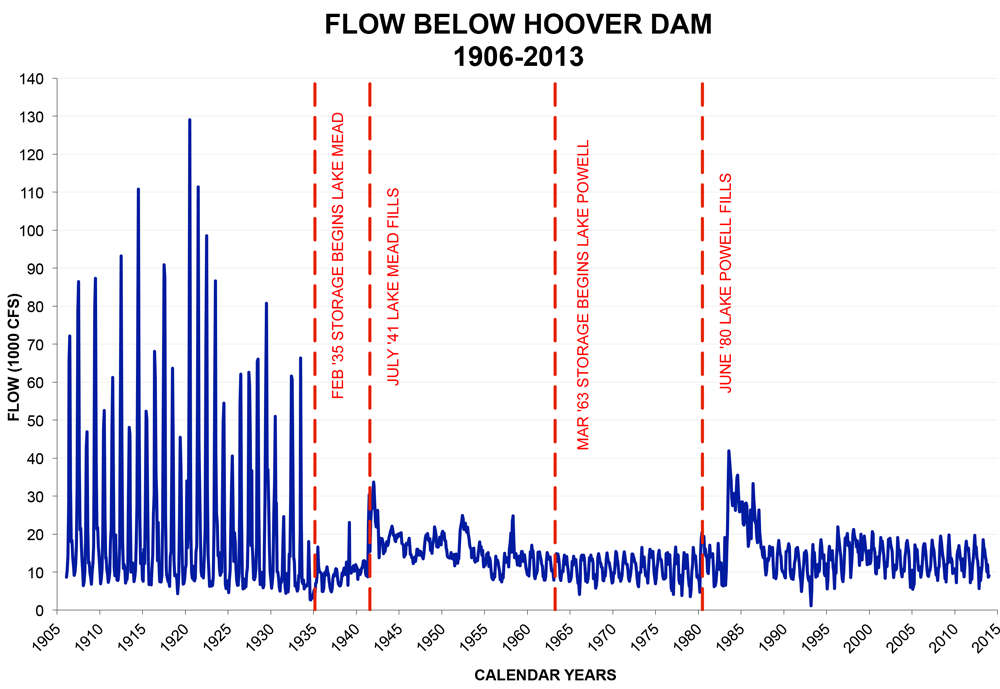


.jpg)