In Part One I wrote about how I had noticed that American Indian Tribes were using their tribal autonomy to do species restoration on their reservations all over the central and western part of the Contiguous US. I was surprised because I hadn’t seen any mention of it as a phenomenon other than one article in the New York Times. It turns out it has been quietly happening for some 30 years or more.
I meant for this post to be a survey of all that is happening, from black footed ferrets to buffalo, but I got so much info on the buffalo I have decided to make a post just on it, Tribal Buffalo Restoration, and then do another final post on the other species that have been popping up (in the case of Prairie Dogs and Black Footed Ferrets, quite literally) all over the west. So this is part two of a three part series.
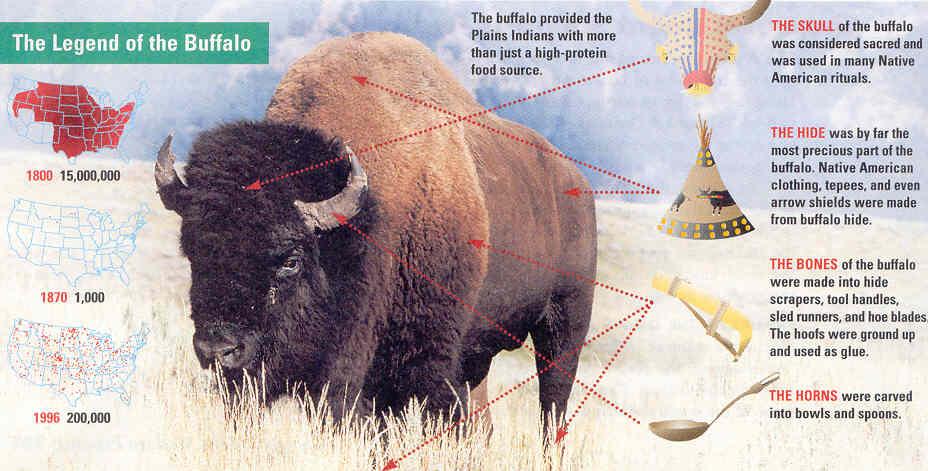
Right now is the golden age of the return of the Buffalo.. it’s happening all over the west, 120 or so conservation herds and growing, in addition to countless meat herds, and it feels like half of those restorations are on government land, and half are on Reservations, and as I dig, a lot of the groundwork was laid as early as the 80’s, and the herds are now in some cases becoming big and viable wild herds.
The numbers reflect that that is indeed true. After a quick but deeply informative interview with the head of the Inter Tribal Buffalo Council, a gentleman by the name of Jim Stone from the Dakotas, I now feel like a bit of an expert on all this, and it’s true, according to Jim, there are about 60 preservationists herds in the west, herds managed for pure ecosystem restoration, kind of to that National Park System level of ecosystem restoration, bu government agencies and even the World Wildlife Fund and the Nature Conservancy, and then there are about 60 herds that are for the Indians ( Native Americans if you like, they usually don’t tend to mind either way).. and by the Indians, and they have a neat and different perspective on it, but all roads lead to Rome, Rome being that they get them on the land where they should be, grow the numbers and maintain herds that help secure the genetic diversity and survival of not only this species but all the interlocking species of the Midwestern and Western fauna and flora. The distinction is, and Jim will tell you this flat out.. these buffalo ain’t just for looking at, they are for eating and enjoying and maybe even taking part in ceremonial life as well.. they aren’t museum pieces, but they are gonna be there all the same, disturbing and restoring the land, snorting and galloping and doing what buffalo do. The ITBC distinguishes itself from the mostly government herds on one side and the commercial herds on the other side by being a bit of both. They are there to meet a lot of goals, from Tribal self sufficiency to ecological restoration to pride and fun, and that’s the way it was 400 years ago so why not have it be that way again. Jim will tell you, there weren’t even Midwest buffalo without Indians, not since the last Ice Age anyhow.. they grew on that land together as the glaciers receded some 10,000 years ago, so why screw it up with too many rules now.
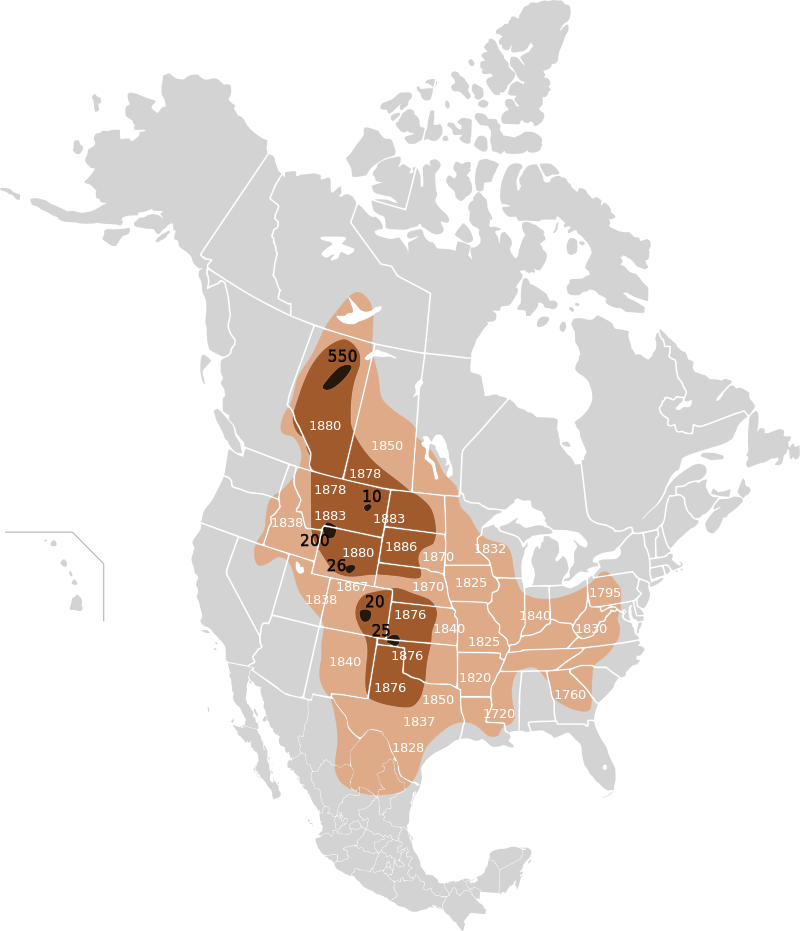
The Story goes like this.. we all know how it started 15 million buffalo charging over the plains, and in woodlands and meadows from the Alleghenies at least clear out to the west coast. Then the Europeans came. They gave horses and rifles to the tribes, but it didn’t do to the natural balance nearly what westward expansion, trains and barbed wire did to the prairie.. wiped the herds out until they were down to about 2,000 individuals of Bison Bison at the turn of the last century. In a story that would be familiar to the followers of my Elk posts and many other conservation sagas, conservationists like Roosevelt and Horneday stepped in to cease the almost extinction as the progressive era began and created the first public conservation and preservation herds in places like Yellowstone, the Henry Mountains etc. From perhaps 70% of the Continental US, they were down to two small herds on small bits of land.

A lot of these herds were created by one or two tribal members who just got a flea in their bun to make things happen. In the casual way of reservation life, sometimes it was just as simple as finding where some buffalo were and getting them, or to quote “Some tribal man or wife and got em and kept em here!”. There was always a sponsor of some sort who felt it was important and did the work. As Jim pointed out, many of these tribes didn’t have wildlife or food programs at first, and some still don’t. I bet a few designate one person to represent them because the ITBC needs a point of contact!
While I’ll write more about the NAFWS in the next post, the hero’s of this post are it’s offshoot about ten years later in the early 90’s, 1992 to be exact with 7-12 tribes. a group called the ITBC, the Inter Tribal Buffalo Council. People started to feel that there were so many buffalo issues, it was so popular, that it needed it’s own group. The original members were mostly from the northern plains with some token Wisconsinites and a group or two from the Southwest Pueblos. Today in 2016 the ITBC has a membership of 60 tribes in 19 states, some 52 of which have at least a few bison, up to the grand wild herds that first got my attention to write any of this last year on about 3 reservations, and growing. As I said before, they have a purpose that puts the tribes first. They are not Buffalo-centric as the preservationists are, they are Tribal-centric, but it works out pretty well for all involved. You can’t hunt bison on federal lands, but you can on Indian lands, but it doesn’t mean that they aren’t meeting all the other goals of restoration ecology as well, they just like to eat, and they have been eating buffalo for ten thousand years. Unlike a lot of regular american producers represented by groups like the National Bison Association and a lot of local groups, they don’t have much pressure to maximize their return on investment. They are tribes, not businesses, so they have latitude to meet as many goals as they see fit.
While the holy grail of Ecosystem restoration is obviously free ranging tribes, it is worth nothing that the majority of their tribal herds are not, maybe 40 of them or more. They are either pen stocked, or contained geographically, but for the survival of the bison, it’s great for genetic diversity and for whatever land they inhabit, which they treat much better than their usual tribal competitors, European Sheep and Cattle. Some of the reservations are small so Free Ranging Herd’s are not viable, and others have Cattle and Sheep on them so it’s a it of a negotiation to get the Tribe to accept a newcomer. In most cases Jim said that it was one tribal member who got really passionate about it, and reminded his fellow tribesman of what was. The pen stocked herds help supplement local diets and offer ceremonial parts and even craft and other secondary product options.
An example of one of these small managed Herds is with the Oneida Tribe of Wisconsin. While buffalo did roam in small amounts through the woods of Wisconsin in the days of Old, it would not have been in the numbers that Thundered along the planes, so this is in keeping with the local ecology to some degree.
http://www.oneidanation.org/farm/page.aspx?id=3902
You can see from the information provided that they are basically farm raising organic or near organic Bison for slaughter. It’s not exactly ecological restoration but for the acres they live on, but it’s a nice start and a good idea culturally and environmentally.
Now onto the big herds, the ones that are in some way full restoration of Buffalo to the ecosystem. Now they might not be introducing wolves as well, their partner in population control, but they are moving across the west at their own pace, and it could be argued the populations need to grow on their own to be capable of surviving such an onslaught someday, and furthermore, Indians don’t necessarily want that competition. They can think of plenty of things to do with the ones they take. What they don’t mind is free ranging herds on some of their larger reservations where the land used to have them and can sustain them. I haven’t heard it said but it’s my hunch that they are easier on the land than Cattle, move around more and disturb the land in a way more appreciated by the other local fauna who co-evolved with them. The Navajo Reservations of the 4 corners, which it has been mentioned to me have a fondness for sheep herding of all things, are one place I have seen erosion issues and degradation associated with cattle herding. I once drove through it, conscious to avoid the human wolves of the tribal police variety who seem to love speed traps, and saw more than a few dust storms that looked out of place despite my desert surroundings. as a contrast to this, Buffalo are what are described as Intelligent browsers. Since they evolved with the local flora, they have better instincts for preserving it to keep growing. There are other animals like bird species that have adapted to taking advantage of the ways in which they disturb the prairies they dwell in. They are the antithesis of a goat, which eats anything and everything it can get it’s hands on.
The tribes who have hit the ultimate mark by this writers standards are these:
Crow Tribe of Montana
Fort Belknap A’aninin and Nakota of Montana Yellowstone NP pure bred
Fort Peck Assinibone and Sioux of Montana Yellowstone NP pure bred
Northern Cheyenne of Montana
Tesuque Pueblo of New Mexico
Uintah and Oouray Ute Tribe of Utah
Pubelo of Pojoaque (this is a tiny res in northern NM, 3 square miles, but it manages a herd on nearby Rio Mora Wildlife Refuge)
Yankton Sioux of South Dakota
click here for the full list
When I asked Jim who might be another great candidate for a free ranging tribe he didn’t hesitate long before mentioning the Cherokee of Oklahoma as being one of the places where free ranging herds had room to grow if allowed to. They are growing a herd taken from NPS herds in South Dakota and North Dakota but they are still kept in a fairly large enclosure as their numbers grow into the hundreds. It’s all about expanding herds and in some ways tolerance he said, balancing environmentalism, conservationism, commercial and sustainability issues, but these free ranging herds go out on a limb towards the fruit of land restoration.
There is still a lot going on in this world. Indians have become the buffalo wranglers of note since they have so much experience, with the feds sometimes borrowing their expertise. Things as common as a roundup for inoculations and testing require a skill and experience no longer commonplace, and sometimes the feds and other conservation groups come to the tribes to get it done. There is discussion of the USFWS turning over some or all management and possession of the National Bison Range, a smallish preserve with a herd numbering in the mid hundreds in western Montana, to nearby Salish and Cootney tribes. If so, this wouldbe yet another Free Ranging herd to add to the list. Montana really does seem like the hotbed of restoration and growth of the wild Bison, not just the wild tribal Bison, and not just thanks to Ted Turner anymore.
Much of the work is reportedly grant driven, with the feds through USFWS and other entities handing out money to get projects done that the tribes can’t self fund. One notable recently granted project was for wildlife corridors in Salish country that might someday support wild bison.
http://www.fws.gov/mountain-prairie/tribal/twg.cfm
On the Fundraising front, in addition to ITBC, two organizations have popped up to raise money for this cause. I can’t say vouch for them one way or the other, but all effort tends to be good effort. They are the
http://www.tankafund.org/about and
For more information on the Tribal Buffalo Movement, check out the ITBC website, or check out the Tribal Guide to Buffalo Management, which was written in part by Jim Stone of the ITBC. Another resource is a book called Buffalo Nation by Ken Zontek who followed this movement and had the courage and the brains to write about it for the printing press.
In addition to the ITBC, two organizations that exist but I know very little about have arisen, the Tatanka Fund and the Adopt a Buffalo Program from the Sacred Ground Coalition.. http://www.adoptabuffalo.com/ have a peek if you wish..
Hope doesn’t always come exclusively from the future.. for me, perhaps as with some of the more environmental and nostalgic of the Native Americans involved in these programs, hope comes from wanting to make the future as great as we know the past was.
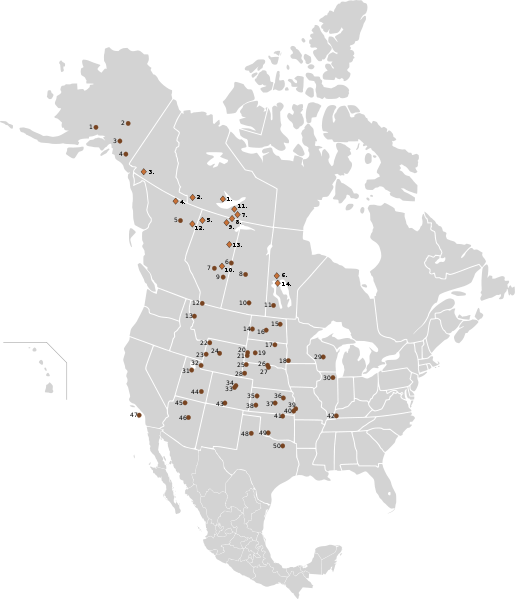 |
| modern buffalo herds of North America c 2014? |