Categories
bison buffalo Ecological Restoration Ecology first nations native americans reservation species reintroduction tribal

First Nations become First Restorationists Part II: A Bison Case Study

In Part One I wrote about how I had noticed that American Indian Tribes were using their tribal autonomy to do species restoration on their reservations all over the central and western part of the Contiguous US. I was surprised because I hadn’t seen any mention of it as a phenomenon other than one article in the New York Times. It turns out it has been quietly happening for some 30 years or more.
I meant for this post to be a survey of all that is happening, from black footed ferrets to buffalo, but I got so much info on the buffalo I have decided to make a post just on it, Tribal Buffalo Restoration, and then do another final post on the other species that have been popping up (in the case of Prairie Dogs and Black Footed Ferrets, quite literally) all over the west. So this is part two of a three part series.
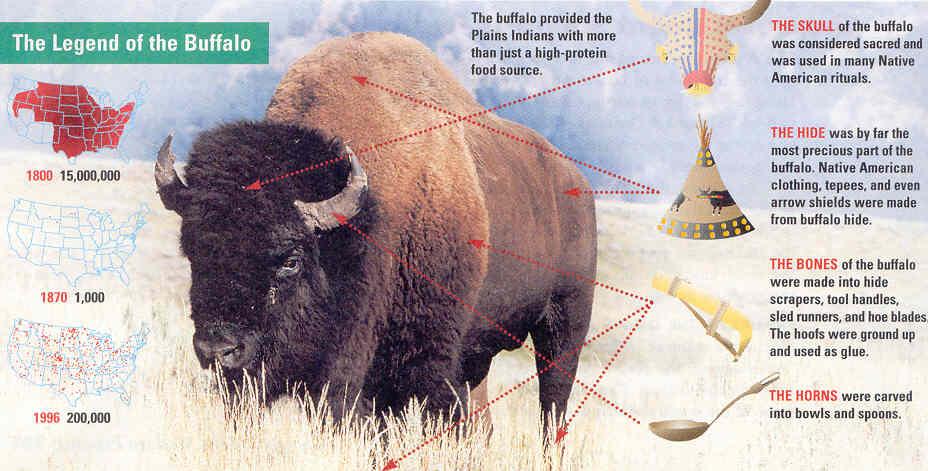
Right now is the golden age of the return of the Buffalo.. it’s happening all over the west, 120 or so conservation herds and growing, in addition to countless meat herds, and it feels like half of those restorations are on government land, and half are on Reservations, and as I dig, a lot of the groundwork was laid as early as the 80’s, and the herds are now in some cases becoming big and viable wild herds.

The numbers reflect that that is indeed true. After a quick but deeply informative interview with the head of the Inter Tribal Buffalo Council, a gentleman by the name of Jim Stone from the Dakotas, I now feel like a bit of an expert on all this, and it’s true, according to Jim, there are about 60 preservationists herds in the west, herds managed for pure ecosystem restoration, kind of to that National Park System level of ecosystem restoration, bu government agencies and even the World Wildlife Fund and the Nature Conservancy, and then there are about 60 herds that are for the Indians ( Native Americans if you like, they usually don’t tend to mind either way).. and by the Indians, and they have a neat and different perspective on it, but all roads lead to Rome, Rome being that they get them on the land where they should be, grow the numbers and maintain herds that help secure the genetic diversity and survival of not only this species but all the interlocking species of the Midwestern and Western fauna and flora. The distinction is, and Jim will tell you this flat out.. these buffalo ain’t just for looking at, they are for eating and enjoying and maybe even taking part in ceremonial life as well.. they aren’t museum pieces, but they are gonna be there all the same, disturbing and restoring the land, snorting and galloping and doing what buffalo do. The ITBC distinguishes itself from the mostly government herds on one side and the commercial herds on the other side by being a bit of both. They are there to meet a lot of goals, from Tribal self sufficiency to ecological restoration to pride and fun, and that’s the way it was 400 years ago so why not have it be that way again. Jim will tell you, there weren’t even Midwest buffalo without Indians, not since the last Ice Age anyhow.. they grew on that land together as the glaciers receded some 10,000 years ago, so why screw it up with too many rules now.
The Story goes like this.. we all know how it started  15 million buffalo charging over the plains, and in woodlands and meadows from the Alleghenies at least clear out to the west coast. Then the Europeans came. They gave horses and rifles to the tribes, but it didn’t do to the natural balance nearly what westward expansion, trains and barbed wire did to the prairie.. wiped the herds out until they were down to about 2,000 individuals of Bison Bison at the turn of the last century. In a story that would be familiar to the followers of my Elk posts and many other conservation sagas, conservationists like Roosevelt and Horneday stepped in to cease the almost extinction as the progressive era began and created the first public conservation and preservation herds in places like Yellowstone, the Henry Mountains etc. From perhaps 70% of the Continental US, they were down to two small herds on small bits of land.

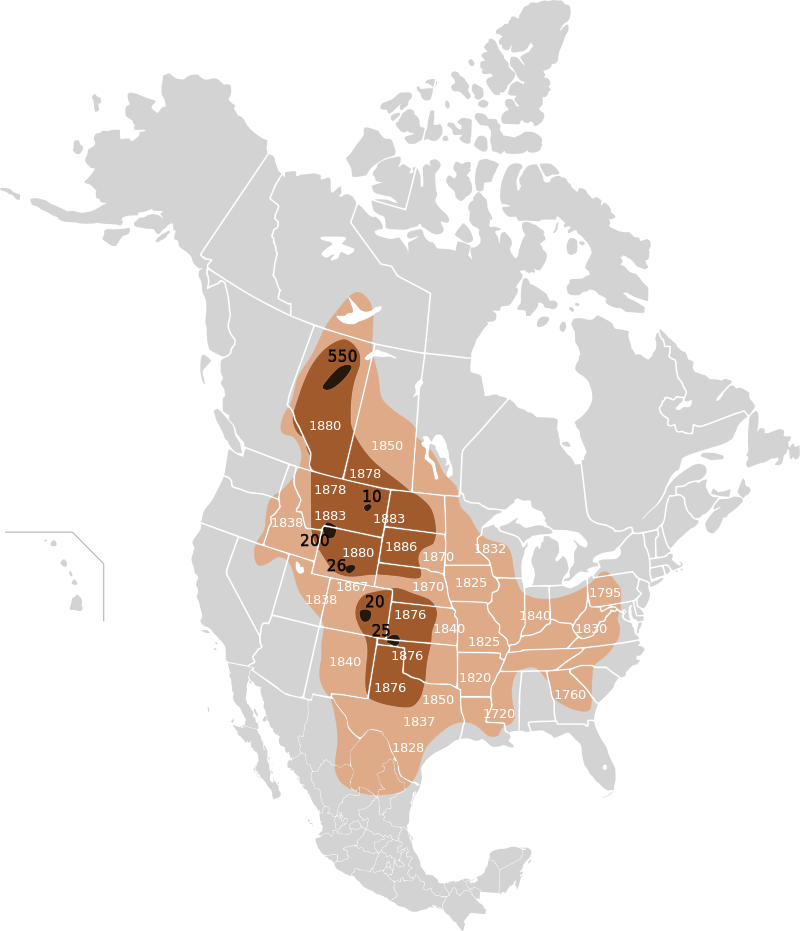
On reservation lands they suffered the same or similar fates. many reservations were land that had already been eaten over, or suffered from the destruction of the large moving herds perhaps hundreds of miles from where they were. The Dawes Act of 1887 conspired to privatize land to integrate herds, fracturing the ownership of many reservations and undermining tribal unity and governance. Other herds that might have been taken from the surviving herds or other remnants were destroyed by the power of the Cattle industry to stamp out TB and Burcellosis in the 1930’s where progress had been made towards restoration on a few reservations.
Time went by as the conservation herds stabilized, the Parks became successes, and tribes tried to regrow on their native lands now reservations, or grow onto reservations they were deported to from lands further east. As time went on they had a resurgence of patriotism with the American Indian Movement in the 70’s and started to see opportunities in their autonomy. While mostly a casual affair, they figured out ways to get by in the new way of doing things, with casinos, tax free opportunities, and in using the land. They began to develop tribal fish and wildlife programs to do similar things to their state and federal counterparts, and the more radical and passionate of them started to agitate for better environmental ethics and restoration of the way the land was before the white man came west. Why eat beef from the store when you can eat bison from the land? Logic began to return.
A lot of these herds were created by one or two tribal members who just got a flea in their bun to make things happen. In the casual way of reservation life, sometimes it was just as simple as finding where some buffalo were and getting them, or to quote “Some tribal man or wife and got em and kept em here!”. There was always a sponsor of some sort who felt it was important and did the work. As Jim pointed out, many of these tribes didn’t have wildlife or food programs at first, and some still don’t. I bet a few designate one person to represent them because the ITBC needs a point of contact!
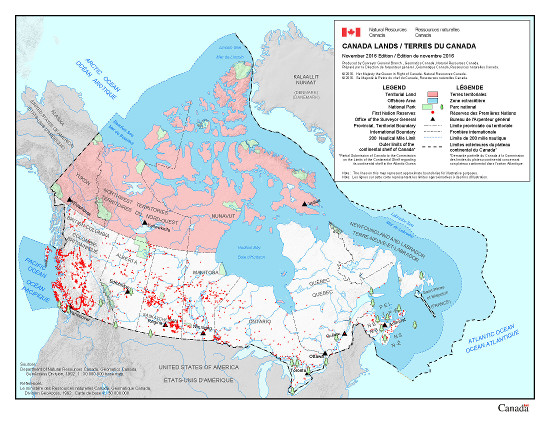
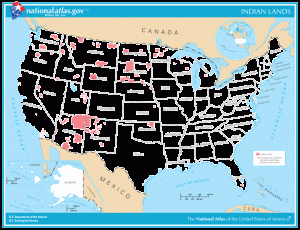
At some point these wildlife programs on all the reservations got together and created an organization to coordinate all their efforts, to have a common voice and a place to share their experiences and help each other in 1983, some 33 years ago, after what I imagine was a period of informal coordination between the more active tribal wildlife programs. It was called the Native American Fish and Wildlife Society, (NAFWS) and today might have 225 members plus Alaska villages. To the unfamiliar, Alaska doesn’t have a reservation system (with one exception in SE, the Metlakatla Tsimshian tribe. ) but instead is organized around something called the Alaska Native Claims Settlement Act, signed by old Tricky Dick Nixon in 1971. Instead of creating reservations, it created corporations and private land ownership for all the unclaimed lands of Alaska to be given to the native groups through the corporations. They have 45 million acres split among about 100,000 Eskimos and Indians, compared to 54 million acres split among 5.4 million Native Americans in the lower 48. It’s collectively about 5% of the surface area of the US. For perspective, the National Parks cover about 14% of the US. Not a bad chunk of land, but a bit rough to think they used to have it all, but they have moved on from worrying about that to taking care of what they have in most cases.

While I’ll write more about the NAFWS in the next post, the hero’s of this post are it’s offshoot about ten years later in the early 90’s, 1992 to be exact with 7-12 tribes. a group called the ITBC, the Inter Tribal Buffalo Council. People started to feel that there were so many buffalo issues, it was so popular, that it needed it’s own group. The original members were mostly from the northern plains with some token Wisconsinites and a group or two from the Southwest Pueblos. Today in 2016 the ITBC has a membership of 60 tribes in 19 states, some 52 of which have at least a few bison, up to the grand wild herds that first got my attention to write any of this last year on about 3 reservations, and growing. As I said before, they have a purpose that puts the tribes first. They are not Buffalo-centric as the preservationists are, they are Tribal-centric, but it works out pretty well for all involved. You can’t hunt bison on federal lands, but you can on Indian lands, but it doesn’t mean that they aren’t meeting all the other goals of restoration ecology as well, they just like to eat, and they have been eating buffalo for ten thousand years. Unlike a lot of regular american producers represented by groups like the National Bison Association and a lot of local groups, they don’t have much pressure to maximize their return on investment. They are tribes, not businesses, so they have latitude to meet as many goals as they see fit.
While the holy grail of Ecosystem restoration is obviously free ranging tribes, it is worth nothing that the majority of their tribal herds are not, maybe 40 of them or more. They are either pen stocked, or contained geographically, but for the survival of the bison, it’s great for genetic diversity and for whatever land they inhabit, which they treat much better than their usual tribal competitors, European Sheep and Cattle. Some of the reservations are small so Free Ranging Herd’s are not viable, and others have Cattle and Sheep on them so it’s a it of a negotiation to get the Tribe to accept a newcomer. In most cases Jim said that it was one tribal member who got really passionate about it, and reminded his fellow tribesman of what was. The pen stocked herds help supplement local diets and offer ceremonial parts and even craft and other secondary product options.
An example of one of these small managed Herds is with the Oneida Tribe of Wisconsin. While buffalo did roam in small amounts through the woods of Wisconsin in the days of Old, it would not have been in the numbers that Thundered along the planes, so this is in keeping with the local ecology to some degree.
http://www.oneidanation.org/farm/page.aspx?id=3902
You can see from the information provided that they are basically farm raising organic or near organic Bison for slaughter. It’s not exactly ecological restoration but for the acres they live on, but it’s a nice start and a good idea culturally and environmentally.
Now onto the big herds, the ones that are in some way full restoration of Buffalo to the ecosystem. Now they might not be introducing wolves as well, their partner in population control, but they are moving across the west at their own pace, and it could be argued the populations need to grow on their own to be capable of surviving such an onslaught someday, and furthermore, Indians don’t necessarily want that competition. They can think of plenty of things to do with the ones they take. What they don’t mind is free ranging herds on some of their larger reservations where the land used to have them and can sustain them. I haven’t heard it said but it’s my hunch that they are easier on the land than Cattle, move around more and disturb the land in a way more appreciated by the other local fauna who co-evolved with them. The Navajo Reservations of the 4 corners, which it has been mentioned to me have a fondness for sheep herding of all things, are one place I have seen erosion issues and degradation associated with cattle herding. I once drove through it, conscious to avoid the human wolves of the tribal police variety who seem to love speed traps, and saw more than a few dust storms that looked out of place despite my desert surroundings. as a contrast to this, Buffalo are what are described as Intelligent browsers. Since they evolved with the local flora, they have better instincts for preserving it to keep growing. There are other animals like bird species that have adapted to taking advantage of the ways in which they disturb the prairies they dwell in. They are the antithesis of a goat, which eats anything and everything it can get it’s hands on.
The tribes who have hit the ultimate mark by this writers standards are these:

Crow Tribe of Montana
Fort Belknap A’aninin and Nakota of Montana    Yellowstone NP pure bred
Fort Peck Assinibone and Sioux  of Montana      Yellowstone NP pure bred
Northern Cheyenne of Montana
Tesuque Pueblo of New Mexico
Uintah and Oouray Ute Tribe of Utah
Pubelo of Pojoaque (this is a tiny res in northern NM, 3 square miles, but it manages a herd on nearby Rio Mora Wildlife Refuge)
Yankton Sioux of South Dakota
click here for the full list

When I asked Jim who might be another great candidate for a free ranging tribe he didn’t hesitate long before mentioning the Cherokee of Oklahoma as being one of the places where free ranging herds had room to grow if allowed to. They are growing a herd taken from NPS herds in South Dakota and North Dakota but they are still kept in a fairly large enclosure as their numbers grow into the hundreds. It’s all about expanding herds and in some ways tolerance he said, balancing environmentalism, conservationism, commercial and sustainability issues, but these free ranging herds go out on a limb towards the fruit of land restoration.
There is still a lot going on in this world. Indians have become the buffalo wranglers of note since they have so much experience, with the feds sometimes borrowing their expertise. Things as common as a roundup for inoculations and testing require a skill and experience no longer commonplace, and sometimes the feds and other conservation groups come to the tribes to get it done. There is discussion of the USFWS turning over some or all management and possession of the National Bison Range, a smallish preserve with a herd numbering in the mid hundreds in western Montana, to nearby Salish and Cootney tribes. If so, this wouldbe yet another Free Ranging herd to add to the list. Montana really does seem like the hotbed of restoration and growth of the wild Bison, not just the wild tribal Bison, and not just thanks to Ted Turner anymore.
Much of the work is reportedly grant driven, with the feds through USFWS and other entities handing out money to get projects done that the tribes can’t self fund. One notable recently granted project was for wildlife corridors in Salish country that might someday support wild bison.
http://www.fws.gov/mountain-prairie/tribal/twg.cfm
On the Fundraising front, in addition to ITBC, two organizations have popped up to raise money for this cause. I can’t say vouch for them one way or the other, but all effort tends to be good effort. They are the
http://www.tankafund.org/about and
For more information on the Tribal Buffalo Movement, check out the ITBC website, or check out the Tribal Guide to Buffalo Management, which was written in part by Jim Stone of the ITBC. Another resource is a book called Buffalo Nation by Ken Zontek who followed this movement and had the courage and the brains to write about it for the printing press.
In addition to the ITBC, two organizations that exist but I know very little about have arisen, the Tatanka Fund and the Adopt a Buffalo Program from the Sacred Ground Coalition..  http://www.adoptabuffalo.com/  have a peek if you wish..
Hope doesn’t always come exclusively from the future.. for me, perhaps as with some of the more environmental and nostalgic of the Native Americans involved in these programs, hope comes from wanting to make the future as great as we know the past was.
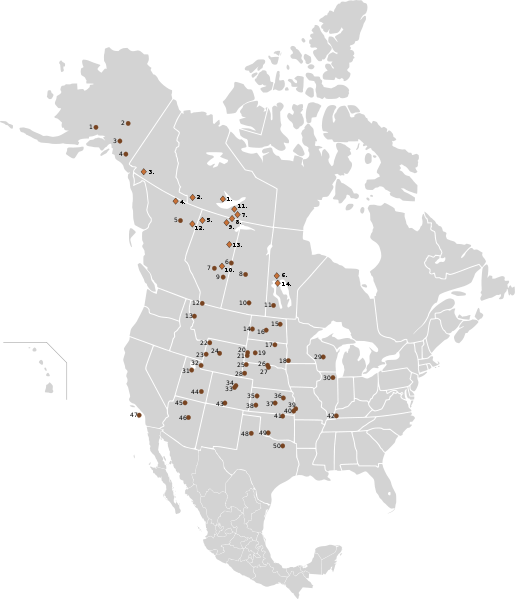
Current Distribution
modern buffalo herds of North America c 2014?
Categories
American Indians Ecological Restoration first nations native americans Re wilding species reintroduction Tribal Land Restoration

First Nations become First Restorationists: How Native American Tribes are Cutting Through Federal Red Tape by Doing Species Reintroduction on Tribal Lands Part 1

This is a pretty simple idea, and I wish the New York Times hadn’t beaten me to writing about it first. I better write about it better.
The gist of it is this:

There have been dozen’s of animal species extirpated, which is a fancy word for hunted out, poisoned out, or habitat destroyed out of wide portions of their range in North America, most particularly the inhabited parts south of the Arctic. Think of the pieces I wrote on Elk, or one I plan to write on the Plains and Wood Buffalo.. they used to roam free in Pre-Colombian America, before a combination of disease, colonization, wars, barriers and deforestation and treaties closed the American Frontier sometime in the late 1800’s.. it had taken about 400 years to completely disfigure the landscape and interrupt the ecosystems almost beyond recognition from the first arrival of European man in any significance. It had created one of the world’s most fascinating nations, but it had come at a cost to both the original inhabitants and the flora and fauna. What had been places for Buffalo to roam hundreds of miles were now criss crossed by barbed wire. Forests where the Lynx or the Elk had roamed had been cut down for timber for firewood and building materials worldwide. Huge swamps like the Great Kankakee had been filled in for farmland, and the deserts had been stunted by cattle grazing. This was the new reality of America: not a corner of the country had escaped some sort of monetization and degradation, and it had chased out a lot of species to remote corners to ride out the storm if they weren’t put into extinction entirely.
 The Progressives came in, led by Muir and Roosevelt, Pinchot and Mather, and small parks sprung up to preserve last bits, and legislate what had been informal animal efforts to survive and some human efforts to not put the final blow in by preservation groups. We started National Parks, and then State and Local Parks, as much for recreation as for Biodiversity and even single species preservation. The Department of Interior grew, but then under the second Roosevelt and the Acts of the great depression we bought up huge tracts of neglected and abused forestland and nursed them back to health for both economic and ecological reasons, creating National Forests and Nature Preserves and Wildlife Preserves, and National Grasslands Etc. Etc. through the Department of Interior and it’s many reporting organizations like the USFS, USFWS, and the BLM.
But the whole time, one group seemed to shake it’s head, like the famous Commercial from the 70’s of the American Indian who is saddened by so much degradation and litter.

It was the American Indians, who had spread out to Reservations, mostly in the American & Canadian West, where they are called Reserves, from homelands all over the US and Canada. Some where nearby, like the small reservations in the east in places like Connecticut and Florida, and out west, Utah and Arizona and Washington, where it thankfully made contemporary sense to give the Natives land where they already were, and some, as many know from studying the Trail of Tears and it’s many associated displacements, were as much as a thousand miles away in completely different parts of the country with completely different ecosystems, places in Oklahoma where tribes from the North East and Midwest ended up.
The Native Americans, First Nations, or Indians are many of them are comfortable being called, despite it’s now renown as a misnomer, tended to live in rural areas no matter how close or far away from their ancestral homelands, and collectively are reputed to never having lost instincts for the importance of ecology and stewardship. So as not to get caught up in Stereotypes of the Nobel Savage, it’s fair to say that by lifestyle choices and perhaps even some economic ones, they stayed active as hunters, gatherers, fishermen and outdoorsmen, more so than their new neighbors, and never collectively abandoned good stewardship as a virtue, with some notable exceptions like the deforestation of Haida Gwaii. Due to this, based on idealism as well as fact, they became symbolic of ecological harmony, due to famous quotes from people like Chief Seattle and the obvious fact that the Alteration of American Ecology was much more dramatic after the arrival of Europeans. They became symbolic, as if a national image and reminder of the consciousness of a Pre Colombian and Pre Industrialization healthier North America.
This brings us to the present day, and the trend I want to discuss. We have this situation where almost every ecosystem outside of the North of Canada and Alaska has some sort of missing species or link in the food web that used to be there before the real arrival of outsiders en masse in the 1600’s. In some places it’s wolves or grizzlies, Black Bears or Cougars, animals that instill fear in those who raise children and profess to lead a normal American life as predators who might not distinguish between overpopulated white tail deer and a kid playing in a yard. In other places it might be top Ungulates like the Buffalo, Elk or Caribou, maybe the Moose or Key Deer, whose habitat was so altered or diminished that they fell on hard times and were eliminated back to strongholds in the areas established by Governments to preserve them, but it’s a pale shadow of their former ranges. And in rivers and streams, nonnatives like Pike, Salmon, and Zebra Mussels in the Great Lakes, and over fishing, both commercially and by individuals, as well as dam’s, bridges, and other public works projects, screwed up balances and habitats that drove fish species like Great Lakes and Missouri River Sturgeon, all sorts of Trout, and Salmon species throughout the river systems that drain into the Pacific from the Sacramento River north.
Native Americans were not above participating in these eliminations it’s said, and it’s rumored in places like Northern Alaska that the Muskox did not face extinction until the Athabaskans and Inuits got their hands on guns which made them far more effective than they had been in the past at hunting, but they might have been meeting bounties from outsiders, and surely it was controversial. Every species in every place has a different story, ones that have been told, or will be told with a little look at the records, but what is happening now is a neat spin on things, a nice shift in a different direction.
By the end of settlement on Reservations around 1900, the consensus was that these tribes were almost independent entities, free from US government oversight on all but the most major things. They couldn’t commit felonies, but were in almost all other cases allowed to autonomously run their own affairs, including their land management. It didn’t go well in all cases. In Navajo reservations overgrazing can cause huge dust clouds today, and there are many instances of everything from Casino’s to fishing causing environmental headaches, but what has started to happen is that many tribes are using the nimbleness, almost casualness of their small Nations, to repopulate their lands with extirpated species in a way that would take years and millions of dollars for Federal and most state governments to do.
One need look no further than the reintroduction of the Wolf to Yellowstone to see what a long road it can be. The Reintroduction was a huge success, one that has spread all the way to the Cascade Range of Oregon as the Wolf resettles it’s old haunts in the North West, but it took forever, and was and still is contentious. Like so many things in America on that scale, calm negotiation cedes to populism and posturing for all sorts of reasons, and in this particular case the Cattle Industry started screaming bloody murder over a stubbed toe, and the Hunters followed suit, wanting to maintain the comfy last century of them as the only apex species to cull overpopulated prey. People like the Rocky Mountain Elk Foundation, while a friend of more complete eco-systems, took somewhat unconscionable positions to maintain relevance with their main donor base, and two out of three state governors, those of Idaho and Wyoming, acted like jackasses, with only the Governor of Montana taking a measured approach that helped guarantee success.
But what if an ecologically sympathetic municipality or county with large land holdings wanted to do something on their own. Well, in the majority of the country, it would be an uphill battle. Most small governments have to go through state authorities where Cattle, Timber and Industrial interests often hold sway. Even in reintroducing the Wood Buffalo to the great wilds of Interior Alaska the Mining industry was a huge damper on 2 out of the 3 selected spots from all rumor, for fear that a species considered endangered as soon as it is released back into the wild ( a proven breeding pair in the wild of any creature engendered kicks in the ESA) would create addition red tape for miners and other industries in places they might or might not be currently even working.
But what if that Ecologically minded small nimble government was a tribe, and that tribe didn’t even have to answer to a state game board or Governor or anyone, since they have sovereignty over their territory. Now that’s a whole different ball of wax, and recently, and in greater and greater numbers, it seems as if the Tribes and the Wildlife professionals they hire as Wardens and Environmental Officers are catching onto the opportunities of that sovereignty, mixed with maybe a little casino cash in some cases, and are doing in small numbers what requires so much effort and inertia changing for the Federal and State Governments try to do in Large Numbers: They are reintroducing extirpated, AKA locally extinct species, all over the place, and it’s good for all of us!
I first noticed this on a recent Buffalo Hunt near the Ute Indian Reservation in East Central Utah. I was happy back in the great north when an old high school buddy of mine and I began to plan a hang out after a long time not having seen each other. It started to be a plan to go skiing or hang out in Moab in his native Utah and a state that I had gotten to know well over the years, due greatly to my love of the Canyon Lands and the endless possibilities for exploration and beauty there. All the sudden he told me that a buddy of his had pulled a once in a lifetime tag to Hunt Buffalo and that he wanted help. I agreed in the first phone call, and we began to plan to meet around Christmas in Salt Lake City and move out to scout and then hunt in the zone he had been designated, south of Vernal, while staying with some family of my buddies who lived out there. The hunter was a great big and boisterous friend of his we will call Tommy Boy, and Tommy boy had explored his territory and was stymied by it, and good naturedly accepted the offer of help and friendship to be part of his hunt, and the great caper began.
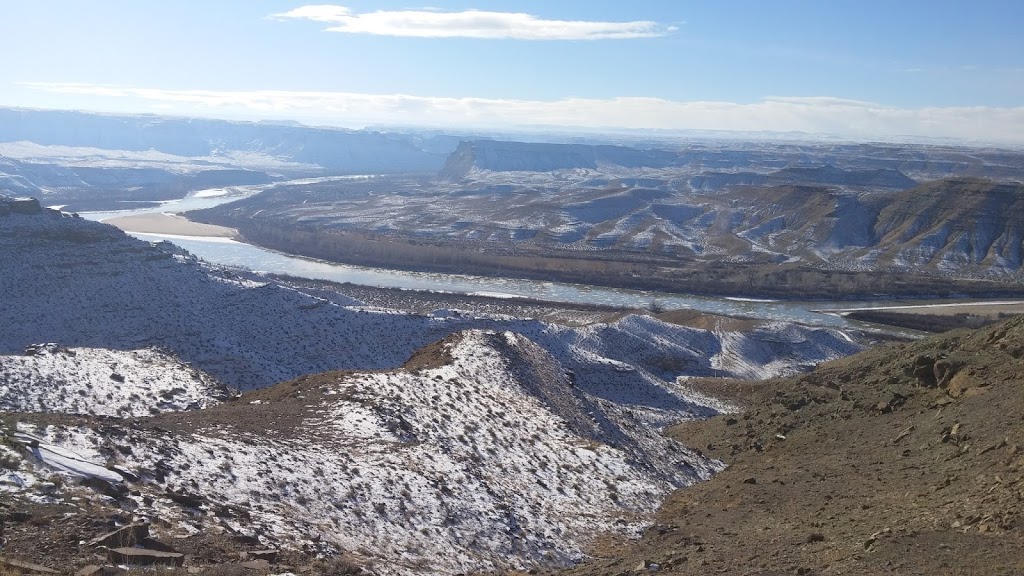
As I researched, I was surprised to be told our territory was in the Book Cliffs. If you have read my writing, you know I am a big nature geek, and I was familiar with only one Buffalo herd in Utah, down in the Henry Mountains, west of the Canyon Lands and one of the remotest areas of the Contiguous United States (it was the last area to be mapped in the late 1800’s of the entire contiguous 48 states). I didn’t know that there was another wild herd, as the effort it takes to establish one and mollify ranchers that they won’t pass diseases to their stock has made the Buffalo/ Bison lag well behind the Elk in reintroduction, also since they don’t have the backing of an organization as well funded and effective  as the Rocky Mountain Elk Foundation.
What had happened to the best of my ability to research was this:
The Ute People live on three reservations across Eastern Utah and Western Colorado. Members of the Northern Branch, 20,000 strong, living on the Unitah and Ouray Reservation at the top of the Book Cliffs, decided to take a few Buffalo from a Montana Herd in 1986.  28 more came from the Henry Mountains in 1993, and now the whole herd counts in the hundreds, 550 for the whole book cliffs is thought to be ideal, and have been managing them and letting them grow in numbers ever since.

The State Plan for Bison in the Book Cliffs

They both allow a hunt for their tribe members and the state of Utah was forced to get into the game, because Bison don’t seem to care too much about boundaries in one of the most forage rich areas in the west, issuing what are know as ‘once in a lifetime permits’ by lottery to Utah resident hunters. Basically, you can win one by lottery when you put in for your hunting tags, and the hunting plan as we learned is this: High Snows force the Bison out of High territory on the Res and into bottom lands to the north, near the Green River. If you are lucky and it snows enough, you will find one near a place called Algers Pass. People made it pretty clear.. don’t go on reservation land to find them.. they won’t like that and they will catch you.. just let em come to you.

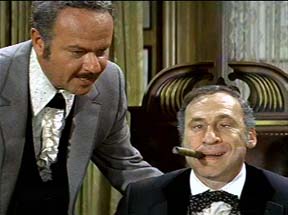
We didn’t know this until pretty late in the game, although we had a good time bombing all around our game area over the course of a few weekends before The Big Kill. Not only Buffalo, the book cliffs were loaded with more mule deer, Elk, wild horses and pronghorn than I knew existed, plus some signs of Mountain Lion were present (we found a cave filed with kill) and is likely the best Wolf Territory yet undiscovered by the Yellowstone packs spreading out. They have made it all the way to Western Oregon, but Utah and it’s crafty coyote of a Governor Gary Herbert ( doesn’t he look like Governor Lapetamine from Blazing Saddles?

), has a 50 dollar bounty on coyotes going, hoping for some accidental shootings before the endangered species act triggers a major sovereignty showdown between a state dominated by Mormon cattle ranchers and natural gas pumpers and the feds if one breeding pair makes it into these tasty hunting grounds in Utah.
Since I am about to go on an expedition for weeks, I am going to call this Part 1 and wrap up with this thought: It occurred to me during the hunt, if this happened with this reservation so quietly here, when every time the Feds do something like this it’s national news, what other tribes have made similar admirable restorational steps?
It turns out dozens, led by dedicated tribal members and their wildlife biologists and game managers, restoring everything from Bison and Elk to Black Footed Ferrets and even fish species.. but that will have to wait until I get back from a great trip to someplace quite far south.. trust me there is a lot here.. sorry for the cliffhanger, but it will be worth the wait… Hopefully when I get back I can flesh out what is a great but quiet positive trend in North American Ecology from perhaps the best place it could come from.. First Americans..