If you have ever been on a boat in a marina, you know what shore power is… you run a plug over the side from the dock, and it’s a special plug you have to fork a ton of money over for at some place like West Marine, no simple land plug will do, for your safety no doubt, and then you can run your toaster and car stereo without having to run your engine or generator… simple stuff right.. well, not if your boat is 364 meters long and uses the power of a medium sized american town.. but truth be told, it almost was that simple.. just a lot bigger.
So I mentioned in my posts how there were these 6 Germans on the boat, but I never mentioned why.. they were contractors I might have said.. that word has so much mystery in the days after Sept. 11, and it’s kind of fun to mess with..it’s so ambiguous that it has become kind of sinister…’Contractor’ now makes people think of Haliburton, Kellog Brown and Root, and Blackwater… War Profiteering and quasi legal waterboarding type stuff… but these guys, these 6 Germans, 3 of whom spoke english and the rest who still had a sense of humor, were in some ways Eco-Contractors. They were a group of Marine Electricians who needed 23 days to do a job, and they used the whole time, wrapped up with like a day to go and some long hours, to install a shore power system. They were all from Hamburg now, but a few were from the old east, a coastal city they told me about called Rostock. Of the 6, 3 spoke English, and they ranged in age from 25 or so to 50, the oldest being the main electrician with like 20 years experience at sea before he settled on this as a profession, and he was the one with the childhood in Rostock I believe (it might have been Kiel, but I think he said Rostock..we spoke of many things, and a ship is about the last place on earth where you have to describe things like the geography of northern Germany instead of just pulling it up on google maps to settle a point) before the wall fell. Dropping down in age where the thoughtful guy with the best english and the taste for British music, Christoph, then Niels, the guy who looked like a World War II Storm Trooper villian, like Vin Diesel only bigger, but who had a heart of gold and loved to fish and joke around. Then there was a cocky guy who reminded me of the cast of The Full Monty.. if it wasn’t for his German, I would have picked him for a mine worker out of north England with a sense of humor and a taste for the ladies.. the rumor was that he was so endowed that he had to wear his regular loose track suits or we would all have been offended. Another mid 30’s guy whose glasses gave him a scholarly look who was neither the biggest trouble maker nor a coward by any means. He had sharp eyes but a kind relaxed demeanor. Then there was Tiny Tim I have joked about before, the little guy who wasn’t so little, it was just that 4 out of the six of them were massive dudes, like Alaskan North Slope Oil Workers or Tongan Rugby Players.. that he looked like the kid of the bunch, and seemed to be struggling with a bit of homesickness and maybe seasickness, although he even had like 2 years experience on the north sea so I might have made a bigger deal about this than it was. They had all worked on ships on the north sea, and the bigger you are in relation to your surface area, the easier it is to keep warm, so it makes sense that these guys were big. On our trip through Kowloon at the end of the journey, before they hit the airport and I hit a hotel, we goofed off for a day seeing the sites, the combination of the 6 of them and me was so surprising to the Locals, who already see a lot of Foreigners, that some women actually asked to have their picture taken with us. We looked like a Viking death metal band dressed up for an uncles 4th wedding. We must have eaten more dim sum than the next 10 tables as well, although when I ordered the chicken feet, the classic westerners gag, it’s fair to say soem food got left on the table.
Anyhow, the story I am trying to tell is not of me and them but of what they were up to. Well, imagine California, and it’s never ending stuggle to clean up the environment.. as much as all the rules in California make my skin crawl, the one place I have to hand it to them is that they are on the cutting edge of Environmental technology and regulation… it’s a damn pretty place, California. I sometimes think that the best place perhaps ever to have lived on earth might have been Santa Barbera in the times of the mission. The word California came from a book that was about an Eden found, and despite the countless people crawling all over it today, the place is beautiful and worth restoring. The fact that Tesla and so many solar manufacturers etc are coming from this state is kind of a testimony to what the place is all about.
So some smart guy in Cali figured out that part of the pollution problem in their two biggest metro areas, LA and The Bay Area, came from the massive ports in the correspondent Long Beach and Oakland harbors.. While they have been clamping down on cars and power plants, these huge ships come sailing in with no environmental controls from the high seas, and while they sit in port they keep at minimum a huge diesel generator or two humming away to power the ship. On the Libra, I think we had 8, each the size of a box truck, and there were at least two running all the time. I have forgotten how many kilowatts they produced, but it was in the hundreds if not thousands. The average american home is usually consuming about 1kw.. so one of these could power maybe 1000 homes.. they were for everything from the lights and instruments and refrigerators to running the pumps for ballast and the huge reefers, the refrigerated containers that were set anywhere from 50 degrees to deep freeze temps of like 30 below. We seemed to have about 30 of them on board on our trip west.. of a possible 10k or so containers, it wasn’t a lot, but they drank power. I think a few of the generators might have been necessary to get the big engine started when we decided to leave port again after the 24 or so hours it usually took to load and unload..
So what the eager minds in Sacramento realized was that if they made these ships turn these generators off, they wouldn’t be pouring the byproducts of relatively inefficiently produced energy into the air and sea, next to their biggest and already most polluted cities. Western Europe, the California of Europe as one might see it, also decided that they wanted the same options. Now I can speculate that it didn’t hurt that they also got to sell this power at a higher rate then the ships produce it at, and that it would crate a few jobs in cali and bring some revenue in.. I would never speculate such craven motives for the bean counters in cali, where self entitlement and imperialness are all part of the deal that goes with fun in the sun, but sticking to the premise that their natural gas plants and occasional windmill and dam can produce this energy more cleanly than the ships diesel generators can, this is a win for the environment.
But how do you make it work? well, on the shore side, I still don’t know.. they had to dig through these container yards and run wires that wouldn’t interfere with the cranes and trucks that roll back and forth loading and unloading containers just feet from the edge of the piers, and then up to the ship. On the boat side, I learned all about it because I even got to work on it for a day in an act as much as out of camaraderie as boredom as we cruised the east china sea, and many a day I would walk by and at least watch the work for 5 minutes or so.
So what they had done is install these two things that looked like steel refrigerators on the two back corners of the boat. There had to be one on each side so they could dock whichever way the port wanted without the danger of 6mw of wire running across the decks. They literally looked like fridge freezer deals, tucked into a steel passageway right over the stern of the ship, where the bosuns throw lines and cleat them underneath the last row of containers. A few times I walked by them as they were working on them and threw them open and pretended to hand out beers and snacks from them. The upper freezer portion would be where the line came in from shore, and the bottom section had a huge switch that would take the wattage and connect it to wires that would run it to some rooms near the engine control room that were the electrical nerve center of the ship. Imagine if your home fuze box was the size of a 6 car garage with huge boxes running in rows that looked like data banks from the 1970’s, or some old computer system from the 50’s. That was where the wires would end up, in another pair of ‘fridges’. So just put the fridge with the switches in and run some wires right.. easy…
Well, don’t forget the boat is 3.5 football fields long.. now, the engine room isn’t that far forward, about a third up, so one football field, but these wires are 3 inches thick with insulation.. I think the guys told me it could handle 6 megawatts.. one per wire.. that’s 1000 homes with the Cuisinart and the TV running. We had to run three or six from each side (forgetting now..it’s been a year!) into a similar fridge sized thing, this one more like a sub zero, in the electrical room. When I first heard about it I don’t think I realized how much metal cutting and welding it would require, and I also never imagined the noise.. the first 30 yards or so had to run down from the boxes into these huge empty rope storage rooms at the back of the ship and below. They were cavernous, like high school gyms… one even had a basketball hoop up if I remember, and they had cool staircases and compartments and structiural members running through them, super james bond stuff, the floors mostly empty except for some equipment that could wind ropes I think. but the downside to these neat spaces is that they were right over the screws, and they were constantly like 100+ db..,clanking metal noises and intense, like a bad horror movie soundtrack, deafening, and cold… the guys had to run the wires, one at a time, down through these spaces on racks they had to make out of metal stock about a foot wide to fasten them down, then snake it to these passageways that ran along the inside of the hull of the ship, and up the 100 yards down these 300 yard long passageways that ran windowless like tunnels the length of the ship, with maybe 5 doors the whole way. It looked like a huge Rube Goldberg conveyor belt going in… I would come by the guys maybe every other day out stretching my legs and sparks would be flying everywhere and the deafening throb of the prop would have us all wearing hearing protection so I would have to wait for them to look up and notice me, and I might make a funny hand signal or just watch for a second, or crawl past trying to make sure my clothes didn’t catch on fire.. Some guys would just silently say hi, engrossed in their work, and I could tell others were going batty in uncomfortable positions jammed between metal deck pieces or on scaffolds and would give me more insane looks than I figured days at sea were making me muster, with often times similarly offensive hand signals to take the stress off. They were bundled up in huge blue overalls and helmets and boots and they would all come back to the superstructure and fight the chill for a while before they even made it to dinner.
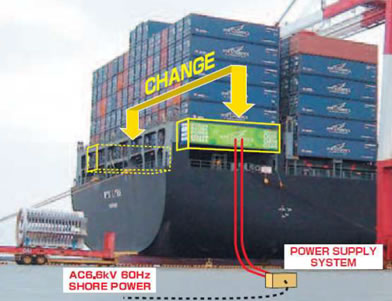 the big container they show on either side of this photo marked Change turned out to not be necessary.
The day I finally figured I could be of some service they were unspooling those great lengths of wire, hundreds of yards worth, black sheathed 1 plus inch weighty lengths of copper, 3 inches total, and like any extension cord, they had to be kind of uncoiled and unwound on the back deck, so I jumped in and just started wrangling these things with them like people showing off a captured 30 ft anaconda… they would slowly feed them from the deck down, hauled by ropes I think, through the contraptions and shelves they had made to the long run down the passageway and into the engine room area. It was like trying to get that draw string back into your favorite old sweat pants on a grand scale.. the spools were huge wooden things maybe 5 ft high that they had a special contraption to stand up and run out. It was a warm day and we were in the East China Sea, and there were Chinese fishing boats bobbing by all the time, and traffic, and it was sunny and almost warm, and the water was muddy and sometimes blue, a departure from the loneliness and dark waters of the north pacific. We would see other ships roll by, and sometimes Nils would take a picture, and they were excited the job was progressing and the sun was shining, and they were out of their thick insulated outfits and down to even t shirts and work gloves.
You see what made this job special was that it was the first time it had been done, at least by them. I was witnessing engineering in action. They had been hired by CMA CGM to do all the boats that had to go through the regulated ports, which like I said were the west coast of the US ports, maybe Vancouver as well, and the ports of Western Europe. They told me there had been one experiment with it so far, and when the ship took up the power, there was a blackout in the nearby town..they thought this was as funny as I did.. kind of a classic case of the meeting of good intentions and age old problems, but time and experience would no doubt iron out these bugs.
A few months ago I was looking up some facts about the Libra and I came across an article on this very thing, and it turns out I wasn’t mistaken that I had come on board at an interesting time and place in the history of shipping and the environment..I had witnessed a small piece of nautical history. Compared to the noise they make and it’s affect on marine mammals, and the completely unfiltered bunker oil exhaust they put out, this is a minor victory in the battle with global warming and the restoration of marine mammals to pre industrial harpoon numbers, but it made for a somewhat more unique trip than my novice seaman experience had led me to realize until now. And thanks to that, I had the relief of having the Germans around.
There are like 20 papers and articles one can find on google about the specific work I witnessed, which is called Cold Ironing, or Alternative Marine Power:
http://shipandbunker.com/news/am/863345-cma-cgm-adopts-modular-cold-ironing-solution
http://www.shipinsight.com/cma-cgm-reduce-co2-emissions-50/
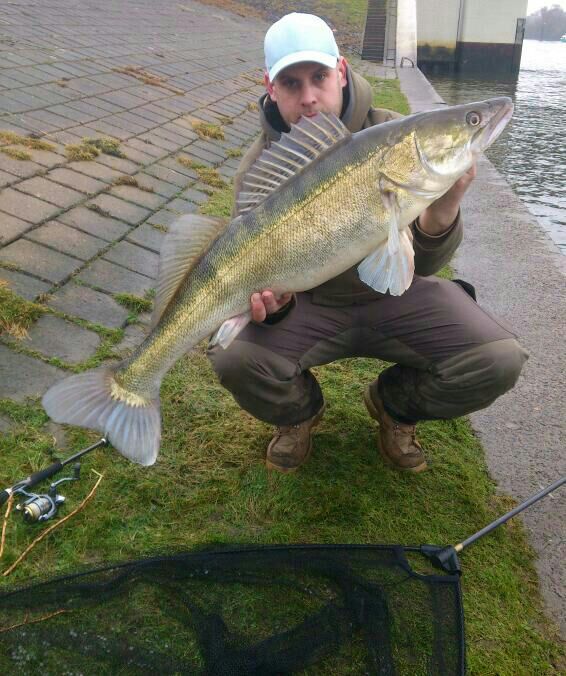
A few weeks later they must have had it all hooked up. They told me it would require another guy to hook it into the ships systems I think. They must have gone back to Cali and back again to China before retuning and throwing the switch. I traded emails with Niels and Christoph and they mentioned they were back at it again after a few weeks home, onto another ship doing the same work. Nils sent me some fishing photos and asked me for an address to send more photos from the journey on disk. I think I might have spaced that but will give him a hollar now. That is one hell of a big fish!
1 reply on “What the Germans were up to.. Cold Ironing, the World’s Largest Shore Power System!”
What the heck, Tom. I thought you stopped writing these, only to just find them in my spam box. Stinks! I’m going to read this and get back to you but I hope you are having a great winter.