Categories
Uncategorized

4 Possible Approaches, Well 5 If You Count Aircraft

As no one has climbed the mountain in 20 years at least, as far as I can tell, due to the two somewhat related issues of FARQ presence and the ‘Sacredness’ issue, the biggest problem in making it to the top of Pico Cristobal Colon is not how to climb it, as that is the fun dilemma of the climbers (although gasping for air about 3/4 up they might beg to differ that there could be any bigger problems in the world), the great dilemma here is the combination of human and geographic influences that make the approach to the likely south side base camp at The 5 Blue Lakes. Here is a list of obvious options I have dreamed up with no input from anyone with experience in the range other than the Military, although the time is coming soon to try to reach some of these people:

1. The Classic Route, from Sea to Summit, along the Don Diego and Palomino watersheds.
2. From Minca
3. The Long Valleys from Guatepuri
4. Over Hill and Dale from Nuagaskimake
5. Flying the friendly skies to the 5 Blue Lakes

Categories
Uncategorized

Approach 2: From Minca

Santa Marta is the Colombian Honolulu, and since this is kind of the beach party town of choice, since Cartagena is more of a kind of Santa Barbera meets Savannah meets South Beach situation, still the domain of the rich, Santa Marta is developing a reputation as the accessible beach town, with Tayrona National PArk it’s Kauai or north shore to explore, Tagonga is it’s backpacker ghetto (dinner there was enough for me..), and Minca it’s mountain outpost, and access point to the Ciudad Perdido, the lost city of the Pre-Colombian Tayrona culture that thrived for a while and was rediscovered in the 70’s, and is now a backpacker pilgrimage, complete with set pit stops and a thriving guiding business. I have not been to Minca, but supposedly you can drive to perhaps even 2000 m by road. This is definitely a safe area from FARC, and has the most foreign presence, therefore might be an easy access above tree line. What I can’t attest to is that you could get to a legitimate base camp for accessing the Pico Cristobol Colon without having to cross some tough ridges head on, which would be logistically difficult to say the least. the Ciudad Perdido, beautiful though it might be, is a 40k walk from Minca, but as far as I can tell,still pretty damn far from the peak as well, and I don’t know that there is any developed trail infrastructure beyond it.. it merits finding out, I just haven’t..
It has been rumored to me that there are guides in Minca who might take you above tree line, but I have been unable to prove this as more than speculation or confusion of trips to the Ciudad Perdido with trips to the High Peaks Area.
Verdict: Inconclusive

Categories
Uncategorized

Approach 1:The Classic Route, Sea to Sierra up the Palomino or Don Diego Rivers

If you were to go the Sourdough way, and decided that the classiest way to approach this dilemma would be to go from the Caribbean Sea, beachside, at 0 feet, up the north side, as climbers are prone to this kind of absolute romanticism, there are two river valleys and a system of trails that might actually work. this would be an exotic endeavor, possibly 5 days in, through the most wild part of the sierra I have seen, both culturally and ecologically. As I went through Messetta on my first excursion, the kid I hired to guide me to the town, since I was miserably lost and stumbled into the ravine he was working in and was spotted by a lady out walking with her kids as undoubtedly out of place, and who proved to be a fun and able guide, even climbing an orange tree as we passed by his house to shake down about 20 oranges for us as I admired the Sierra, told me that from Messetta, about a half day to a day’s walk in, it was 4 more days to the snows, along this muddy trail, an official Camino Real, that we walked on for part of our 1 hour trip, and I followed out to the highway some 8 hours downhill (supposedly I missed s shortcut), and it would go all the way to the last village. So either with backpacks or pack animals, even though you would be passing through at least a handful of Arawaku and Kogui villages, the latter of which might give you issues, it’s possible to make it to the snows from Sea to Summit would be my guess. There is also a waterfall someplace in this area, possibly 200 feet tall. A guide trying to drum up business in Palomino showed me pictures of it, and i think it was called La Cascada Crystal.
The Camino Real, kind of a 5 foot wide unmaintained but certainly passable walking trail, reminiscent to me of the Natchez trace in the American South, was definitely muddy in spots as it was still rainy season, but looked passable for a few days distance at least would be my guess.. it would be a true adventure, but how depleted might a climber be 5 days in. The first half day, especially on the Don Diego, beautiful though it may be, would be in jungle, and through the Don Diegito Canyon (Don Diegito means little Don Diego, -ito meaning little when added to any word in spanish, and the Don Diegito runs off the Don Diego pretty close to sea level and up to Messetta close enough to where you could jump to the Palomino in about an hour if you wanted to, and I believe the Camino Real does this) .. This opens the possibility for all sorts of insect bites and contamination. The jungle would give way to subtropical areas and cleared fields for crops and cattle. I was told that tree line near there would be at about 3800 M, which seemed possible given how warm and humid the air off the Caribbean is. I should just sit down with Google Earth and get that figure for myself.
This would be the classic route, the Mega-Transect of sorts for the Sierra, the undeniable Herculean effort that would make the peak truly sweet. The draw backs are the potential difficulties in Kogui Lands, the steepness of the Mountain from the north, the idea that the base camp and route could be in perpetual shadow during a January Climb, and my lack of knowledge of where a base camp might legitimately be established on that side, although anything is possible. I have yet to recall seeing a lake on that side, although I did see snow, so water would be available, once you made it to the snows, and where there is snow there is runoff, but whether you could follow these rivers is again speculation, especially with pack animals, all the way up to an access point to the mountain. I also must admit, that from where I sat, from about 20 miles away, it was hard to imagine that the rock was that clean. the north side looked like a big black rock slide to me.

Categories
Uncategorized

The 4 Indigenous Groups of the Sierra Nevada de Santa Marta

If you want exotic, if you want indigenous cultures, the Sierra Nevada de Santa Marta has them in spades. I am not talking Indian Casinos and Museaums, I am talking time capsuls, people truly living with the methods of another time, pre enlightenment, with on occasional cell phone thrown in, but it just accents how resilient thier culture has been when it coems flying out of a heavy cloak pocket made of yucca sinew and they start speaking in what sounds like chicken clucks to you. They might keep you from getting to the mountain the way you like, but they sure as heck will intrigue you for a bit, might even charm you as has happened to me with the Arawaku’s and some of the higher elevation Koguis, who are the nuttiest of the bunch as I can tell. I have seen mountainous indigenous people in the Himalayas, and they are charming indeed, and I know them to exists in this form, in their traditional lifestyle, in other parts of the Andes, most notably Bolivia, now Ecuador as I travel, and Peru, and in the Amazon and parts of the frontier region between Venezuela, the Guyanas and Surinam and Brazil, but this is a pretty unadulterated bunch for only 2 and a half hours flight from Miami. I’ll finish the survey by saying that parts of Timor, Indonesia and Papua New Guinea still have indigenous tribes living unadulterated (except for an odd cell phone as usual), as well as areas in Southern Africa, like Namibia and Botswana, and some Eskimo groups up north, but with each passing year the numbers do decline, and about half the languages in the world, 3000 of 6000 are in danger of extinction in the next generation. That is not a fear here, with only one of the four languages of the Sierra Nevada tongues gone, and the other 3 doing quite well.
The tribes in the Sierra come from the Pre-Colombian tribes of the region obviously, and there was a high culture called the Tayrona that seemed to decline sometime in the 1400’s, before Columbus from what I can tell. Their capitol city, now called Ciudad Perdida, Spanish for Lost City, rediscovered in the 1970’s, was over by Minca, above Santa Marta, and as I have mentioned in relationship to security, is now a popular 3-4 day 40 km tourist trek, one I kind of wish I had done, as I poked around the rougher edges of th sierra without a fun kind of hit on the German chick excursion. The tribes in the Sierra either descended from them, or moved into the sierra to escape the movement of the Spanish into the Valleys from their original foot holds on the coast from the beginning of the 1500’s. The Spanish came looking for gold, but eventually moved into agriculture in Colombia as they did all over Latin America. They sent explorations into the interiors, the famed Conquistadors, starting in the 1520’s or so and 1530’s, and started creating towns soon after, although there was a large population of Indigenous already there obviously. The unfortunate fact over all of the Americas is that their numbers were cut usually by 90% by the diseases brought by the Westerners, so that the population densities are higher than assumed by the original writers, perhaps in line with the Sierra today. Valledupar was named after the local chieftain whose settlement might have been there, the same with Mompox. There were other dominant or high cultures in the Magdalena river valley near Mompox, where they undertook to build ditches, dykes for farming, and platforms for living to deal with the inevitable flooding of the cienegas (in this case fresh water swamps and lagoons, although the word can mean salt water ones as well, as with the ones between Santa Marta and Barranquilla) in these areas, and another famous or two tribe south of or near Bogota and one in San Antonio from whence the gold came, often from grave robbing, but these cultures had stone carving and evident contact with the Incas.
Alright,..to the present day.

First a bit of anthropology I guess. The Upper Limit of the Habitation of the Sierra tends to be about 7500 ft, about 2500 meters, because this is the upper extent of Plantain growth in the Sierra, their main staple, according to something I read. This jibes with what I saw. The valleys also seemed to be open well below an alleged tree line of 11,000 ft in spots, down to like 6000 ft above Guatapuri, and I chalk this up to perhaps grazing, lack of sunlight in spots due to the steepness and the east west running ridges, or just me not having the eyes to distinguish trees from where I stood.

These are the 4 tribes of the Sierra
Kogui

Arawaku

Wiwas
Kancuamos

there is a kind of fifth tribe, the Hippie Koguis, made up of Urban Refugees from both Colombia and outside. They are also referred to as the ‘Civilizados’, the civilized ones. I probed if this was considered an inapropriate term by the natives, but some Arawakus made it plain they didn’t give a crap. the Arawakus have a lot of pride!They seem to ahve come in the 70’s, kind of Vermont for the Guerilla resistant, and live amongst the natives in little farms kind of doing their own thing. Some of them serve as Paramedics for the tribes in a program they call Medicos. They number below 100 I was told. I met perhaps 5, in a kind of magical surreal run in with civilization worthy of a scene from Apocolypse Now, and heard of another, an America, who built a piece of Paradise above Guatapuri, but hustled out ahead of the FARC, his house now in ruins but with a row of trees still marking how to get there.

nearby, the Wayuu’s of La Guajira and

Embrerra of The Darian Region and Choco

The Crazy tribe that likes to drink across the valley whose name now escapes me, but they live along the Venezuelan border and are known for being pretty feral drunks.. everyone describes them the way Europeans might descibe the Irish, with a kind of wistful respect.

Categories
Uncategorized

The Obvious Basecamp

the Five Blue Lakes

I don’t know much about them, but they sit to the south of the two main peaks, offering water, meditation, and some flat territory I believe. I have seen photos I think depict them, and I think they do get substantial sun from the south since they are on a high plateau, perhaps at 12,000 feet. That altitude at this latitude actually allows for bushes and plant life beyond lichens and moss. In most of the Andes it is called Paramo, and I would assume it to be the same here, although some photos I look at make it look like slick rock or boulder fields, or craggy rock as well.

http://en.wikipedia.org/wiki/P%C3%A1ramo

It would be my guess that the Five Blue Lakes are the logical base camp for an ascent. Part of me has been working in secrecy, but the best way to prove this would be to reach out to one of the people who climbed in the Sierra before it got two dangerous. I have found once such person online, but the email I sent didn’t come back.

Categories
Bald Eagle Catalina Island DDT Montrose Chemical Corporation Two Harbors

Close to the end of the Era of DDT? Bald Eagles brought to term on Catalina Island

Bald Eagles are spreading back over their original range again in a way that is making a lot of people happy, myself included. They are majestic, but I might agree with Ben Franklin about the Turkey, they are a bit smarter, in fact, more than a bit smarter:

My Life as a Turkey from ASECIC_VIMEO on Vimeo.

but nothing quite says ‘America Kicks Ass! like a baldie… but having watched 14 of them hang out on a truck full of fish nets in Dutch Harbor once, I can’t argue they serve for stimulating conversation. Sadly, I think Jim Henson’s Sam the Eagle got the personality pretty right..

National Symbolism aside, I doubt I need to explain to many readers the story of DDT, Rachel Carson and Silent Spring, and how thin eggshells, which caused massive moralities in recently laid eggs, nearly wiped away birds of prey from the Lower 48 and perhaps many other places on earth..

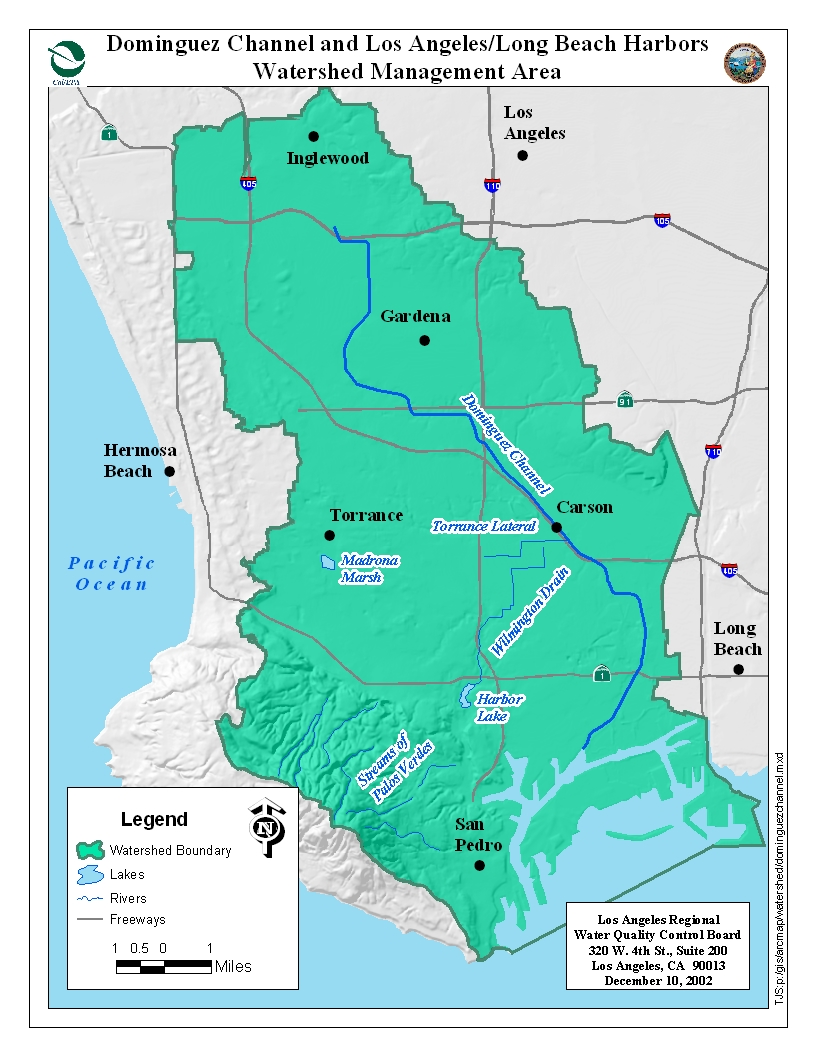
One of the footnotes to the global impact of DDT was that a company that manufactured it, perhaps ‘the’ company that manufactured it, Montrose Chemical Corporation, dumped tons of the pesticide into a drainage ditch near it’s factory in Torrence, Los Angeles County, LA to dispose of it, (interestingly right next to a neighborhood called Carson, bringing to mind Rachel Carson). That ditch appeared to drain into something called the Dominguez Channel, what serves as kind of over engineered ‘river’ for this area if you could call it that, and the Dominguez canal would find it’s way into Long Beach Harbor.

 After a while they stopped this and just started pumping DDT into the sewage system, about a ton every 3 days, therefore tens of thousands of tons over decades, where it went uncleaned through the system, which usually exists to break down excrement, not complex chemicals, and out into the Pacific Ocean near Paloes Verdes, the Hill in the South West corner of Los Angeles with some pretty nice views of both the LA basin and the Pacific,if you don’t think about what might have been in the water.
http://industriallosangeles.org/sites/montrose.html
So how does this fairly commonplace tale of environmental ignorance from the Big Car Era lead to Hope!?
Well, I was once staying in Banning House Lodge, perhaps 2 years ago, the old house of the family that owned Catalina Island for quite a while, above Two Harbors, dodging buffalo on my walks around day and night, and in the office they had a monitor always displaying one of these web cams since the actual location happened to be just a few hundred yards out the window:
http://www.ustream.tv/west-end-cam
Now realize that Catalina is about as close to Paloes Verdes and Dominguez Channel as any self respecting eagle is going to setup shop. They need room to soar..they gotto be free baby.. they ain’t pigeons. What makes this all significant and hopeful, is that up until about two years ago they were stealing the Eagle Chick Eggs to rear in an incubator so it would be free of DDT impacts, basically so the mom wouldn’t crush it because it was assumed that she would be eating walrus carcass or seal or what have you, and it’s fat especially would be contaminated with the tons of DDT that Montrose dumped 70-30 years ago as they flap around the local waters, and she would sit on the shells to warm them and they would get crushed, which had been the trend for this long Silent Spring. But about 5 years or so ago, they decided to leave the eggs be, and lo and behold, they survived…
http://www.fws.gov/news/NewsReleases/showNews.cfm?newsId=FB243CE4-9CEC-E367-C02C0A0B255EA85E
Vigilance is the eternal price of freedom perhaps, but this is a pretty good sign that despite all the environmental challenges ahead of us, perhaps the DDT problem is slowly fading into the rear view mirror..

Categories
Appalachians Catamount Cougar East Eastern United States Florida Panther Midwestern United Stated Mississippi river Mountain Lion New England Puma Repopulation

Cougar, Puma, Mountain Lion, Catamount, Panther.. call it what you want, but they are at the Mississippi River and moving east!

Hard not to love a Mountain Lion.. for one, they eat people on occasion.. puts a little legitimate stress back in life.. something to worry about other than that text you haven’t received yet..
The official line from various state agencies and the US Department of Interior is that they haven’t moved east of the Mississippi River, with the exception of the isolated Florida Panther with one or two famous exceptions:
http://www.ct.gov/deep/lib/deep/press_releases/2011/2011-07-26_mtnlionpresentation.pdf
I have had friends knowledgeable about the outdoors give me pretty reliable stories of sightings in Vermont, South Carolina and Tennessee. Most recently I was told of game camera photos taken of them in North West Indiana. Maybe it’s just young males looking for a good time, but they are in the east, have no doubt.

My first interaction with them was in New Mexico where my college roommate, his girlfriend and I spotted a spot on huge track near Gila Hot Springs in the South West part of the state. Another time a college buddy showed up in my room needing to talk after a night hike in Colorado. He had been stalked by a Mountain Lion he was pretty sure and wanted to get the story out, which had both thrilled and disturbed him. Their population and health in the west is uncontested, but they are moving east, and if you have ever seen how deer run wild east of the Mississippi you wouldn’t blame them. Often sightings are blamed on released pets, quite possible, but the move from the easternmost known wild populations in South Dakota into places like Wisconsin, and, well in the case above, Fairfield County, Connecticut, home of Martha Stuart and essentially the East Coast Version of Orange County, California, is undeniable. I might regret saying this if some 5 year old gets gobbled up while his mom tends the Bar B Q in some Jersey Suburb, but bring it on!
The lack of apex predators in the east, with the near extinction of the red wolf, displacement of the grey wolf and Mountain Lion, sparsity of the Black Bear and again extirpation of the Grizzly that did roam at least close to the Appalachians has left the easy pick’ins for deer hunters but not a health ecosystem by any measure. The White Tail deer roams with such impunity over the whole east, with so much forage from fractured edgeland woods that they are considered a nuisance in many areas, and unhealthy due to the only natural selection taking out the stronger speciments through trophy hunting. One good mountain lion could eat one or more a week, which is a nice start.

links to the controversy and latest facts:
http://www.mountainlion.org/cal_ch3.asp
http://www.mountainlion.org/featurearticleeastwardho.asp
http://www.strangeark.com/nabr/NABR7.pdf
These Guys, the Eastern Cougar Foundation, appear to be a pugnacious group who are actively trying to put together a picture of where the natural reintroductions, migrations perhaps, are happening and could happen:
http://www.easterncougar.org/index.htm
There are now websites that focus on aggregating sightings. It’s a veritable feline Where’s Waldo? This is a good one for the State of Michigan:
http://savethecougar.org/
Another for Connecticut, including a sighting near Sandy Hook just before the now infamous school shooting:
http://ctmountainlion.org/
Western TN:
https://www.uu.edu/forms/cougars/sightings.cfm
One for central New York State which is using mapping as well:
http://www.trackincats.com/mapslash.php
I noticed more for Virginia, and a few other places, and a number of State Environmental Departments with reporting sites. The Motivation of State officials for not reporting can be complex. some might not want to cause a panic, which could harm the animals they might secretly want to see naturally reintroduced. Others might be too strapped to want to deal with it, and some might want to not muddy the waters and just collect data and let their various leaders and law makers make the decisions. The Federal Government, as well as all state governments, are always dealing with Legislation surrounding these things, including the Endangered Species Act, and that can start a lot of requirements with just one spotted breeding pair under certain classifications for a species. IT call can be quite controversial, tie peoples hands, and if a department or specific agent or biologist is sympathetic, he might find his best course of action is to say and do nothing. Also, if the department is not sympathetic when it comes to meeting those requirements, the same is true. The Eastern Cougar, a subspecies distinguished by not much perhaps, was declared extinct by the USD of I in just 2011, and this move might have meant a few things: There is no difference between the two, and we know the western cougar is going to refill this land, and rather than try to chase animals that can move thousands of miles all over the place, let’s not turn that into an ESA issue. This is the Logic I am projecting and assuming.
http://www.nytimes.com/2011/03/03/science/earth/03cougar.html?_r=0
http://en.wikipedia.org/wiki/Eastern_cougar

In regards to say the resettling of the Elk in the East, a similar story, and something I wrote about in another post with glee, although all extirpations are sad, bad for the environment due to the way they allow populations to get out of blance with the carying capacity of the land, the timing of these two could be seen as fortuitous, because a settled Eastern Mountain Lion population would definitely have put some wrinkles in this effort, the same as a settled Wolf Population would have.. in this case, introducing the elk, letting their populations grow and become healthy, then adding the other predators should the political will ever be there, is the smart way to go, and the way things appear to be happening both with and without man’s help. The mistakes of the Red Wolf Wolf Reintroduction to Smokey Mountain National Park and the lack of suitable game for them is present in the minds of all east coast biologists and conservationists. I wrote about that effort as well here.
There was a website I was trying to find that attempted to aggregate Sightings from all over the East, ah, here it is:
http://www.cougarnet.org/
but that appears to no longer be a moot point..they’re heeee’re!
http://www.youtube.com/watch?v=CVC2vyVCWJI

Categories
Beaver European Beaver Reintroduction Scotland UK

Beaver Reintroduction to Scotland, and Much of Europe it turns out..

In the 16th Century, the last of the Beavers of Scotland were killed, and it appears that as early as 1188 there weren’t many left in the whole of the British Isles.
http://uk.answers.yahoo.com/question/index?qid=20110627142642AAg83v0
They make a nice hat, so I can understand why.

Well, after a 200-400 year absence depending upon whom you talk to.. still, murky waters have returned a bit of reserve and mystery to the British Isles. My research of the Scottish project, the first one I heard about and the one that intrigued me the most for some reason, has shown some success. Beavers as as common as mice in some areas of the US, we take them for granted, so I picture Willie the Scottish Janitor from The Simpsons wranglign with one like Bill Murray’s Carl Spackler in Caddyshack. The Project, likned to below, counts 24 living individuals as I write in January 2013, out of an introduced population of 16, and it appears a nearby river has somehow been miraculously repopulated on it’s own so that they are deciding to expand their study to observe there as well (could be amateur reintroduces, escaped pet’s, or stream hating eco terrorists!). The population there is estimated at 150, so we are climbing towards 200 all told…
http://beaversinengland.com/
http://en.wikipedia.org/wiki/River_Tay They tried to capture them for a while, but gave up.
This accidental or not reintroduction on the River Tay is actually way ahead of the official reintroduction project.

Below is the family tree of what has transpired so far in the official project which is about 2 hours north west of Glasgow between Oban and Lochgilphead in the Knapdale forest.
http://www.scottishbeavers.org.uk/docs/003__143__general__Beaver_family_tree___Oct_2012__1351071740.pdf
http://www.scottishbeavers.org.uk/

The Welsh appear to be studying the project like.. well.. eager beavers.
http://www.welshbeaverproject.org/home/

The English are, well, also still studying it as well, for two locations.. not men of action like the Scots yet! Actually, reading the wikipedia entry below leads me to believe there are fenced beaver populations in a few locations in England and Whales, but the only ones Born Free are the ones in the two groups mentioned above in Scotland, although movement is afoot to let ’em all scurry free over Albion…
http://beaversinengland.com/reintroductions/

And then there is Mainland Europe, and it appears, parts of Asia: http://en.wikipedia.org/wiki/European_beaver
Eco-Wonk away!

Categories
Atlantic Ocean Atlantic Right Whale Fishing Nets New England Aquarium North Atlantic Right Whale Overfishing Right Whale Sea Lanes

Blissfully Hanging On: the Atlantic Right Whale

The Right Whale as a Family of Species is doing well given the events of the last two centuries, but that’s due to the healthy recovery of just one of it’s five species, the Eubalena Australis, or Southern Right whale. The other three or four species, are well, sadly, in the toilet, although there is hope on at least one side of each remaining ocean that they inhabit, the Atlantic and Pacific. As they have found with Great White Sharks recently, which a are single species that have multiple migration areas that can lead to what might be a sub species with the shark, but with the right whales are considered a separate species, due to a differentiation that has occurred with the evolutions of the groups in the different migration areas over time. With the whites, they found that in fact, the ones off the coast of California have different patterns and habits than the ones off South Africa, which are likely the two best studied groups. They breed in different places, have different feeding grounds, and migrations and migrations times, it’s not just one massive roaming population. Why I am discussing Great Whites in a post about Right Whales will become more obvious in a later post, but for now I hope the example makes sense. The five populations of Right Whales don’t all have to survive for the family to survive, but it would be pretty hard to haul 200 Right Whales up from Antarctica and expect them to learn now to live off the coast of Alaska or Nova Scotia. They are actually different species, and the ideal is for each species to survive.
They were the ‘Right Whales’ to hunt, for they had ample supplies of Whale Oil to light the lamps of the world stored in their bulbous heads and blubber before Thomas Edison took mercy on them and started harnessing electricity. Before offshore whaling got big at the beginning of the 1800’s, there were multiple independent migrations around the world, there were many around the arctic, and then there was from what I can tell an eastern and western Pacific migration, and an eastern and western Atlantic migration. They have been seen in the Mediterranian as well. So 5 distinct populations and i guess species all told, if not more. Since this blog is supposed to be an upper and not a downer, I will focus on the fact that three of the populations still exist, and one is doing quite fine, down in the southern oceans. I once sat in of all places a bathtub on the South Coast of South Africa and watched them breach and play for hours on end. The Western Pacific is hanging on well enough to be survive but have a future very much in doubt, population perhaps 200,mostly in the Sea of Okhost but not heavily researched, but the Western Atlantic population, which likes to Jet Set between the Georgia-Florida Coastal Areas for breeding, then back North again to the seas from New York north to it appears to Nova Scotia for summer feeding, mostly from Cape Cod North, has a population just hanging on, but the good news is that it is slowly but surely increasing…
http://en.wikipedia.org/wiki/Right_whale
http://en.wikipedia.org/wiki/North_Atlantic_right_whale
Reading these entries you can see that it is a tough slow increase.They estimate that they birth about 20 per summer, and about half the moralities are due to Human Factors.. fishing nets, ship strikes, noise from sonar, and global warming and overfishing likely have had an impact, like in the summer of 2010. But if you notice, as of this summer, the population, like a man climbing back over the edge of a cliff, is slowly rising. They claim that in August of 2012 there were 396 individuals, up from 361 in 2005.. so that’s not a huge appreciation, 35 individuals, about a 10% increase over 7 years, In 1935 I just read, there were only 100 thought to exist, so progress indeed, and progress in a place not many people associate with wilderness, the North Atlantic, which is more famous for World War Two battles and Shipwrecked Cruise Liners than for it’s biodiversity, which is hanging by a thread due to honestly almost exclusively the pressures of being surrounded by some of the worlds largest population densities, who have the cash and the know how to fish offshore, and have for now hundreds of years.. but it’s improvement, and I’m no geneticist, but I would argue that it’s also likely enough to preserve the species.
NOAA and the USFWS have stepped in to do all it can on behalf of the American Government. Shipping lanes have been established to protect the whales, especially around Boston Harbor,and there is even an IPad app you can download to see where collisions might occur due to a warning system they have created.
http://www.nmfs.noaa.gov/pr/species/mammals/cetaceans/rightwhale_northatlantic.htm
http://www.nmfs.noaa.gov/pr/sars/species.htm#largewhales
http://www.nmfs.noaa.gov/pr/pdfs/sars/ao2012whnr-w.pdf
http://www.fws.gov/endangered/news/bulletin-summer2009/reducing-threats-to-right-whales.html
That whale on the Bulbous Bow in the photo from the above link appears to be a fin whale that was brought into Baltimore Harbor on a container ship.. they are less endangered, so don’t worry too much:
http://www.dnr.state.md.us/fisheries/fishingreport/fishingrptArchive/frarchives2006/0510index.asp
http://www.learner.org/jnorth/search/RightWhale_notes1.html
There does not seem to be an independent advocacy group for the right whale, just the government and the general groups like the World Wildlife Fund, wait, I take that back, the New England Aquarium seems to take a lead in research up north, and down south there are some advocacy groups as well.
http://www.neaq.org/conservation_and_research/projects/endangered_species_habitats/right_whale_research/index.php
They keep a blog and seem to be constantly doing something:
http://rightwhales.neaq.org/?m=1
So for now, what can be done is to let NOAA do it’s work, try to keep the boats and the nets from killing them, hold your breath, let em get it on, and watch the population grow… slowly…
http://www.bostonglobe.com/metro/2013/03/16/right-whales-make-comeback-after-centuries-decline/Cf8IdJe8ydpeLYLXr3ibTL/story.html

Categories
Carbon Savings Growth Hope Large Offshore Poster Child Projects Symbol United States Wind Power Wind Power Overview Windmills

The Expansion of Wind’s Power

Somehow Windmills have become the poster child of the Green Revolution..

they are, well, pretty in the abstract, and in person, kind of impressive, form follows function, and they are somehow calming, and like a wind chime, cooling, and they are popping up in large installations it seems just about everywhere (except for the coast of California, but for once I will try not to be grumpy)..the biggest onshore I can find is 5 Gigawatts of potential in north west China, and another in the North Sea might hit 9 Gigawatts.
I can name a few spots I have seen them in my travels. The old famous Farms were the highways east of San Francisco and LA, on 580 and I-10, Altamont and San Gorgonio Pass respectively (the latter also the home of the giant dinosaurs at the truck stop in Pee Wee’s Big Adventure, which I know is more important to you than anything that follows). These installations are somehow a vestige of the first Obama administration, known to many as the Carter Administration (or maybe the third Wilson Administration perhaps..), since it was the environmental movement of the 70’s that laid the seeds of today’s progress, but they lay dormant in some ways for years as we kind of cleaned up many a mess from our wild industrial times before we could step it up to move forward as we are now.

Recently I drove with a friend to Mammouth Ski Area from the West Coast Hipster Capitol of Silver Lake, and made my buddy pull his Subaru over to and swing his skinny jeans out of the car to check this wind farm out, on a ‘Long Cut’ that helped us avoid Palmdale and Lancaster and check out more of I-5 and the countryside. The light blinking in the night kind of provided a fascinating modern spectacle.. no California Road Trip for a Gen X’er complete without some gaping at the weird combo of man made and natural that is The Golden State, and it turns out this is the second largest one in the US.. Tenchapi Pass. One Gigawatt of Potential, Marty McFly, one million American Households, and it was a spinning that night!

http://en.wikipedia.org/wiki/Alta_Wind_Energy_Center
http://www.youtube.com/watch?v=mjCRUvX2D0E
I’ve now seen them from Gaspe Penninsula to near Fairbanks (Alaska has had for a while a collection of like three windmills in a little place called Delta Junction, and a handful of native villages to supplant Diesel generators when possible, but they finally had two Major Utility Farms go online in the last few months, one on an island off of Anchorage, and another south of Fairbanks, near Healy) down to California and then a few in the Midwest, that are easiest to find on an FAA Sectional (Aviation Map) because they show up as a huge collection of flight hazards, like a multi square mile antennae farm. Somehow Illinois has taken a jump into wind, and Indiana is following suit.
The South East isn’t known for it’s wind, but Texas is, and Texas, under T Boone Pickins, has gone big as well. Did you expect anything less from Texas?
Here is a list of the Big ones.. it appears China is building one 5 Gigawatts.. well, I guess it is to be encouraged.. as much as it gets my goat to put nationalism aside..
http://en.wikipedia.org/wiki/List_of_onshore_wind_farms
Potential seems to be growing at the speed of Planck’s Constant.
Wind is the closest to competitive of the Green Energy Sources, usually measured in Price per Kilowatt Hour (how much it costs to build and maintain an energy source compared to the energy it produces), which is kind of the power industry standard, since it is how they bill.. It seems to come in around ten cents per KWH, a little under, but with subsidies can compete with hydro (which I will call pseudo green due to the environmental consequences of Dam Building) at sometimes as low as 4 cents a KWH, Coal and Natural Gas which might be around 6 cents per KWH. The wind industry was about to board up and close shop when it was anticipated that Romney would win re-election, but it looks like they are good for another 4 years as from the Inauguration speech to even the back rooms of the Fiscal Cliff debate, the Administration seems to be earnestly keeping these green incentives on the table. There are permitted projects in places like North West Indiana, Marshall County, that will likely go through now, and in Mexico the bread company that makes Bimbo, Gamesa, essentially North America’s Largest Bakery, has decided to offset it’s carbon footprint by financing a 90mw Farm in Oxaca. A company called Gamesa,not to be confused with the Mexican Cookie Manufacturer of the same name, but given the Bimbo story, I did, is planning Wind Farm near Tecate, perhaps the most charming border town in Mexico right now (and a good place to have your teeth fixed. To explain to me why Tecate had not gone the way of Juarez or Tijuana, the dentist told me that the border actually closes at like 10pm, which kept Tecate from being a party town).
But I have failed to mention offshore. The fight over Cape Wind, the wind farm near Nantucket, settled at the federal level over the strong protests of Nantucket’s many Billionaire Residents like one of the Koch Brothers, was kind of a landmark fight, but it was won by the utility installing the wind farm, or so I thought.. it appears Save our Sound might have yet filed another injunction:
http://en.wikipedia.org/wiki/Cape_Wind
http://www.capewind.org/index.php
http://www.saveoursound.org/
http://switchboard.nrdc.org/blogs/kkennedy/the_cape_wind_offshore_wind_fa.html
Unfortunately the fight has tied the project up for now some 12 years, so that nothing has actually happened yet physically as far as I can tell except for constructing a new office. That project pales in Megawatt-age compared to this that I just discovered on Googles Blog:
http://www.nytimes.com/2013/01/15/business/energy-environment/an-offshore-wind-power-line-moves-ahead.html?_r=0
http://atlanticwindconnection.com/
http://en.wikipedia.org/wiki/Atlantic_Wind_Connection
This is an Ambitious project! Looks like the kind of thing that eventually ends up in the last scene of a James Bond movie
And that’s just America… Europe appears to be the leader for now in offshore, but Nantucket and now Atlantic promise to be Bigger, perhaps holding the record for a while.. Go Jersey!
If I could voice just one reservation, that as much as I don’t want to be a wind power naysayer, the legitimacy of the bird kill possibilities aside (although habitat loss and global warming have and promise to kill a lot more), there is something beautiful about the sea not being defined, that other than navigation or a GPS, it is a space without reference, and the idea of offshore wind farms does somehow spoil that fantasy, gives it a checker board of definition, but I guess to save the sea, we must take away some of it’s mystery..
On with wind power!
http://energy.gov/articles/wind-farm-growth-through-years#buttn
http://www.windpoweringamerica.gov/wind_installed_capacity.asp